
‘Two gardens of delicious surprises’ is how Lady Frances Wolseley described Gertrude Jekyll’s design for Legh Manor, when she visited in the 1930s, and SGT’s visit on a showery September afternoon was equally full of serendipity.
This was a welcome opportunity to experience a Jekyll garden in Sussex, one of a relatively small number of private gardens known to have an assured Jekyll connection, and which is now being sensitively restored. Since moving to Legh Manor in 2019 the owners, Tim and Karen, have cleared all the brambles and overgrown yew hedges to reveal the original borders and pathways of Jekyll’s 1918 plans, and with the help of their gardener, Dave Osgood, the four symmetrical borders of the mulberry garden are now filled with a rich variety of flowering perennials. Meeting Dave in the garden he explained some of the challenges recreating the original planting, such as when particular varieties of plants are no longer available, or not suited to the conditions – the garden is shadier than in 1918 now the surrounding trees are fully grown. But with a Jekyll plan to hand we could see Bergenia (Megasea on Jekyll’s plan) Stachys, Gypsophilia, Santolina, Echinops and Nepata and the pink flowered Weigela,all plants that she used in the plans for mulberry garden.
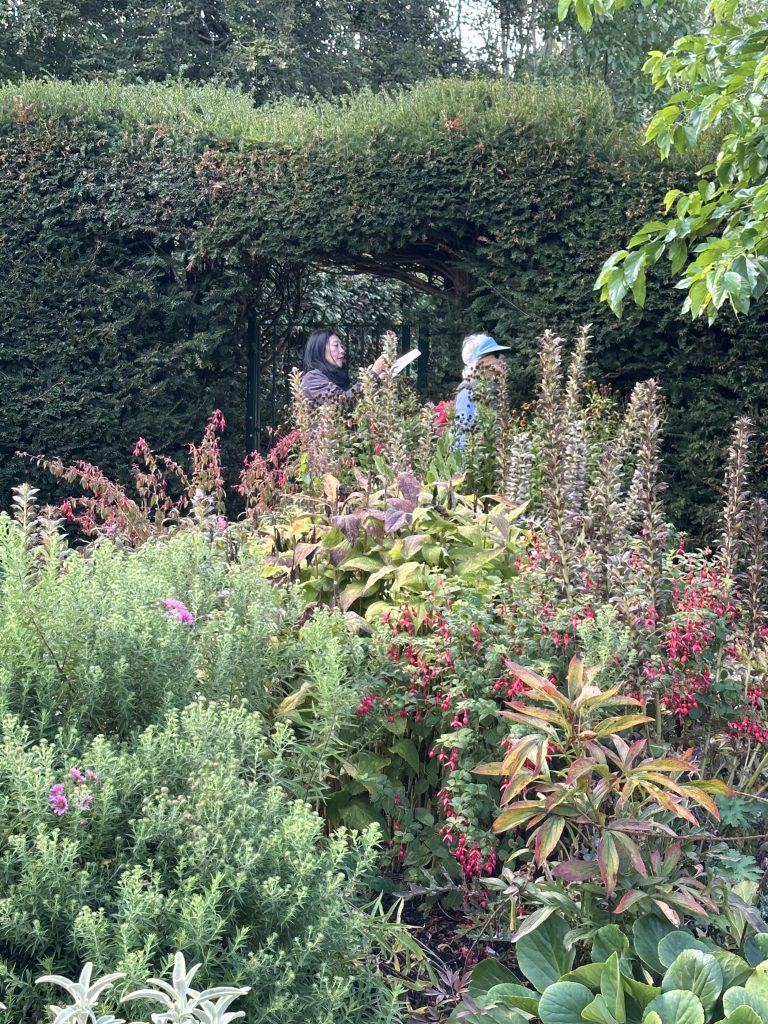
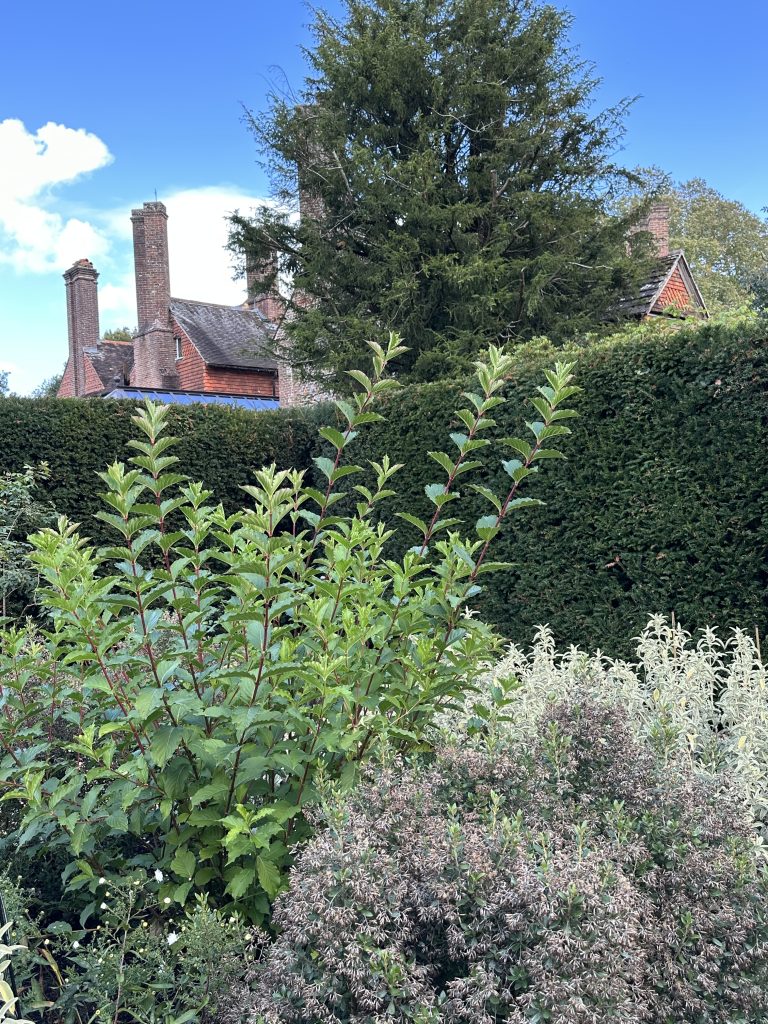
In the formal garden where Jekyll planted roses, iris, and drifts of lily of the valley there is a different approach, partly because this garden is a haven for wildlife: deer and rabbits frequently munch their way through young plants. There are snapdragons – one of Jekyll’s favourite plants – protected by wire, and a mix of soft grasses although new shoots are vulnerable to the night-time visitors. The mulberry garden has gates which keep out the deer but this is not possible in the formal garden, now bordered by the dense woodland. Perhaps it is reassuring to note that writing in Wood and Garden Jekyll comments on the trouble caused by mice, pheasants, rabbits – who will ‘nibble and gnaw at anything and everything that is newly planted’ and hares, which apparently stood up to eat the rose bushes.
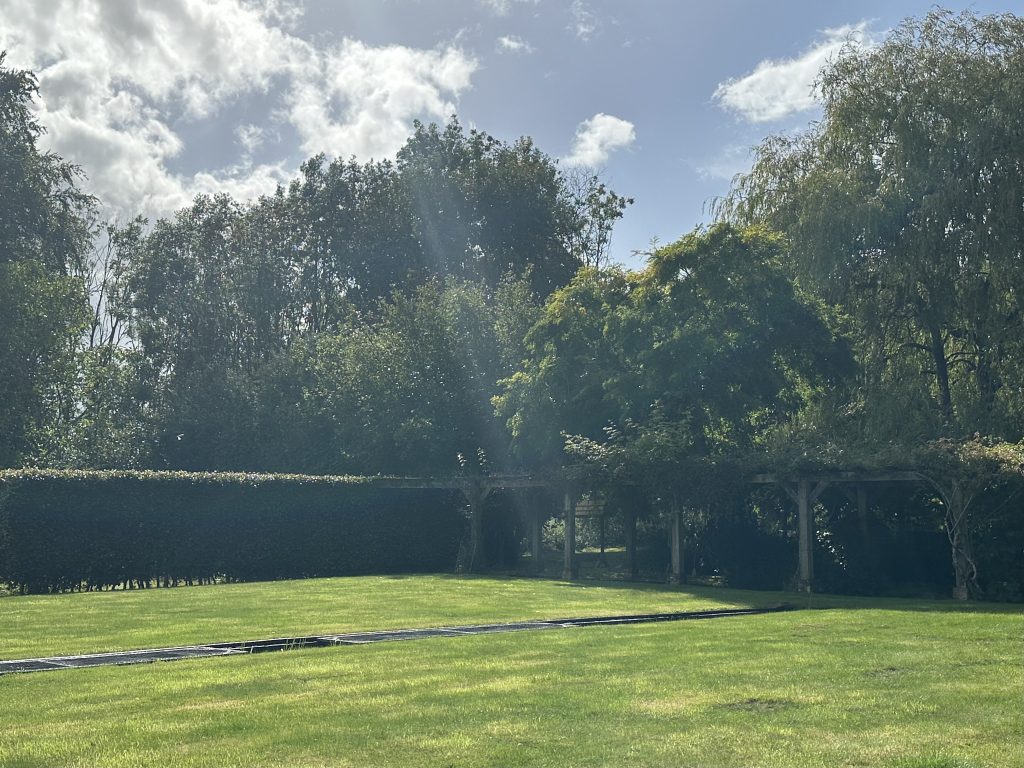
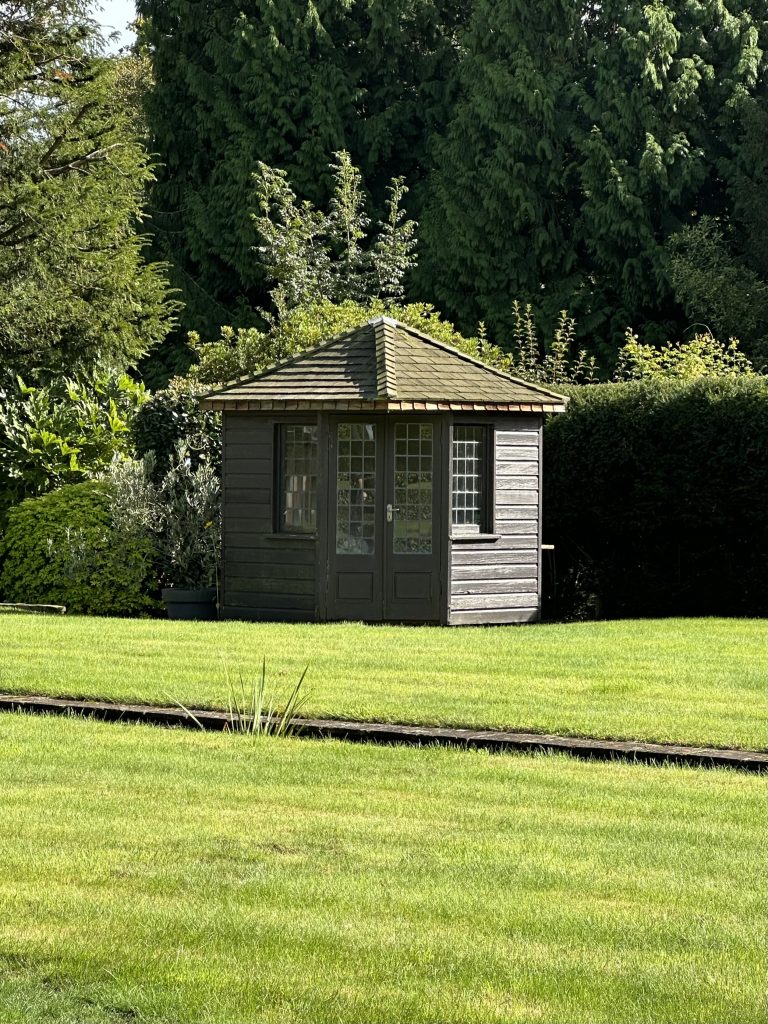
A sudden sharp shower meant we could beat a retreat for the tea and delicious cakes made by Karen, but as the sun returned we picked up our walk again on the lawn, now divided by a rill. A puzzle for researchers has always been the location of a long herbaceous border shown on a later plan drawn by Jekyll in 1931 and which Wolseley described as a ‘bold creation … upon either side of a grass walk’. Quite recently Tim has discovered some surprising aerial photographs, taken in the 1980s, which show possible borders to the north west of the house where the rill is now situated. And, just by chance, we were joined by Mark Burton, a manager of the estate at Legh in the 1980s, who had some fascinating stories about the garden, at a time when all the yew hedges had to be cut using hand-shears. He remembered the original mulberry tree blowing down in the 1987 storm, and having to be replaced. Mark also recalled the long herbaceous borders then planted with roses. We stood on the lawn where these beds once existed and wondered if they were the missing flower borders that Jekyll planned with hollyhocks, sunflowers, and verbascum. However, a more likely position might be the grassed area to the south of the house, given that Wolesley describes the end of the walk as giving a distant view of the South Downs. New research might be needed to reveal further surprises!
We are very appreciative of Tim Sheldon and Karen von Habsburg-Lothringen for inviting SGT to their private garden. This is the first time they had opened the garden for a group of visitors, and we all agreed it was a wonderful opportunity to see Jekyll’s plans coming to life.
Article by Sally Ingram
Photos ©Sally Ingram
The story of Legh Manor and Jekyll’s connection can be found in the SGT 2021 publication Gertrude Jekyll in Sussex and ordered from the website here.