
The SGT 2026 Spring Lecture
‘If you can draw a leaf, you can draw anything’. Timothy Walker began his lecture citing these words of John Ruskin to express his admiration and respect for all the botanical illustrators who have found infinite ways to interpret what is art and what is botany, what is flower painting and what is scientific illustration.
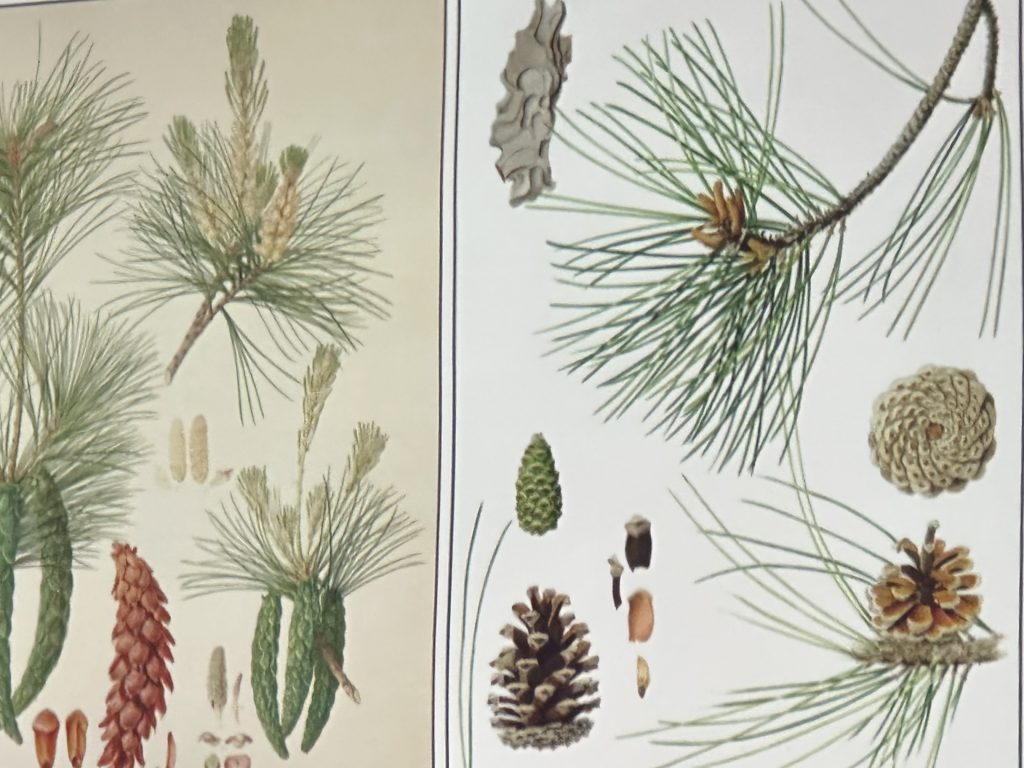
With so much that could be said on this subject Timothy had chosen to focus his talk as if looking through a microscopic lens, narrowing down on illustrations of one particular plant species – the Euphorbia. However, the lens widened as he entertained us with an expansive journey, from the first herbalists drawing the plants grown in their gardens, to the amazing glass flowers created by Leopold and Rudolf Blaschka for the Harvard Museum of Natural History. There were familiar names like Gerard and Linnaeus, but also individual stories of the artists who often struggled to record such biological diversity. Sydney Parkinson was one such young man, hired by Joseph Banks and in 1878 accompanied Captain Cook on the voyage of the Endeavour, drawing and painting the collected specimens. Working in harsh conditions he died on the return journey, but his work contributed significantly to Banks’ Florilegium.
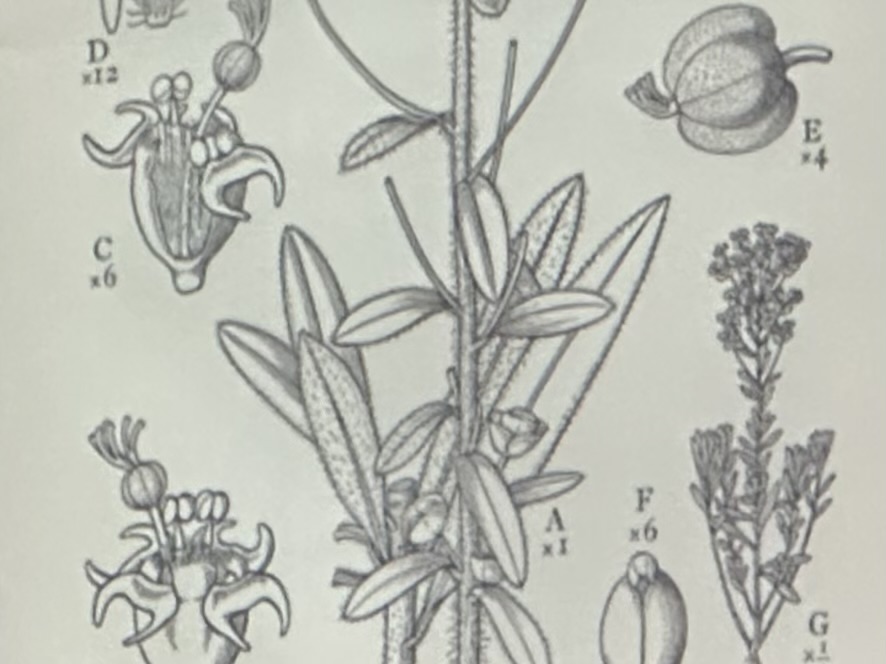
Euphorbia stricta illustrated by Mehrdad Mehranfard (2014)
Presenting a selection of beautiful images Timothy showed us all that is involved illustrating plant life, whether drawing with coloured pencils, painting with oils, printing or creating intricate models. We saw Gerard’s detailed woodcuts, and Linnaeus’s copper engravings, and the work of more recent visual artists such as Rob Kesseler using close-up photography to make large-scale images of plant grains and seeds.
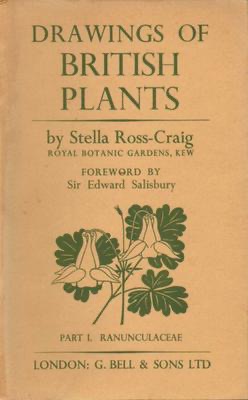
Botanical illustrators continue this vital role of promoting learning and recording and identifying plant species. For Timothy the twentieth century was rightly dominated by women, indebted to their predecessors such as Elizabeth Blackwell and Marianne North. Stella Ross-Craig, like North, worked at RHS Kew and published her watercolours and drawings of British plants as a series of paperbacks in the 1950s bringing botanical illustration to a wider public.
Artists have travelled the world to focus on plants in their natural habitats. Rosemary Wise, a botanical artist working at Oxford University, has accompanied numerous expeditions to illustrate plants, although Timothy ended his talk bringing the lens closer to home, with one of her illustrations of Pinus nigra, immortalising a tree from his own garden.
Timothy’s lecture was very much enjoyed by everyone, and had us thinking about botanical illustration in completely new ways.
Review by Sally Ingram
All plant images courtesy of Timothy Walker