
Clinton Lodge Garden has been created to reflect the ramblings of an old country house: a series of smaller and intricate gardens within a larger garden of about six acres, divided by walkways and yew hedges, archways and half hidden doorways, revealing an enclosed garden of roses, the knots of an Elizabethan herb garden or an old Italian marble cistern.
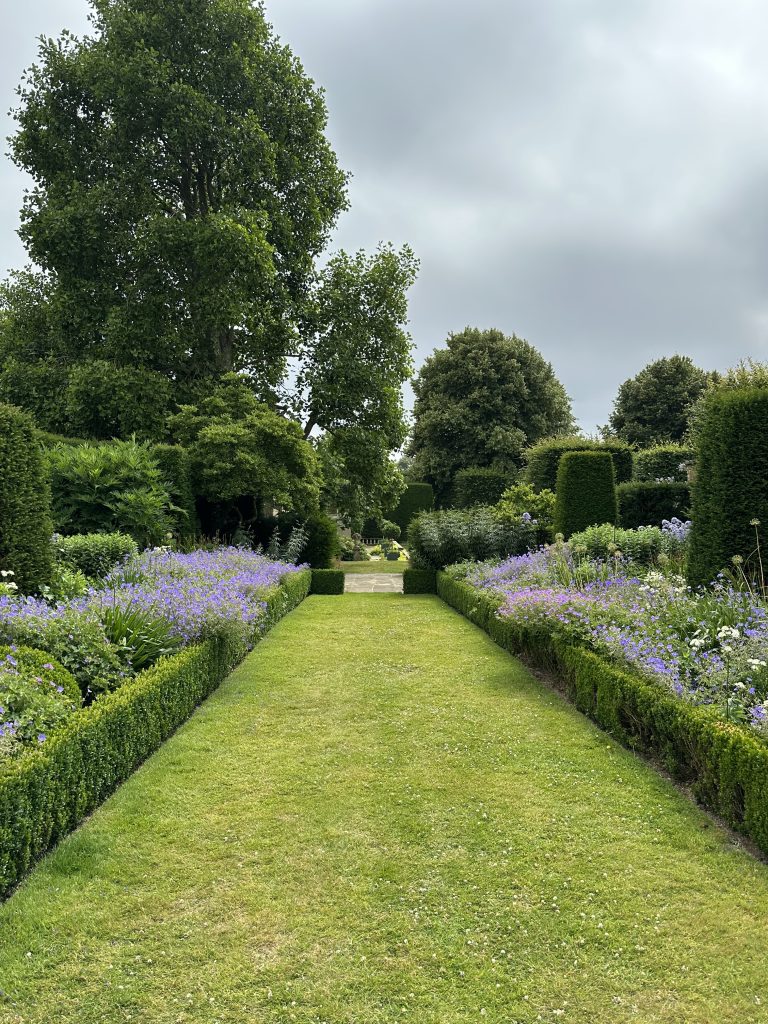
The long herbaceous borders edged with box
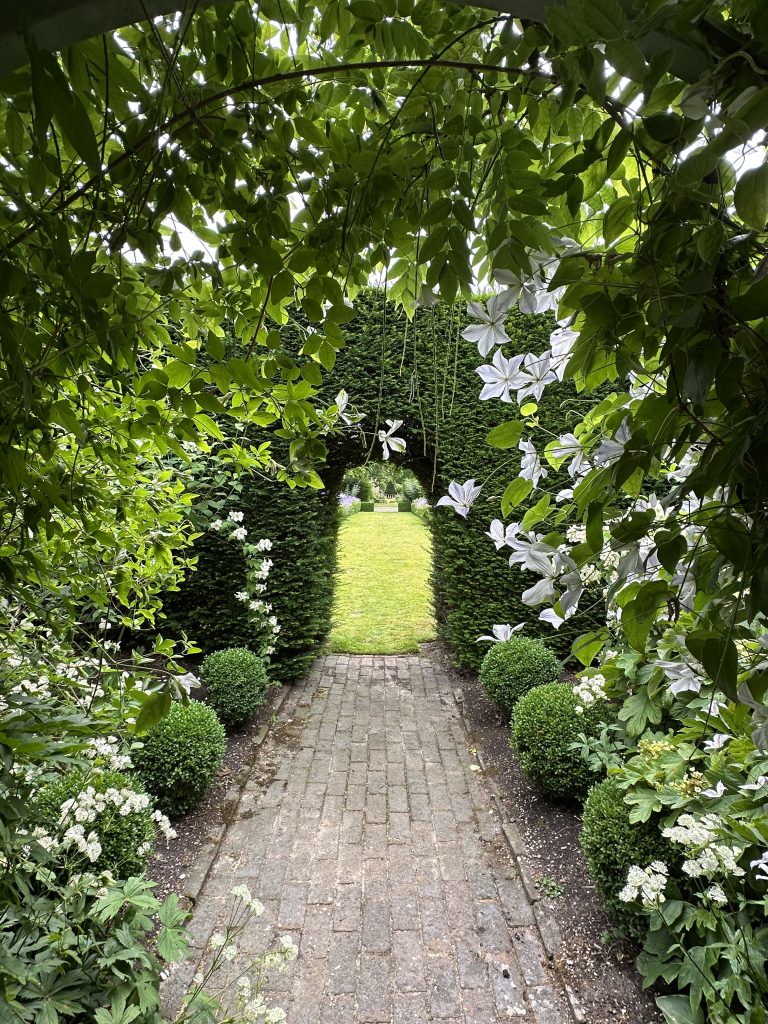
White clematis and astrantia surrounding the archway of clipped yew
When Lady Collum greeted SGT members for our visit she explained that this was a garden meant for two people, as a tranquil and peaceful retreat. It is a garden for strolling and enjoying the sound of water, the scent of the roses or peonies, but we were also to take time and use the many seats and benches because this is a garden of vistas and long views, or stone figures glimpsed through an arcade of tiny white clematis.
Reaching out from the seventeenth century house is a lawn is planted with clipped hornbeams, with longer grass on each side. The park beyond the ha-ha was landscaped by Julian Treyer-Evans, (a member of SGT) following the 1987 storm. Lady Collum said deer had ‘edited’ his design, but this view to a distant hill remains the same all through the year.
We began our walk in the double herbaceous borders where the colours are always blue or blues with whites, from spring until October. Edged with box there are drifts of nepeta and tall pale blue campanula with white starry flowers of astrantia and at the end a stone figure of a muse is set within a brick niche. Steps lead to a cloister walk with arcades of clematis and into the seventeenth century herb garden, divided into four squares with intersecting paths and a fountain in the centre. The plants here are aromatic, and there are benches to sit and become part of the garden. A small gate leads to the ‘Banqueting House’ an eighteenth-century style folly, not for barbecues Lady Collum told us, but somewhere to bring candles and flowers, a sense of humour and jewels.
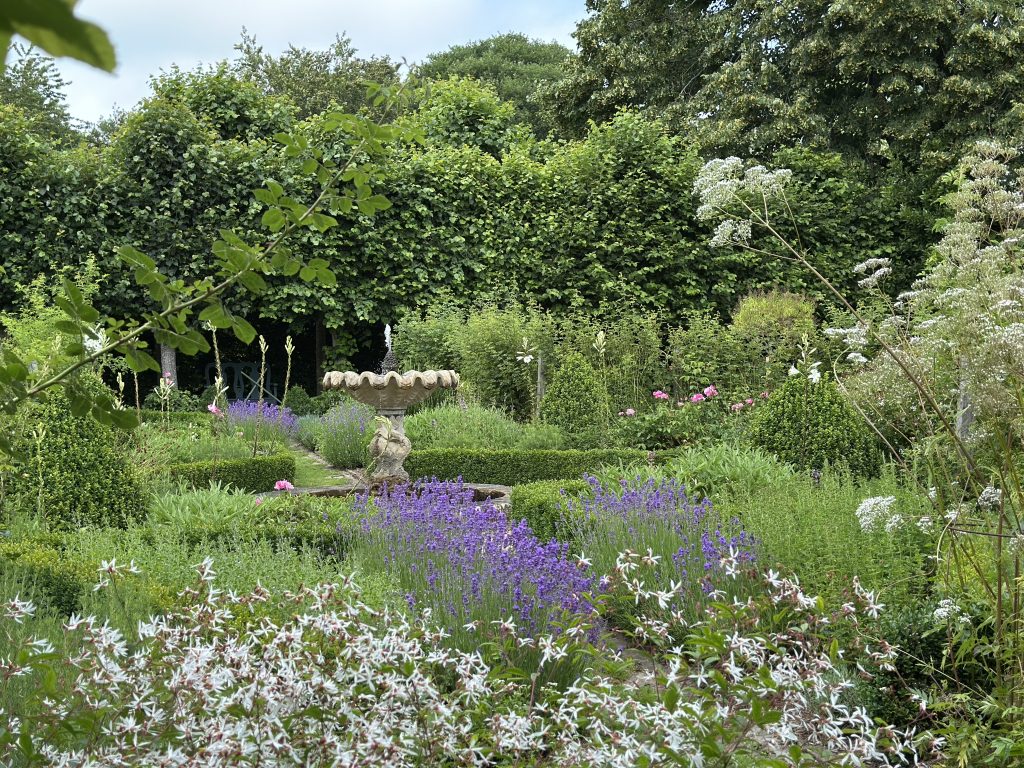
In the Pye Garden, named after a water feature by William Pye, the old varieties of roses are grown to nose height so that the perfume is enjoyed ‘by looking up and not down’ and the pathway then leads to a peony walk, with pale pink clematis, and into a twentieth century pool garden with apples, agapanthus and paniculate hydrangeas. In the potager masses of flowers are grown, because as Lady Collum said, ‘you can buy enough vegetables, you cannot buy enough flowers’. All the flowers in this garden as she explained, have been chosen for their sense of harmony, rather than a ‘look at me attitude’ and the effect is of a very naturalistic mix of perennials within the beech and yew hedges.
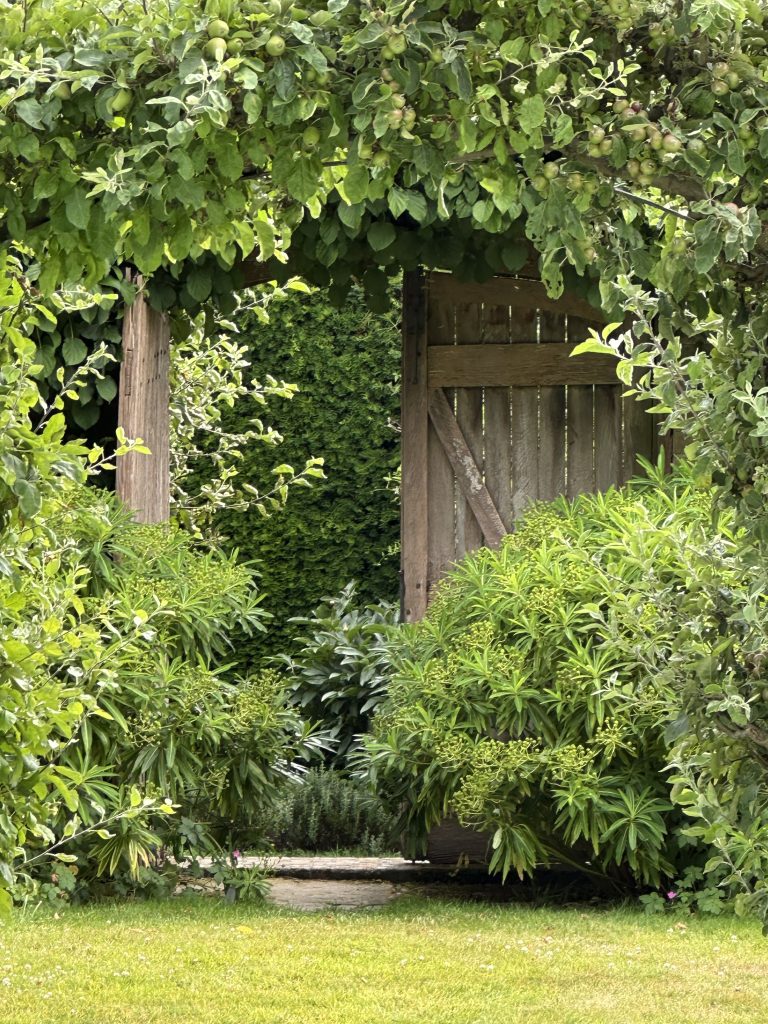
An arcade of apples in the pool garden
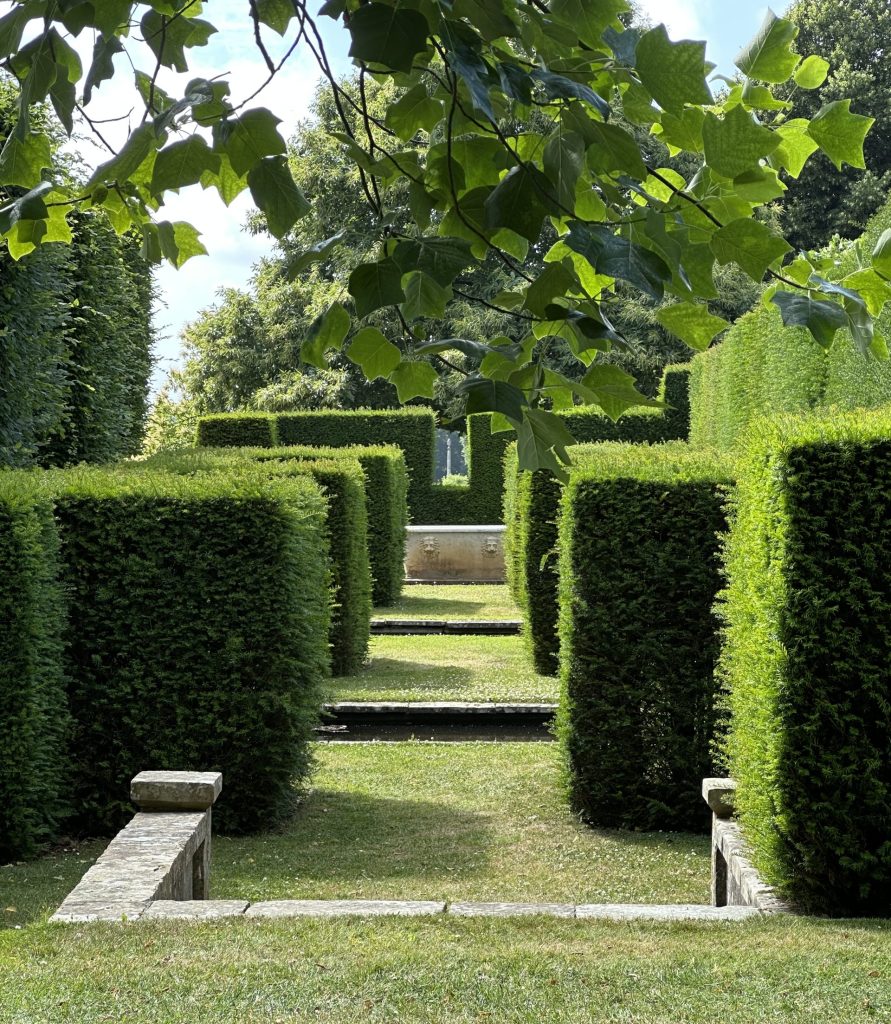
The long vista through clipped yew hedges to the Roman bath and an obelisk in the distance
The glimpses of garden history evolve naturally in this garden: a seventeenth century Italian marble cistern in the marble bath garden, fountains partly hidden by yew hedges, a cloister walk inspired by a Pre-Raphaelite painting, the enclosed herb garden, even a Latin inscription from Columella, the Roman writer on agriculture – which gave our brains a work-out.
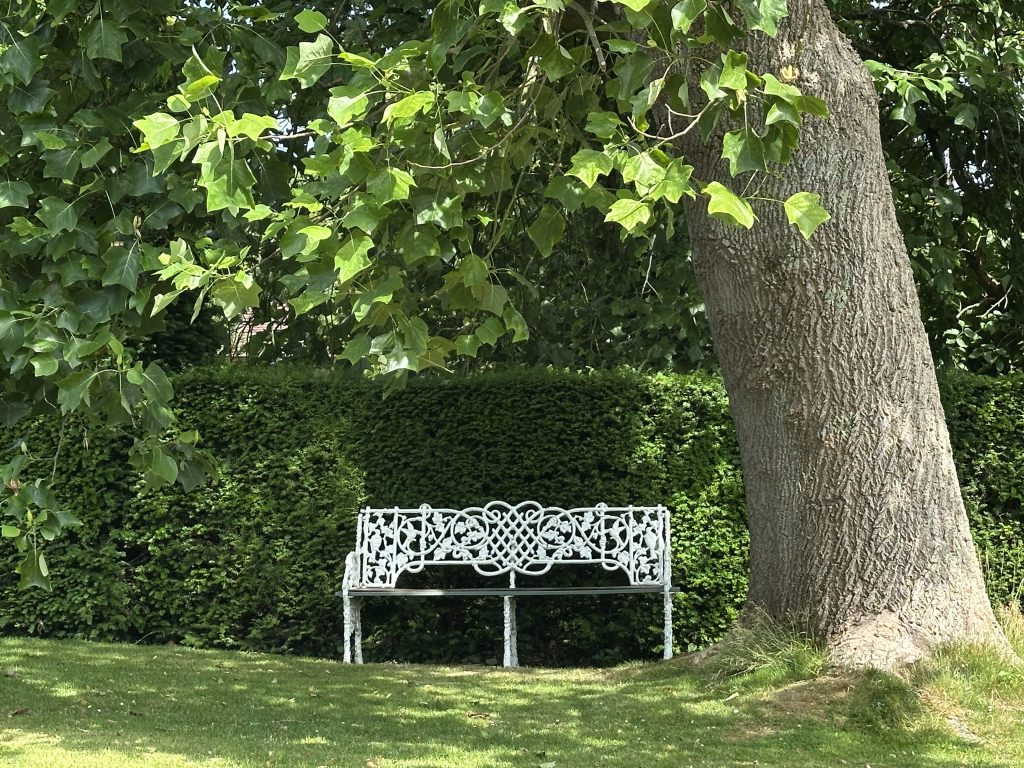
The garden has many seats and benches from which to enjoy the views
We ended this delightful afternoon back on the lawn, with tea and cakes waiting, inspired by such a surprising garden of so many different parts.
Article by Sally Ingram
All photos ©Sally Ingram and by kind permission of Lady Collum