
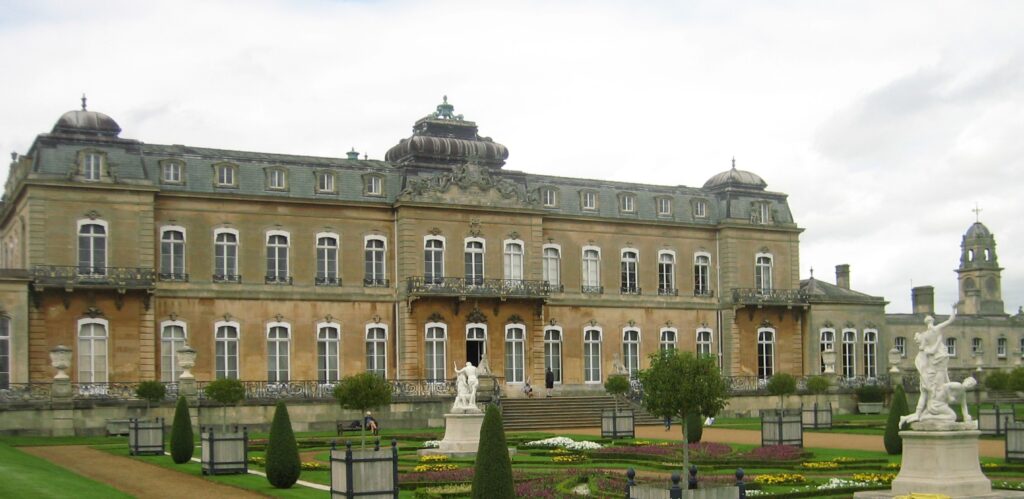
It is quite easy to believe that you are visiting a garden somewhere in France when you arrive at Wrest Park. The impressive gates and lodges at Silsoe are in the French style, as is the magnificent house which does an excellent impression of an eighteenth-century French chateau. The formal gardens and the Long Water all add to that feeling of not being in Bedfordshire.
There are many reasons to consider making a trip to Wrest – for me one of the main attractions was the opportunity to explore the ‘Great Garden’, designed and planted in the 1700s by the then Duke of Kent. This is one of the few gardens of this type to be almost as it was at that time , so allowing one to envisage how it would have been enjoyed in centuries past.
This ‘ Great Garden’ is an ornamental woodland (often called an ornamental wilderness) and was originally designed to use the juxtaposition of light, shade and greenery for its impact. Later, in the 1740s the Marchioness Grey added an understorey of plants such as jasmines, honeysuckles and briars , making the most of their recent introduction. The main rides are straight and symmetrical on either side of the Long Water, and they are linked by a maze of narrow winding paths. As the visitor explores these allées they will come across clearings, monuments and half- houses, all designed to provide ‘events’ during the journey.
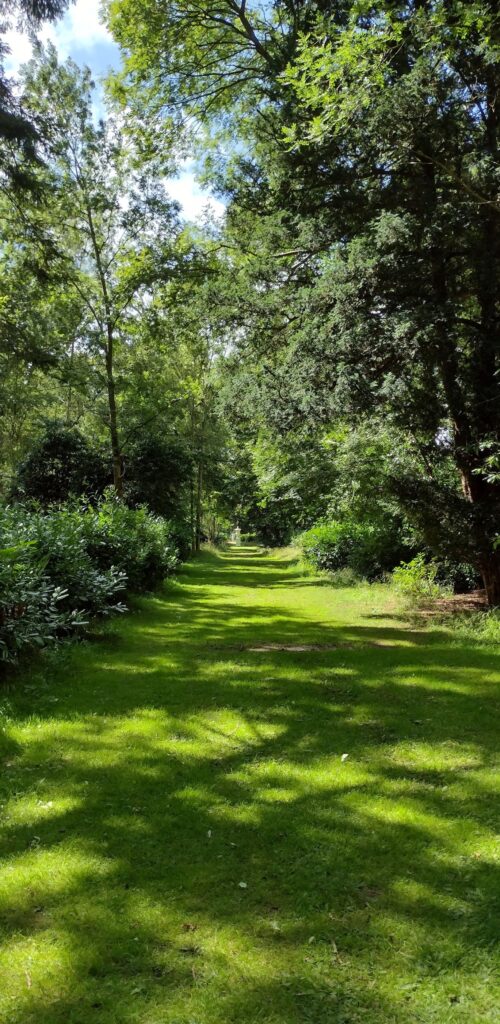
Rarely seen elsewhere in Britain this is an exceptional feature of Wrest and salutes the French style seen at Vaux and Versailles. So impressive was this garden that future generations of the family, whilst making some changes of their own in other areas, always tried to maintain and respect the ‘Great Garden.’ Even Lancelot ‘Capability’ Brown when he was employed to ‘soften the edges’ of the garden used a light touch.
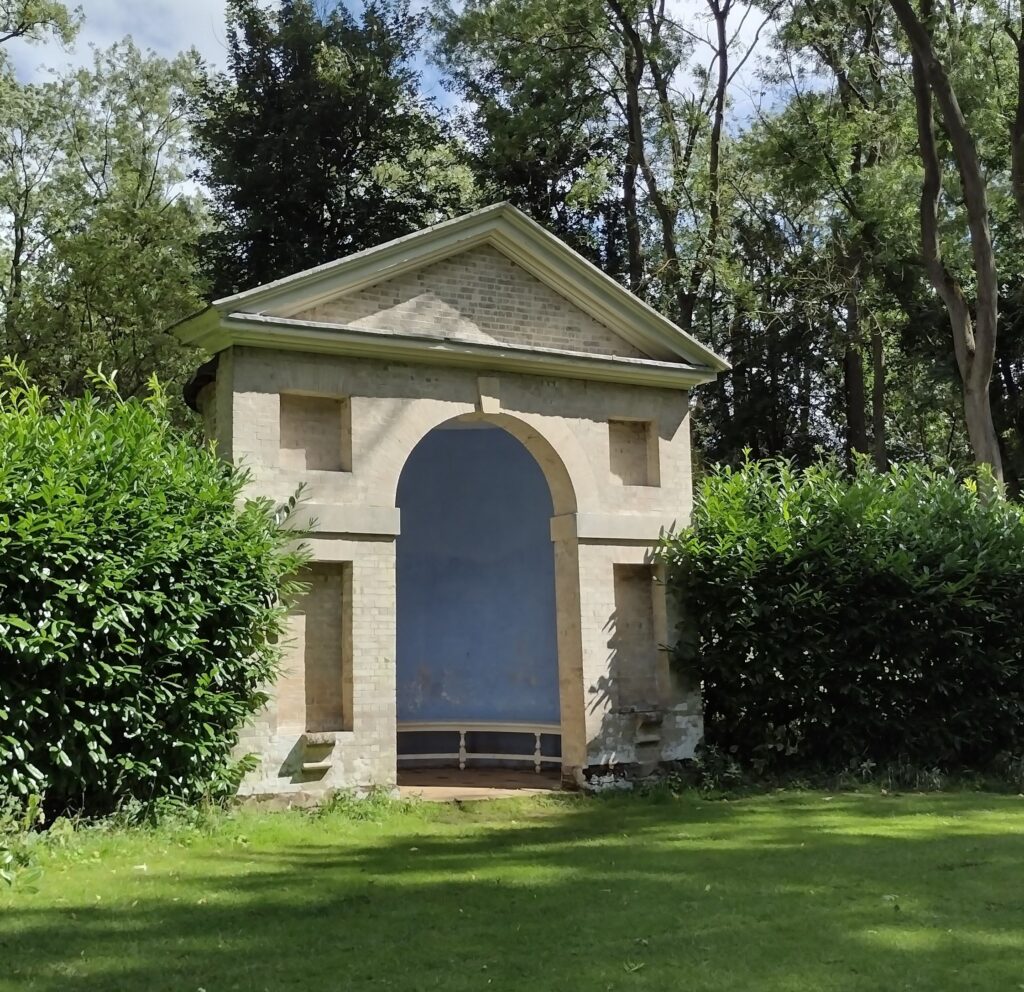
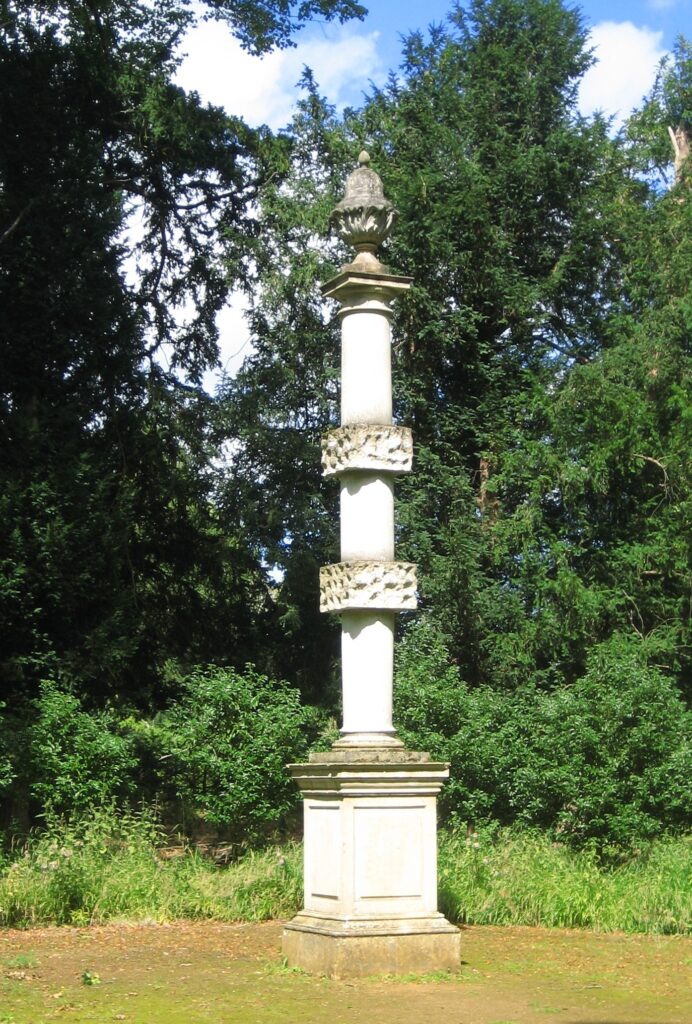
He replaced the original formal canal boundaries with what appears to be a natural winding river. Elsewhere he added the Bath House and a Chinese Temple. His contribution to Wrest is commemorated by a column, impressive in its own right.
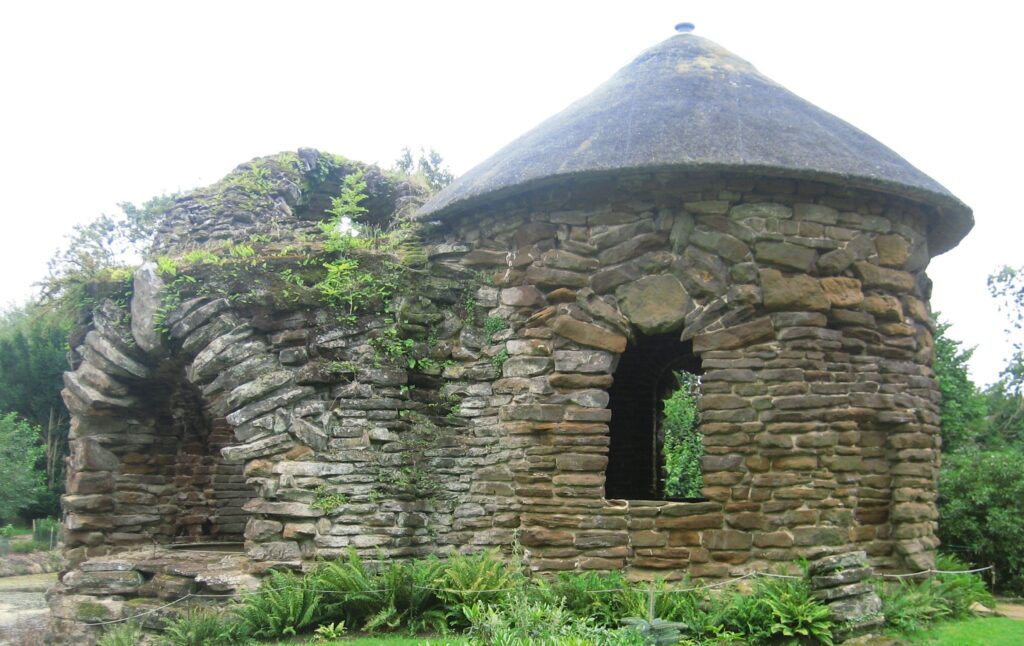
Wrest was the home of the de Grey family for over 600 years. The Long Water was created by Amabel Benn and her son the 11th Earl between 1670 and 1680. This feature still defines the axis of the garden.
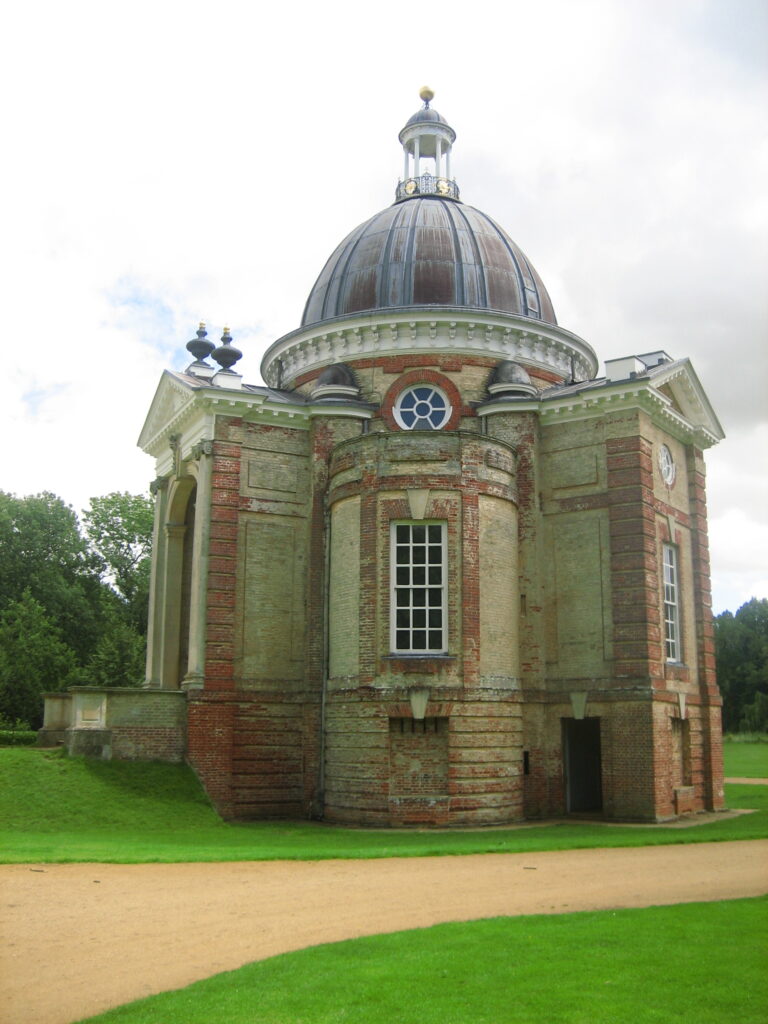
Positioned at the end of the Long Water is the Baroque Pavilion ( 1709 – 1711) designed by Thomas Archer. It was built to be an entertaining venue whilst also providing a focus and viewing points for the garden. The six projecting bays give views along the six main axes of the garden, and the pavilion is aligned centrally to the house.
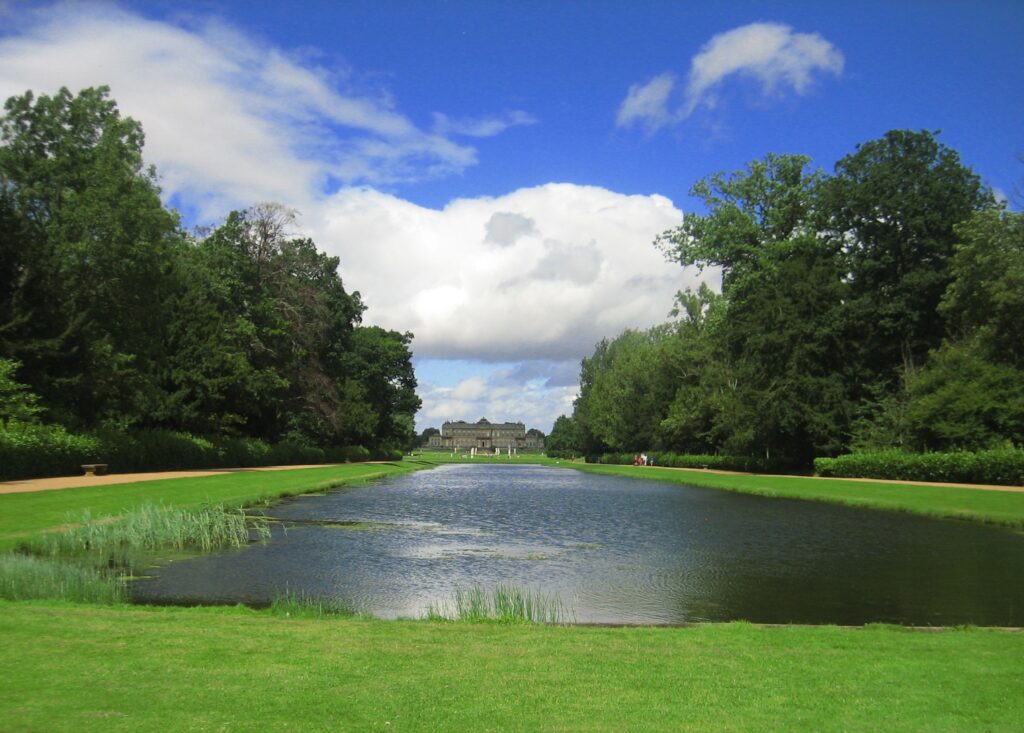
When Thomas ‘Earl de Grey’ inherited Wrest in 1833 from his Aunt Amabel, the house was like many of that time, a mishmash of various styles and extensions. He considered it of no architectural value and decided to demolish it and rebuild 200 metres north of the original to allow the development of more garden. He was an amateur architect and had travelled widely. He had a special fondness for Paris and its buildings but as far as we know Wrest is the only example of him building in the French Style. He always had books written by three French architects to hand and their names appear on a motif in the house in recognition of their contribution.
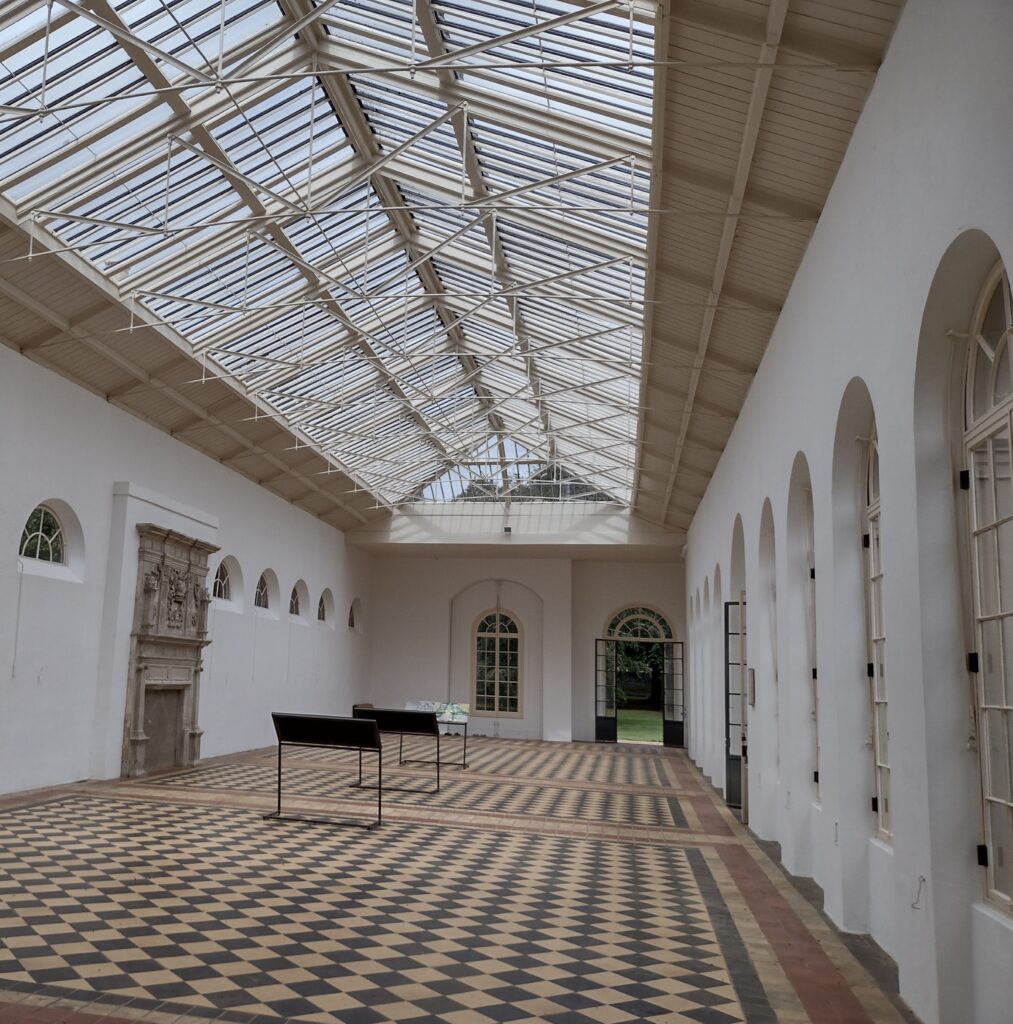
Finally the Orangery caught my eye, sadly I was not prepared to take a photograph of the exterior which would have included the ice cream kiosk, poor siting I feel! This was designed by de Grey and constructed in the 1830s. At the end of the nineteenth century it was reported to house some of the largest orange trees in the country. It has two concealed full height doors and floor tracks , which allowed these to be moved outside for the summer.
Wrest Park is beautifully managed by English Heritage , and I have only mentioned a few of its delights. The combination of brilliant historic garden design, flamboyant architecture and sympathetic planting make it a place that as Michelin guides would say is ‘ worth a journey.’
Article by Gillian Taylor
All photos ©Gillian Taylor