
On a recent trip to see friends in Devon and Somerset we visited two contrasting gardens. The first was Hestercombe Gardens, an independent charity and RHS Partner garden near Taunton, Somerset, and the second was Burrow Farm Gardens, a privately-owned garden near Axminster in Devon.
Hestercombe
Hestercombe is a large 900-acre estate and mansion house which the Warre family acquired in 1391 and occupied for about 500 years. The landscape garden was first recorded in 1761 as a beautiful example of an Arcadian landscape. It had been designed by the owner and landscape painter, Copplestone Warre Bampfylde to emphasise the pastoral views.
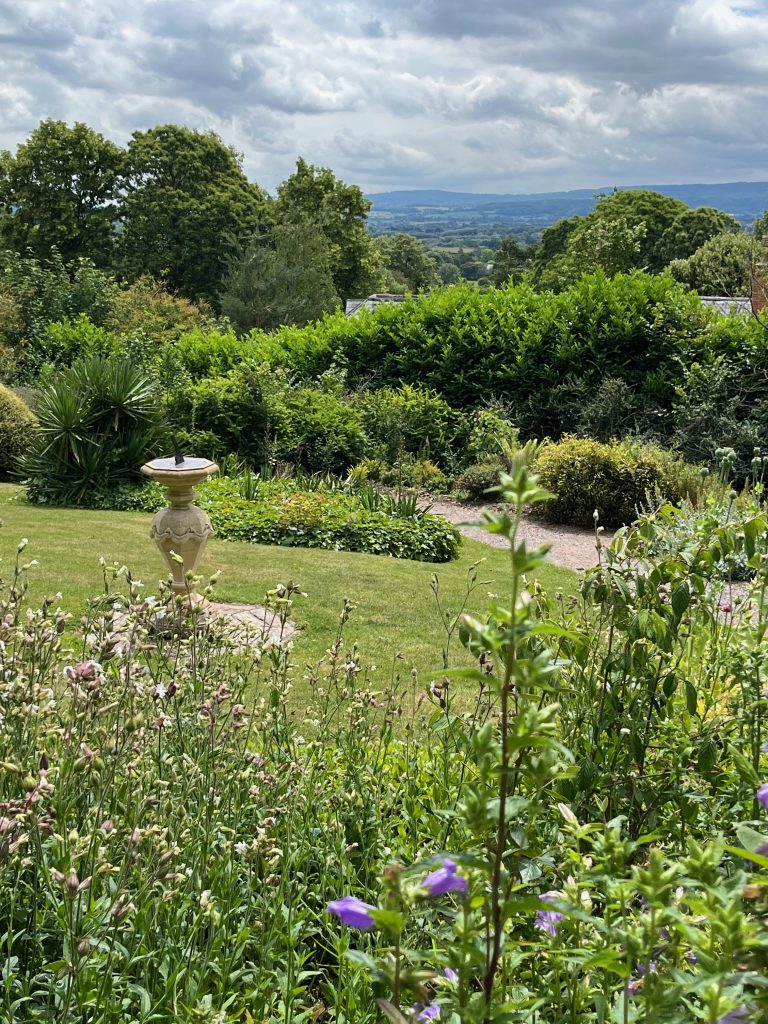
In the late nineteenth century Lord Portman bought the estate, renovated and remodelled the mansion house and introduced more formal gardens, as was the style at that time. A new terrace was created at the front of the house with centrepiece fountain. This is now known as the Victorian Terrace.
At the turn of the twentieth century the new partnership of Edwin Lutyens, architect, and Gertrude Jekyll, garden designer, were invited by the Portman family to design a new flower garden below the terrace, along with a walled kitchen garden. The stone for the new garden was sourced from the estate and at the time seventeen gardeners and ground staff worked on this and the estate. Sadly, as with other estates the First World War decimated the garden staff and in the Second World War Hestercombe was acquired for use by the 8th Corp Rear HQ, with telephone exchange and battle HQ. After the war part of the estate was sold to the Crown Commission to pay for death duties, and after the last Mrs Portman died they assumed control of the whole estate.
In the 1960s the landscape gardens were clear-felled for commercial timber and replanted with Forestry Commission money to grow more commercial timber, but in 1991 Philip White discovered the derelict garden and began a restoration project to return Hestercombe to its former glory of landscape and formal gardens. The ponds and cascade were restored, new planting took place and in 1997 Hestercombe Gardens Trust was formed and the gardens opened to the public. Subsequently, Heritage Lottery funding helped in the establishment of the gardens and development of a visitor centre.
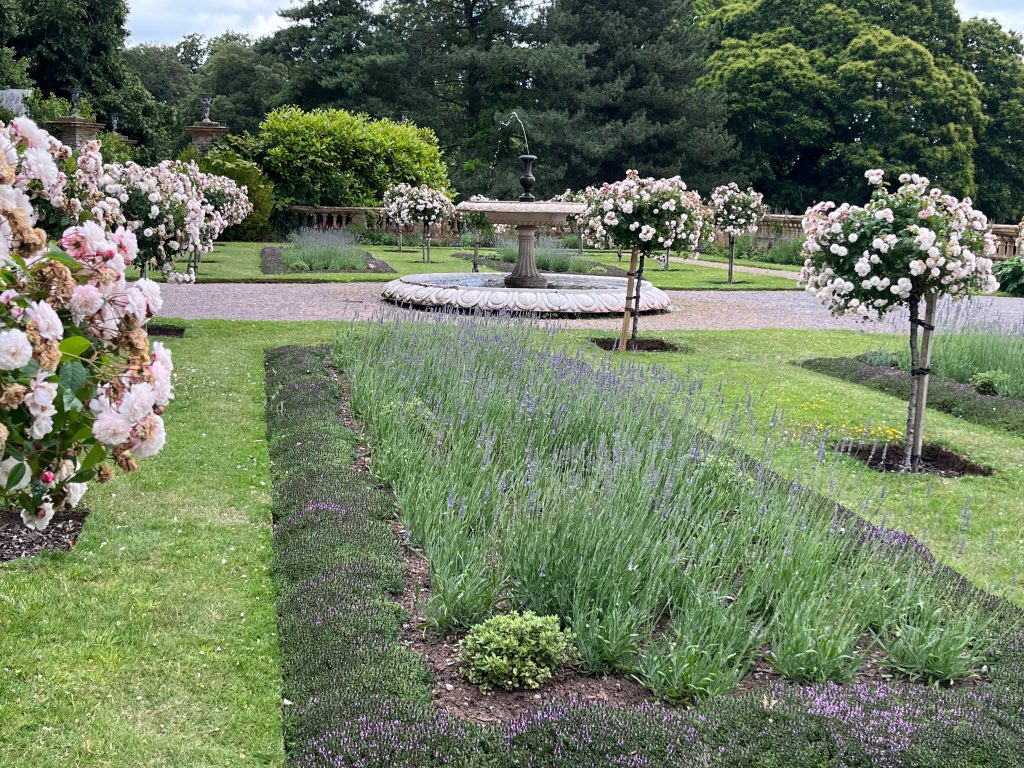
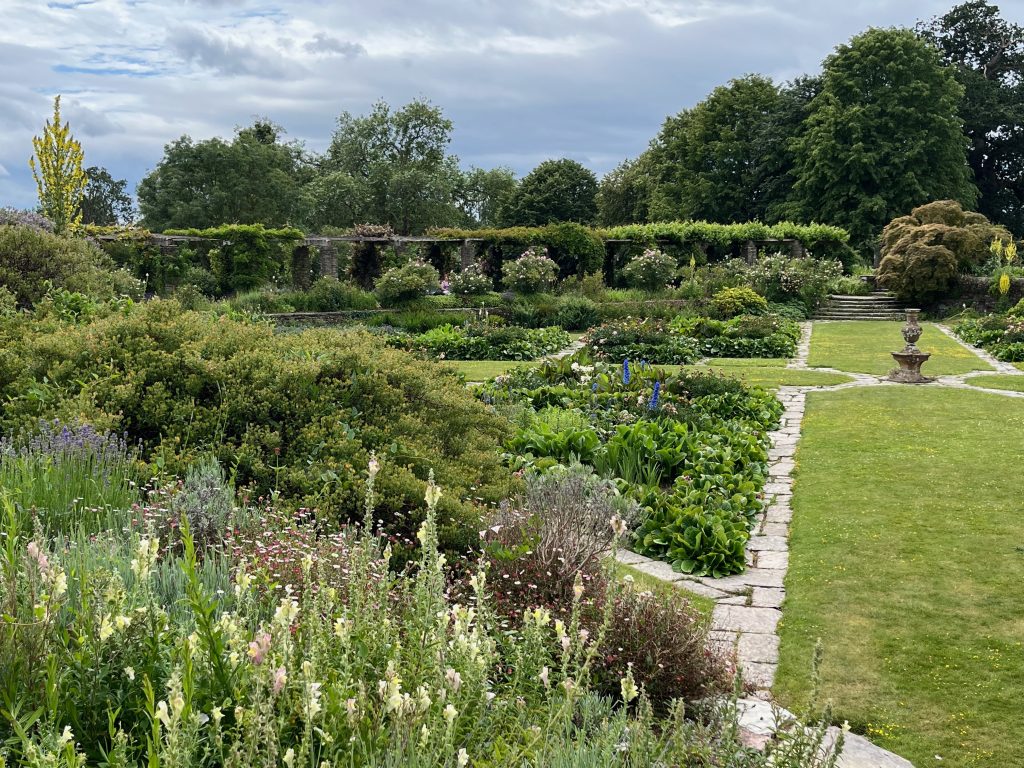
Hestercombe is a large garden to walk around but we started in the Georgian Landscape garden, watched swans and ducks on Pear Pond, visited the octagonal summerhouse and appreciated the views as we headed up a gentle hill. We passed the impressive cascade and tested out the many alcoves, seats and temples placed for relaxation and reflection. Heading back down towards the house we came to Mill Pond and more formal gardens, the first being a small Dutch Garden full of soft grey Lambs Ear, or Stachys byzandtina, lavender, roses and yucca. From here we walked past the empty orangery building, which these days is used for events, to the Victorian terrace with its fountain and white standard roses, lavender, thyme and lawn, down steps to the large Great Plat with a rose pergola at the far end.
The formal beds were filled with Bergenia, roses, peonies, poppies and Verbascum. It did not feel very Gertrude Jekyll as there were no drifts of colour although the planting did soften the hard-stone steps and rills and the information, such as it was, did note that Jekyll planting plans were regularly followed. The season was early this year and we had missed the flowering of the Bergenia and peonies so perhaps this was the reason for the lack of colour.
Burrow Farm Garden
The second garden we visited, Burrow Farm Garden, was very different and of the two we enjoyed it more. It was much smaller at only thirteen acres, but landscaped with wonderful views, lawns, colourful borders, lake and wildlife ponds, rose garden, grasses garden, a courtyard and terrace garden.
It is a private garden owned by John and Mary Benger who bought it as a farm in 1959 and built the garden from scratch as a hobby project. The first formal area to be built after all the clearance of scrub and tree planting was the rose garden in 1985.
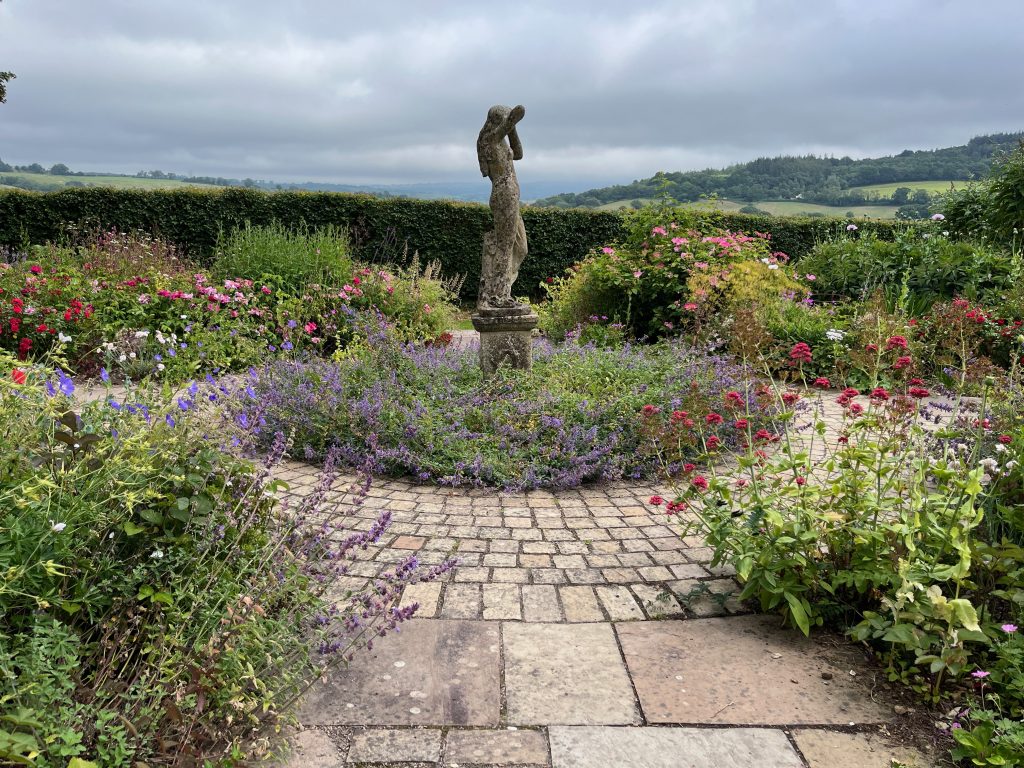
The gardens at Burrow Farm are full of colour and informality plus some good choices of unusual trees. We were very taken with the
Cornus kousa trees of different colours and habit. Particularly stunning was a pale pink coloured one which moved gently in the breeze.
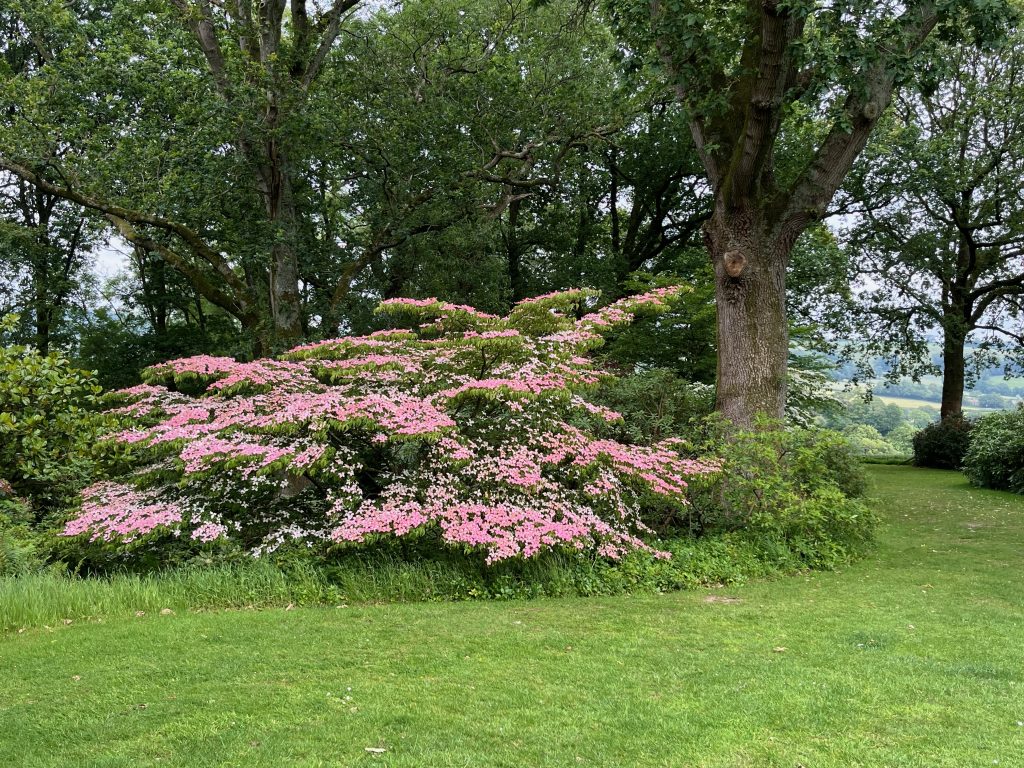
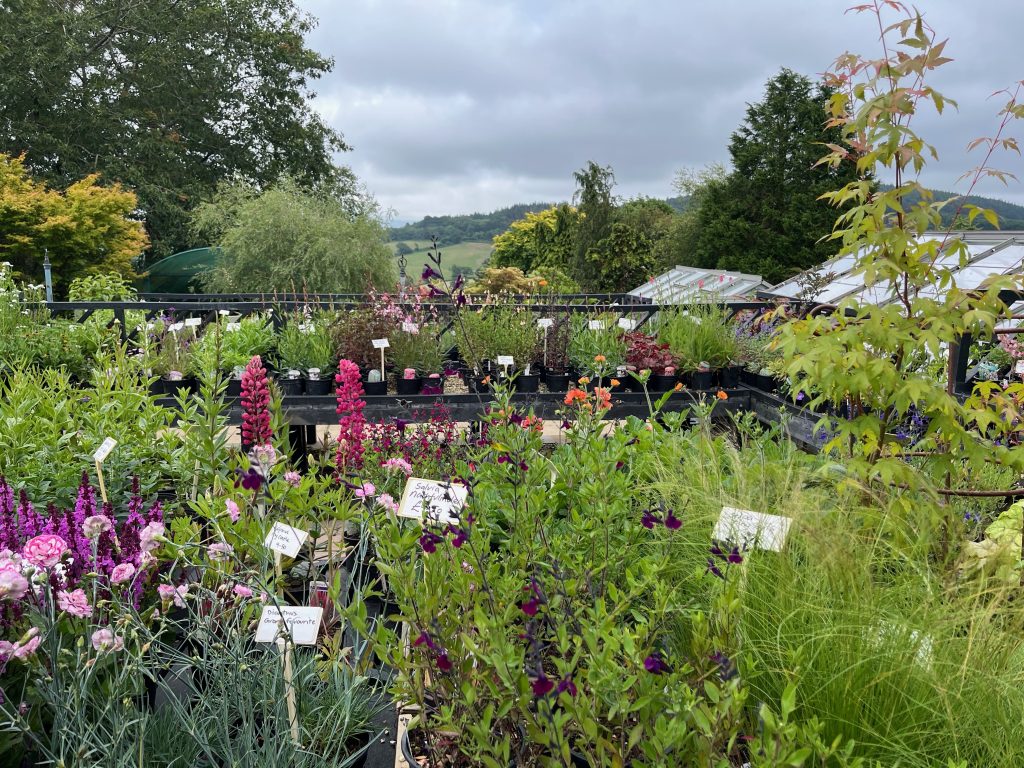
There was a mass of Erigeron daisy, self-seeded into, and softening, steps and terraces and generally a lot more colour in the herbaceous beds than at Hestercombe, perhaps due to the planting being looser and more modern. There was a good nursery offering most of the plants we had seen, iron work garden sculptures for sale and an excellent tea room, all with helpful chatty staff. The farm is of course very rural, situated at Dalwood, Axminster, in the Blackdown Hills overlooking the Axe Valley, hence the stunning views.
Article and photos by Maggie Weir-Wilson