
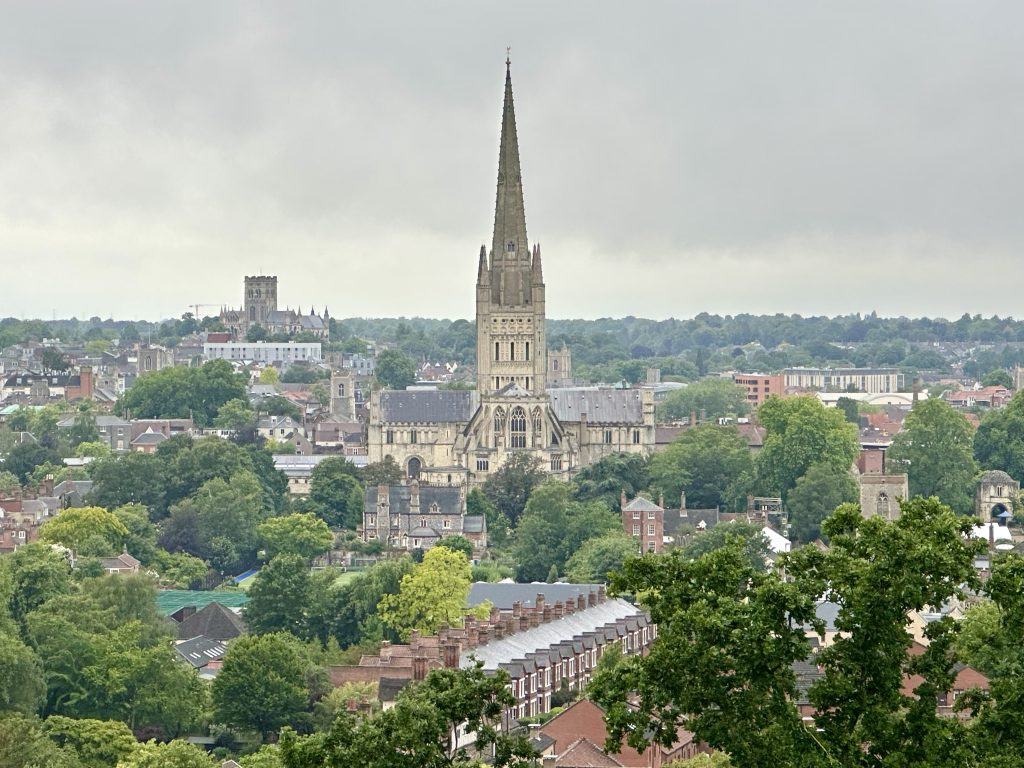
CGT members arriving in Norwich the day before the GT Annual Conference were invited by Norfolk Gardens Trust for a tour of ‘one of Norwich’s best kept secrets’: a designed landscape high above the city on Mousehold Heath and thought to be the only extant designed landscape associated with a gasworks.
Kett’s Heights
The site takes its name from Robert Kett, who led a rebellion in Norwich in 1549 and from where his 10,000 followers had a strategic view of the city as they planned their siege. Kett was a wealthy landowner who sympathised with the farmers rebelling against the land enclosures taking place in Norwich and across the whole country. On the 27 August a battle took place in the city between Kett’s rebels and the Earl of Warwick’s army. Kett’s men were well armed, but defeated and it is thought 3,000 of them were killed. In December 1549 Robert Kett was hanged from the walls of Norwich Castle.
The Gas Company of Norwich was established in 1830 and owned Kett’s Heights which they developed into gardens for their workers. The workers were allowed to keep pigs there during the second world war, with the Pig Club members keeping half of the meat for themselves and half going to support the government’s food rationing scheme.
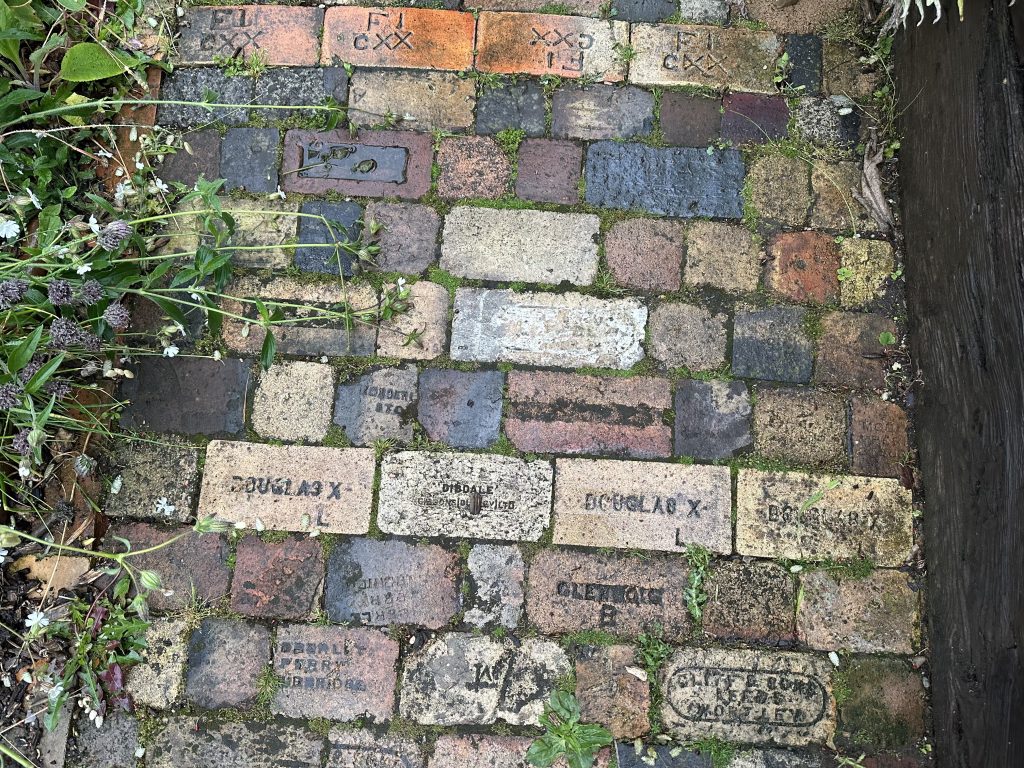
Following the closure of the gasworks the landscape of Kett’s Heights was taken on by Norwich City Council in the 1980s, but became overgrown and neglected. Since 2015 a Friends group has worked with the council, creating a community orchard, clearing paths, restoring the view points and more recently creating a new step-free entrance. The walls throughout Kett’s Heights reveal a wide variation in the building materials – flint, clinker, stone, and the old bricks recycled from the gasworks were used to create retaining walls for the terraces with haphazard patterns. There are even curved bricks in the walls, recycled from retort pipes used in the making of gas. Original named bricks can be seen in a long seat and pathway in the herb garden, and research by the Friends group has revealed the history of some of these brickworks.
When a group of us assembled at ‘the piggeries’ on Kett’s Heights, on a gloomy evening with the threat of rain and beneath an overcast mouse-coloured sky I must admit the thought of a comfortable hotel room was alluring, but this tour, led expertly by John Trevelyan from Norfolk GT, revealed so much history of Norwich within a small green space and a spectacular view of the city that I was glad to be a part of the best kept secret.
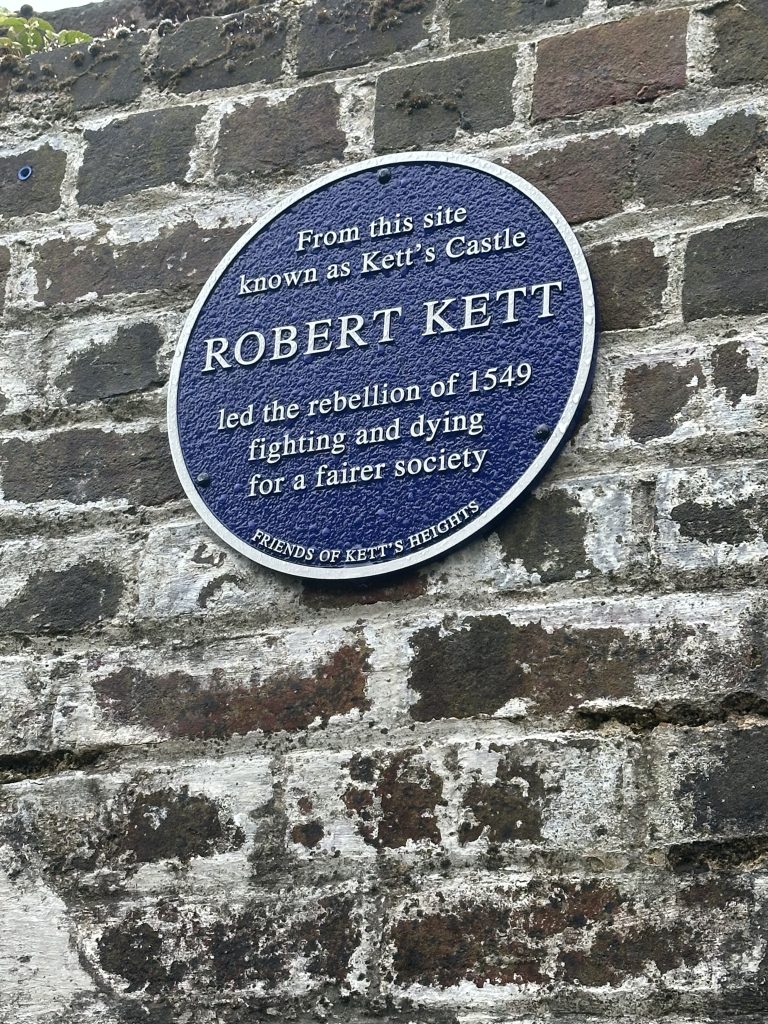
A blue plaque was unveiled on the ruin walls of St Michael’s Chapel at Kett’s Heights in 2025 to honour his memory. Until the twentieth century Kett was seen as a dangerous traitor who deserved his fate, but from the 1950s he has been viewed more favourably as a champion of the oppressed, and his memory celebrated.
Find more information at www.kettsheights.co.uk and about Robert Kett here.
The Plantation
Another garden in Norwich, once hidden from view for many years, is the Plantation, which not unlike Kett’s Heights grew out of an industrial site and made use of old waste bricks for its walls and pathways. The Gardens Trust had arranged a tour of this garden, at the end of the conference, with local volunteer guides. In the mid 1800s Henry Trevor created this garden within a quarry, in a uniquely personal style, bringing together Victorian fashions for bedding plants, Italianate style terraces and even rustic gothic structures.
Henry was a successful business man in Norwich, who took over the lease of the chalk quarry in 1855 and built a house there which he called The Plantation. Our very knowledgeable guide explained that the house cost £2,000 and from the windows he would have seen the Roman Catholic Cathedral across the road at an early stage of its construction. Henry set about transforming the quarry into an enchanting garden for his family and visitors, creating flower beds and winding pathways through woodland, ruins and follies, an ‘Italian’ balustrade and a ‘Gothic’ fountain with lily pond (with hundreds of tadpoles when we were there). Using an assortment of materials, he built greenhouses, a summer house and a palm house. The summer house has been restored but the palm house no longer exists, although flower borders mark the outlines of the original building. Perhaps the most striking feature in the garden is an Italianate style terrace using recycled bricks from the Costessey brickworks, a nineteenth century brickworks in Norfolk famous for its decorated bricks and chimneys. Our guide pointed out a number of amazing patterns on the walls made from flints and bricks.
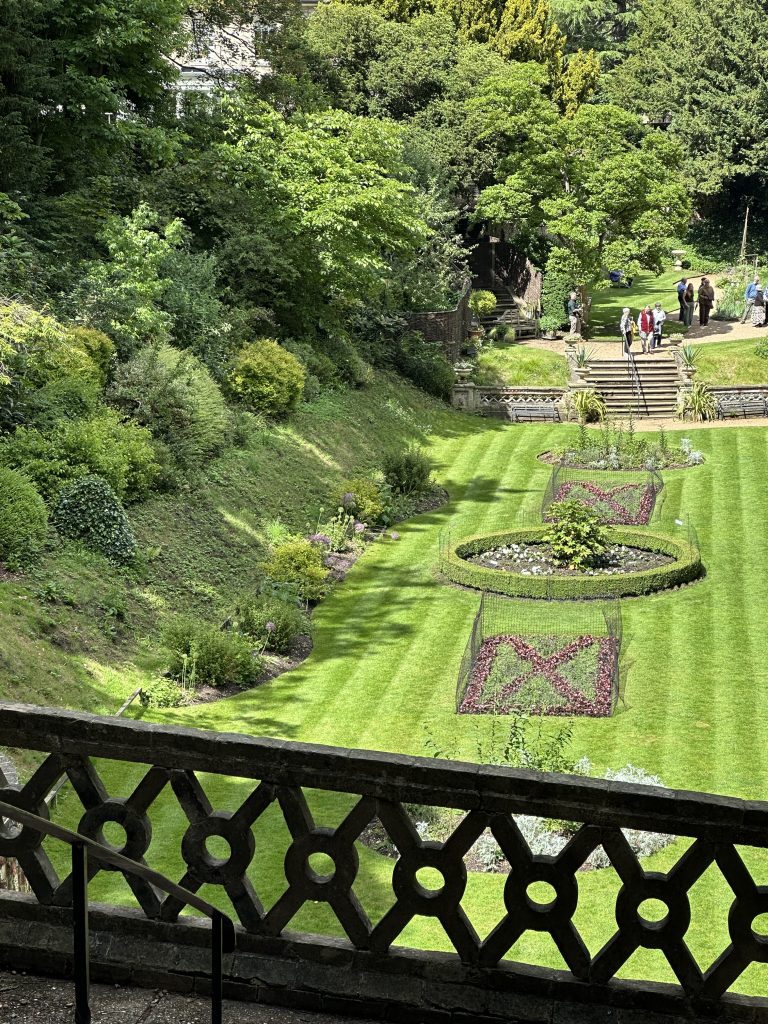
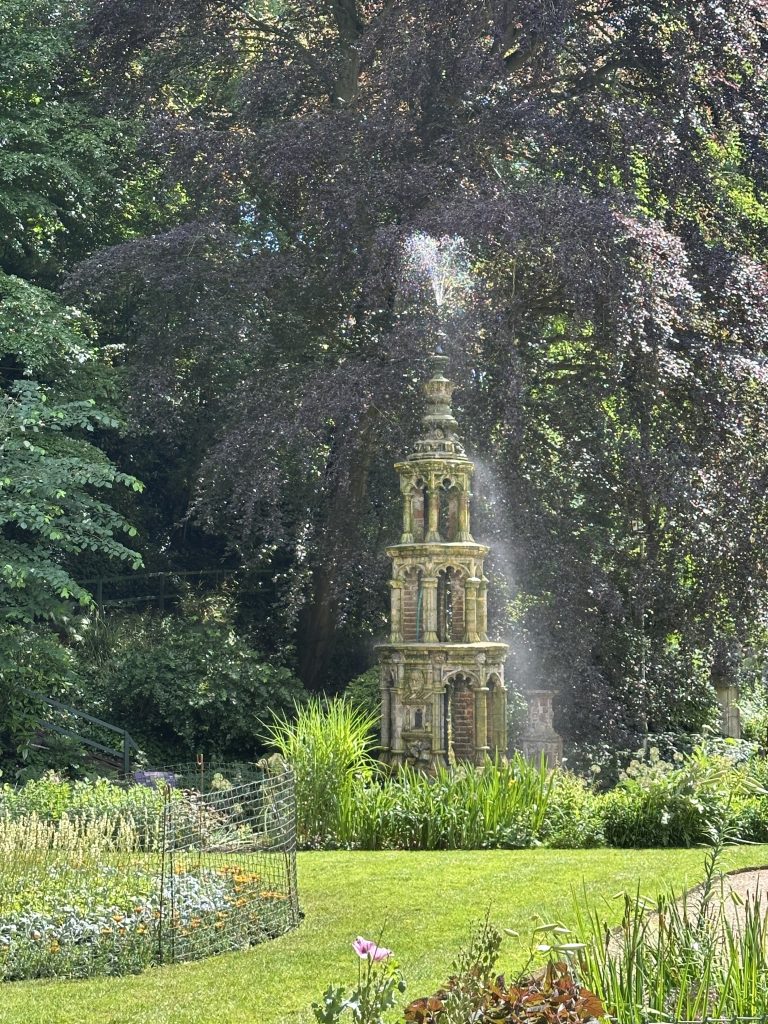
After Henry’s death in 1897 his wife continued to live in the house, but when it was sold and occupied over the years by different owners the garden became neglected, overgrown and lost to sight. In 1980 a group of enthusiasts and volunteers rediscovered the garden and the Plantation Garden Preservation Trust (PGPT) began a long process of restoration, stripping away years of overgrown ivy and weeds, rebuilding the retaining wall, the summer house, the fountain, rockworks, and replanting.
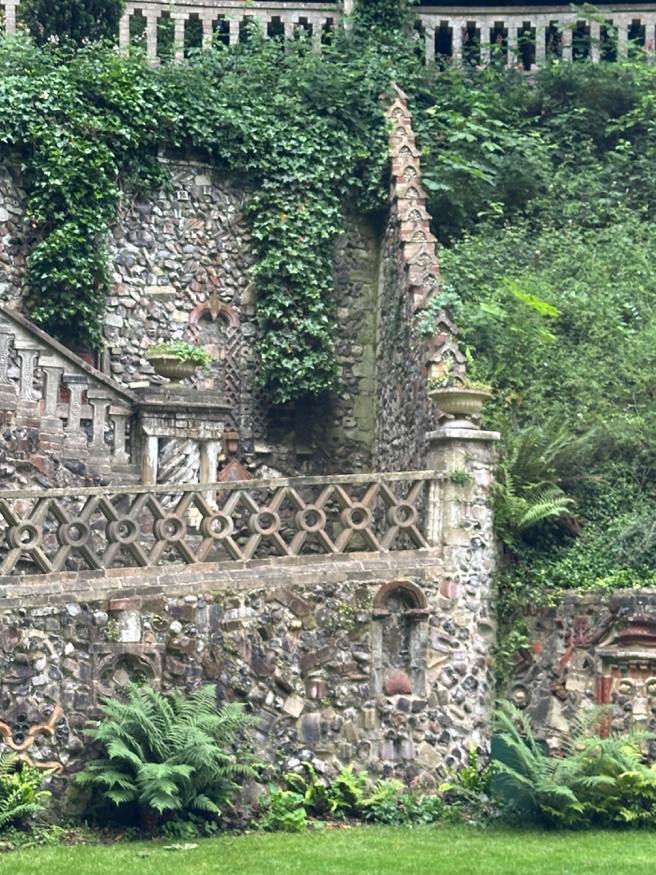
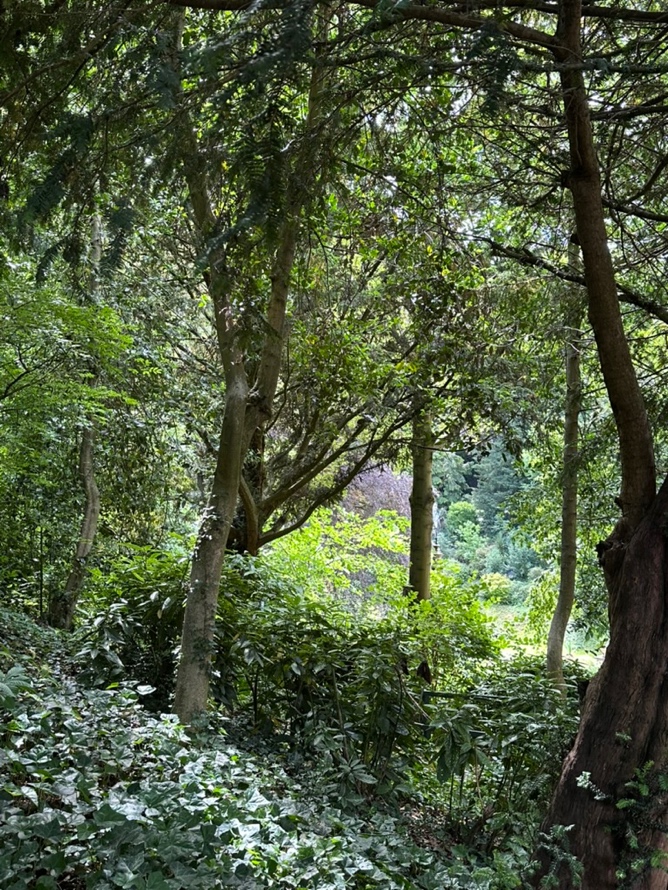
There is an extensive online archive of photos and much more history about the Plantation Garden put together by the PGPT here.
North Norfolk is known for some grand stately houses and gardens: Blickling, Felbrigg, Holkham, Sandringham. But if you are visiting Norwich, I would recommend these two public gardens, offering green spaces of calm in the centre of the city, valued by the community and each with a fascinating history.
Article and photos by Sally Ingram