
A report on the work to repair and conserve the windows of the glasshouses, supported by a grant from the Sussex Gardens Trust Small Grants Award.
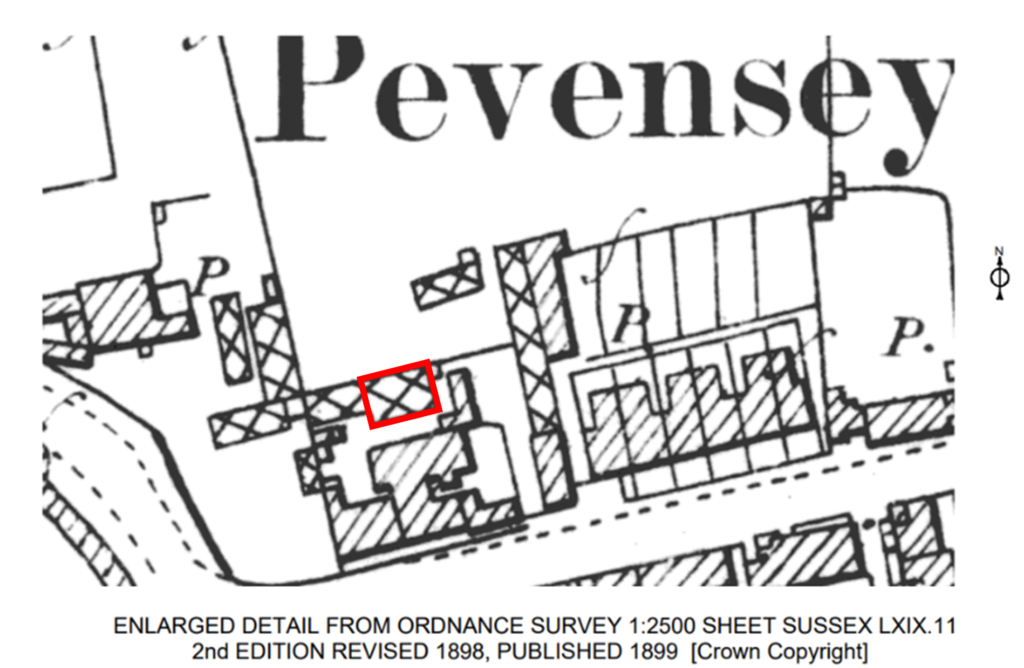
The Glass House attached to the rear (north eastern) wing of The Mint House, in recent times known as The Orangery dates to the last quarter of the nineteenth century[1] and was likely utilised as a hot house for growing delicate herbs or more likely exotic flowers. It is the remaining part of a range of greenhouses (see map above) and heated glass houses used as part of a market garden business run for a time by a William Hermon.[2]
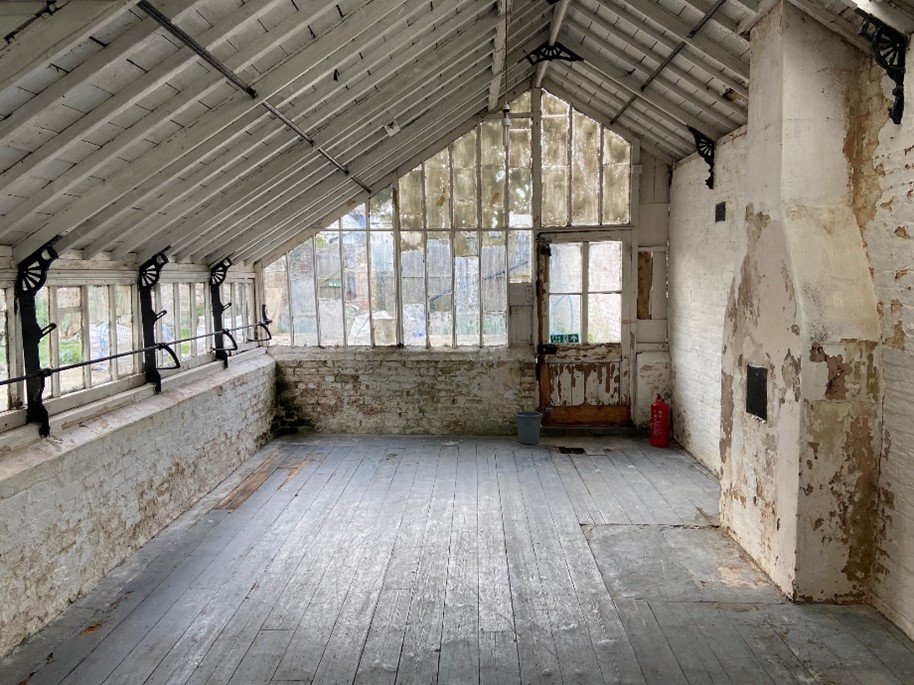
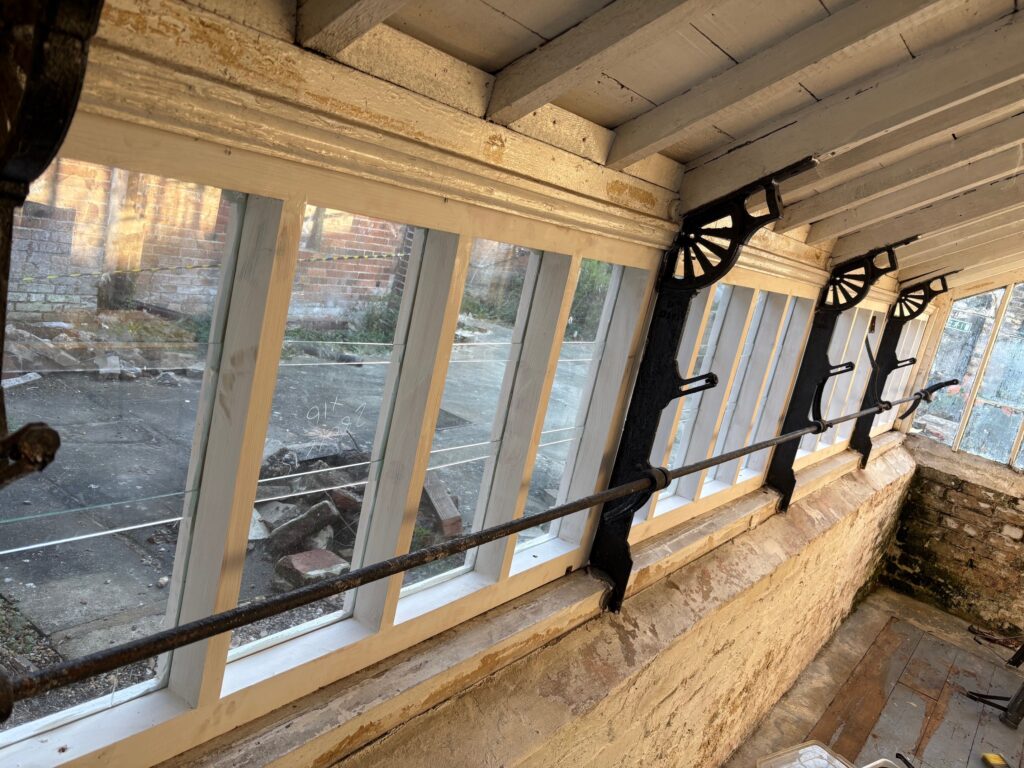
The south-facing long window is typical of this period and incorporates a cast iron opening method whereby a single lever controls all the windows which pivot on an upper hinge. Also notable is the style of glass (single pane) and the overlapping method used as it has been placed within the wooden frames.
The presumably glass paned roof has been replaced with corrugated metal in the later twentieth century and the internal stove has been removed, though the chimney, flue and some iron pipework remains.
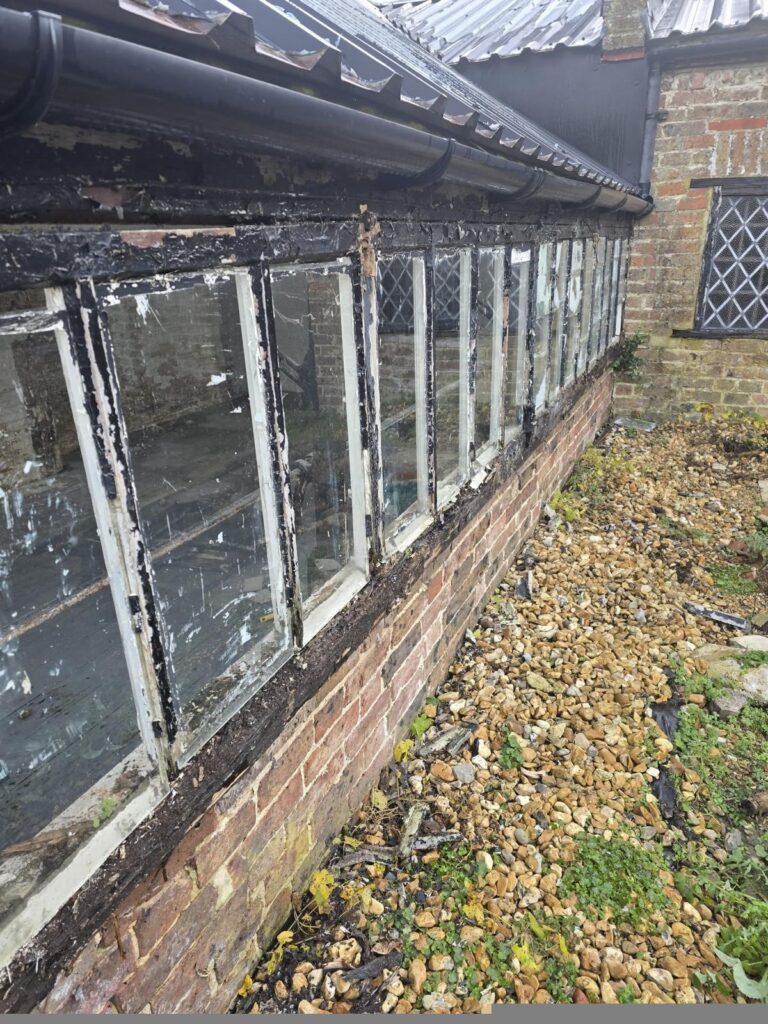
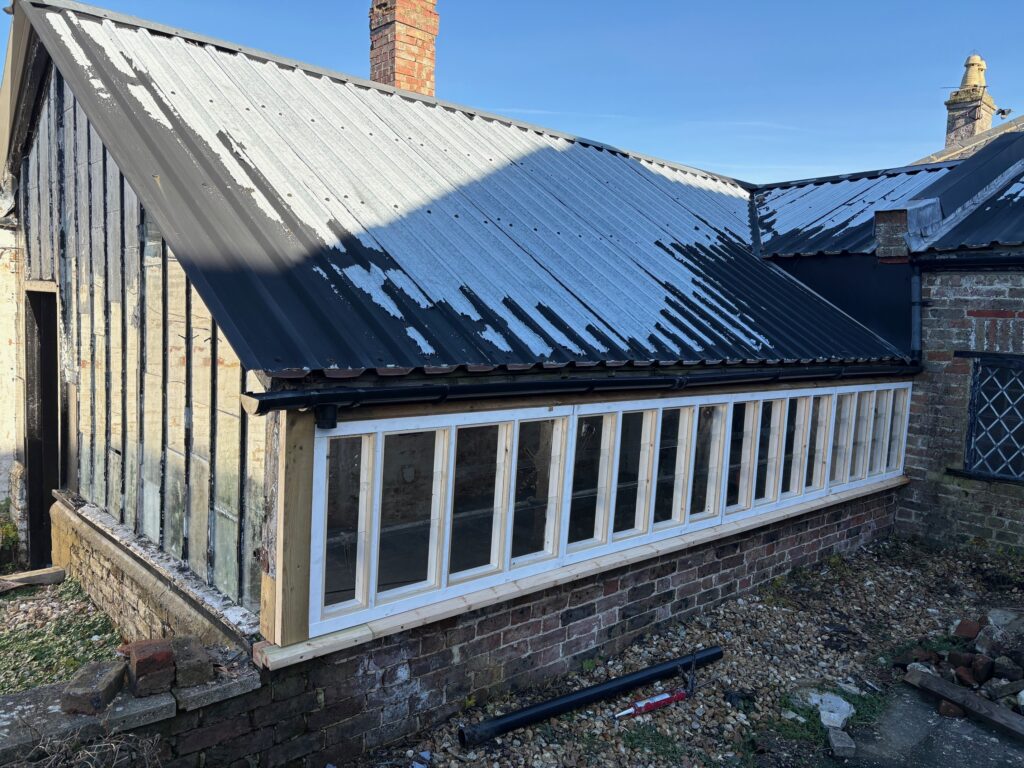
When the building was purchased by the current owner the long south window was already in a state of disrepair and the intervening years have caused the wood rot to disintegrate. Given the risk of the window collapsing and causing damage to the surrounding woodwork (which was still in good condition) it was decided to bring forward remedial repairs ahead of the planned work on the main building in 2026/7.
The existing window was carefully removed so as to conserve all available parts that were not rotted, including the glass panes that were still fully intact (including fully formed edges). Unfortunately, during this removal work it was discovered that much more of the woodwork was rotting internally and not visible from the outside so much less of the original framework could be saved than previously thought.
However, any remaining wood was carefully treated with a wood-rot inhibitor and used to support the new framework and glass. The end result being a beautifully restored window which includes all the surrounding frame and uprights.
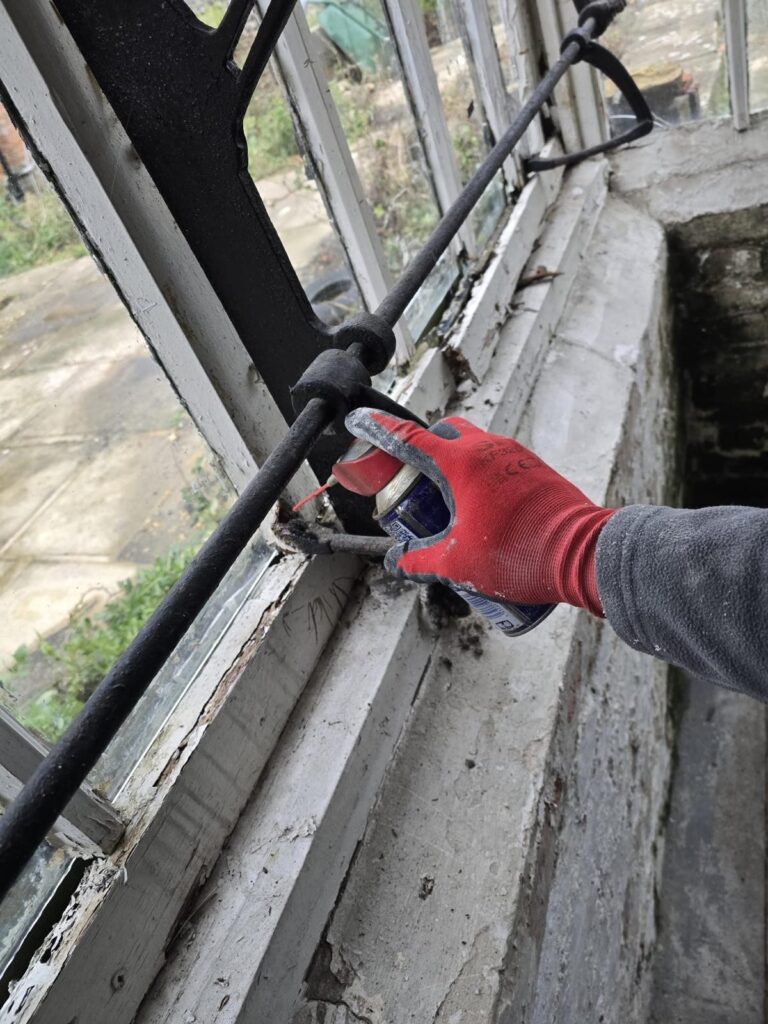
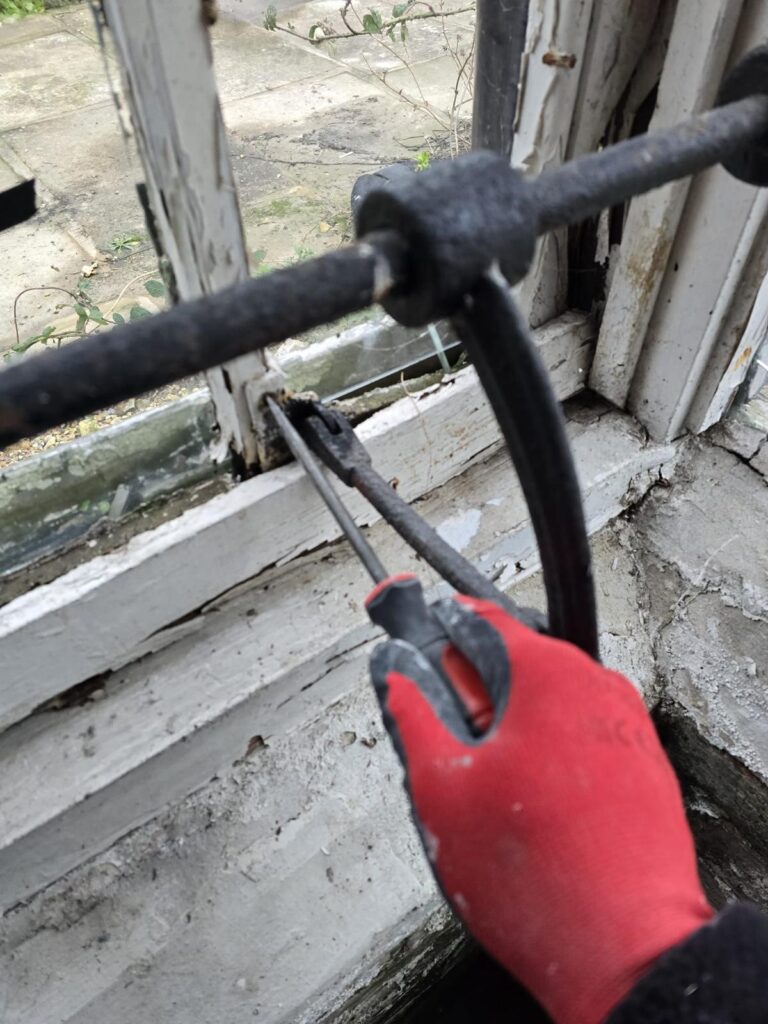
For the restoration of the metal controllers, separating the rotten frame from them was very time consuming and involved careful dislodgement of the heavy paintwork while spraying WD-40 periodically to work loose the mechanism.
The original plan was to boil the paint off the cast iron metalwork as this would have been the least instructive method (boiling water softens the multiple paint layers which can then be carefully pulled off without harming the underlying metal – less stressful than any mechanical method and less toxic than acids). Also, there was over 3mm of paint on some parts which reveals the many levels that had built up over the years which made this restoration slow and delicate.
Once all the ironwork and mechanisms were working it was time to re-attach to the restored window. The existing screws were kept, cleaned and reused and the ironwork has been reattached to the renewed woodwork. In early 2025 the mechanism will be put into fully working order with the end result a renewed and useable window.
The carpenter that carried out all this work was Devon Woodhouse from DW Carpentry, a London based firm established by a very skilled carpenter who learnt his trade in Jamaica.
The Glass House is still undergoing work including the continued, painstaking removal of the white bathroom paint from the brickwork (about 70% complete) which has revealed a series of limewashes over a terracotta-coloured lead-based undercoat. Due to the nature of this base coat it is likely that the walls will have to be treated with a thin coat of limewash to seal it, but still stow the detail of the beautiful brickwork and wall finishes. The flooring will be looked at again in 2025 as the costs fall outside the currently available funds.
Article by Jason Rolph and prepared by Jonathan Seaman
[1] The structure does not appear in the maps dated 1875 but is present by those of 1898
[2] More research is needed into this commercial aspect of The Mint House story and it is hoped that the Sussex Gardens Trust will help with some of this