
Other people’s gardens can give one great joy and one can learn so much. Maude Haworth-Booth, 1934.
A recent report published by the Gardens Trust, Harnessing Parks and Gardens in the 21st Century, asks: ‘who will be the garden visitors of the future’? Unsurprisingly, the report found the majority of visitors to gardens are the over sixties, although there is an increasing appeal for garden visiting by a younger generation, seeking the benefits that a garden can bring, both physically and emotionally. But these visitors want something beyond just the plants. Many notable parks and gardens have needed to upgrade their facilities for eating and drinking, or family-oriented attractions, and invest in new infrastructure to generate income.
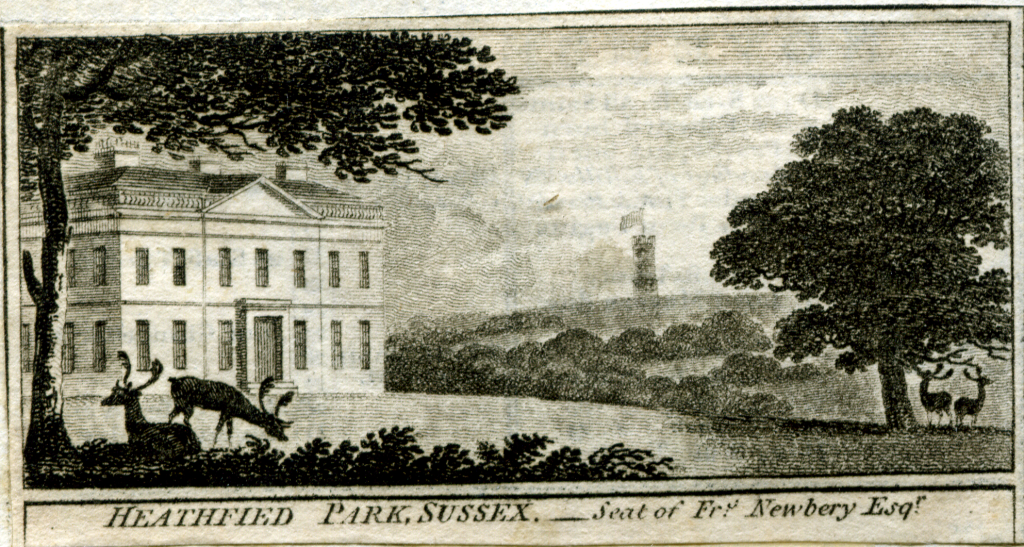
Humphry Repton might be one of the first landscape designers to consider enhancing the experience for the visitor as much as for the owner. Called upon to ‘improve’ Heathfield Park in Sussex in 1794 he insisted the long drive up to the house could be monotonous for ‘strangers’ who would be more engaged by a variety of walks, a direct pathway or a twisting route so that distant views could be enjoyed, connecting ‘the scattered beauties’, and including ‘new and pleasing objects’ Even the placing of seats had to be carefully considered, not only for the view to be appreciated, but so that the discerning visitor felt refreshed in body and mind.
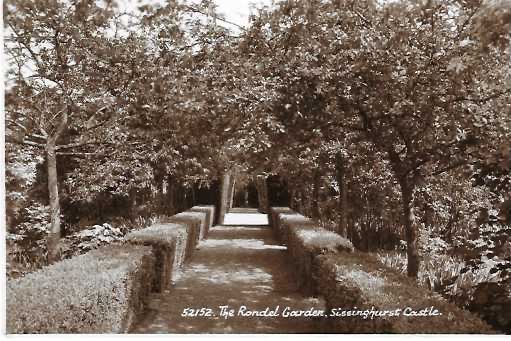
Country houses began regularly opening their doors to visitors in the 1800s, when the ease of travelling by train and the increasing amount of travel literature made tours of the country an experience not unlike undertaking the Grand Tour of Europe in the earlier century. Visitors recorded their impressions in letters and diaries of grand houses such as Chatsworth, Wilton, or Hatfield. By the mid 1900s the experience of garden visiting had become more democratic, when the public, encouraged by the founding of the National Gardens Scheme in 1927, could discover private and personal gardens open for just one shilling. Vita Sackville West at Sissinghurst was one of the first to join the NGS, opening her garden in 1938 for one weekend and the following year had 800 visitors. By 1948 the garden was open almost every day in the summer, Vita apparently enamoured by her audience:
It is a real experience to open one’s garden to the public. In a sense you might think it a desecration, a violation of one’s patch of private peace. ‘How offensive’, you might think, ‘to have eight hundred strangers straggling all over one’s very personal property!’ You would be wrong. It is a pleasure; even a form of flattery.
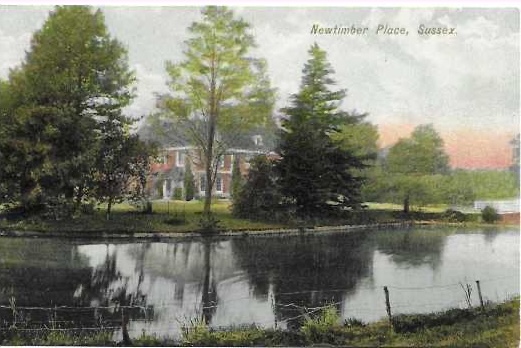
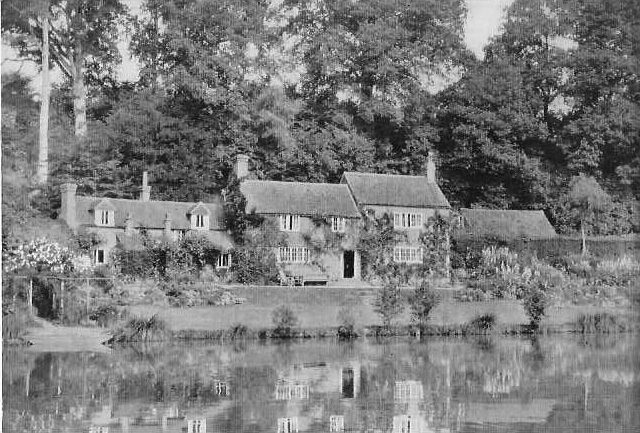
Garden visitors could experience many innovative gardens in Sussex – think of the Loder family travelling between their gardens at Wakehurst and Leonardslee, collecting plants and shrubs, or Queen Mary visiting the chalk garden created by the Sterns at Highdown. And those making a garden of their own visited other gardeners. Maude Haworth-Booth had started her new garden at The Mill House near Balcombe in 1934, and between planting a flower border of one hundred and eight feet in length she found time for garden visiting: afternoons at her neighbours’ gardens, a trip to Newtimber Place, recently opened with the NGS, admiring Nymans and Gravetye, where ‘all garden lovers should go … and go often, for Mr William Robinson most generously allows all who will to wander there every Thursday’. Travelling around the county she had no hesitation in stopping by a garden she admired and asking the owners to let her look more closely, meeting the gardeners, all of whom became her friends – Mr Markham at Gravetye, Mr Comber at Nymans – and said she owed all her gardening knowledge to these ‘pukka gardeners’.
Vita Sackville West welcomed such ‘mild, gentle men and women who invade one’s garden after putting their silver token into the bowl’, but would every garden owner appreciate ‘strangers straggling all over one’s personal property’?
For Mirabel Osler, writer and creator of a spacious garden in Shropshire, the visitors could be divided into two kinds: ‘the Gapers and the Crouchers’. The Gapers look all around, they saunter, they change their focus, they leave refreshed, but Crouchers ‘knees bent, specs on’ never sense the atmosphere as they drop Latin names, intent on plant finding, ‘with tunnel vision and a permanent stoop’ and depart without truly understanding the garden.
Mirabel was far from alone in finding irritation with garden visitors. Gertrude Jekyll felt contempt with passers-by for whom everything in the garden was ‘marvellous’ and by her late sixties she was apologising that she could no longer show as many people around the garden who arrived unannounced, as ‘for the sake of health and the reasonable enjoyment of life it is necessary to keep it quite private’.
At her gravel garden in Essex, Beth Chatto also had an uneasy relationship with garden visitors. Showing horticultural students around the garden, she found them ‘astonishingly ignorant about plants … without there being some knowledge and experience of plants and planting, I think much of it will be passed by, not seen’. Her mutual friend and fellow letter writer, Christopher Lloyd, must have sympathised with Chatto, writing to her that showing a group of students around Great Dixter in April 1998: ‘it could hardly have been a duller experience’. He regretted that none of them seemed to be interested in gardening, unlike earlier years when he made such lasting friendships, especially with Fergus Garrett.
The two friends enjoyed visiting other people’s gardens and some years after Chatto had started her gravel garden, they had a day out together at Dungeness, delighting in plants that seemingly survived harsh conditions, like the sea kale, foxgloves, wood sage, santolina, and flotsam and jetsam brought in by the tide. She was surprised when ‘suddenly I realised we were in someone else’s garden … a tall lean figure appeared … it was the film producer, Derek Jarman with a warm welcome for two people he had never met before’. Jarman shared with them his passion for plants that would thrive in shingle, and Chatto wrote that Dungeness gave her ‘a renewed determination’ to continue with her own gravel garden.
Jarman called Great Dixter a paradise because, ‘it’s shaggy. If a garden isn’t shaggy, forget it’. After his death in 1994 Prospect Cottage became for many another kind of paradise – inspiring a great influx of visitors in a pilgrimage, but posing a risk to this garden without boundaries within a fragile environment. Ironically, this is a garden without a café, or toilets, or family themed attractions, yet continues to draw interested visitors from around the world. Balancing the needs of visitors with a sensitive understanding of the history and vulnerability of a particular site is perhaps an ever-present dilemma for those managing gardens as ‘tourist destinations’ in the future. Munstead Wood, for example, recently purchased by the National Trust will surely be popular with garden historians and enthusiasts alike, and while it will need to generate an income, a café or car park would be incongruous with this unique site.
The ’visitor experience’ of the future may be more about biodiversity, or well-being and accessibility than Repton envisaged with his themed walks and drives, but the appeal of other people’s gardens will no doubt continue to inspire the enquiring visitor and the sometimes impatient owner.
Article by Sally Ingram
References:
My Garden Diary, Maude Haworth-Booth, John Murray, 1934.
‘Other People’s Gardens’, Vita Sackville West, Country Notes, Michael Joseph, 1939.
A Breath from Elsewhere, Mirabel Osler, Bloomsbury Publishing, 2012.
Dear Friend & Gardener: Letters on Life and Gardening, Beth Chatto & Christopher Lloyd, Frances Lincoln, 1998.
Beth Chatto’s Gravel Garden, Frances Lincoln, 2000.
Humphry Repton in Sussex, Sussex Gardens Trust, 2018.
Gertrude Jekyll in Sussex, Sussex Gardens Trust, 2021.
Derek Jarman’s Garden. Thames & Hudson, 1995.