
The CGT volunteers attending the Gardens Trust Conference in Sheffield in July had a wonderful opportunity to visit the Botanical Gardens, with a tour organised by Jill Sinclair of Sheffield GT, together with volunteer guides from the Friends of the Botanical Gardens. This extensive green landscape together with two smaller urban gardens form a rich part of Sheffield’s history.
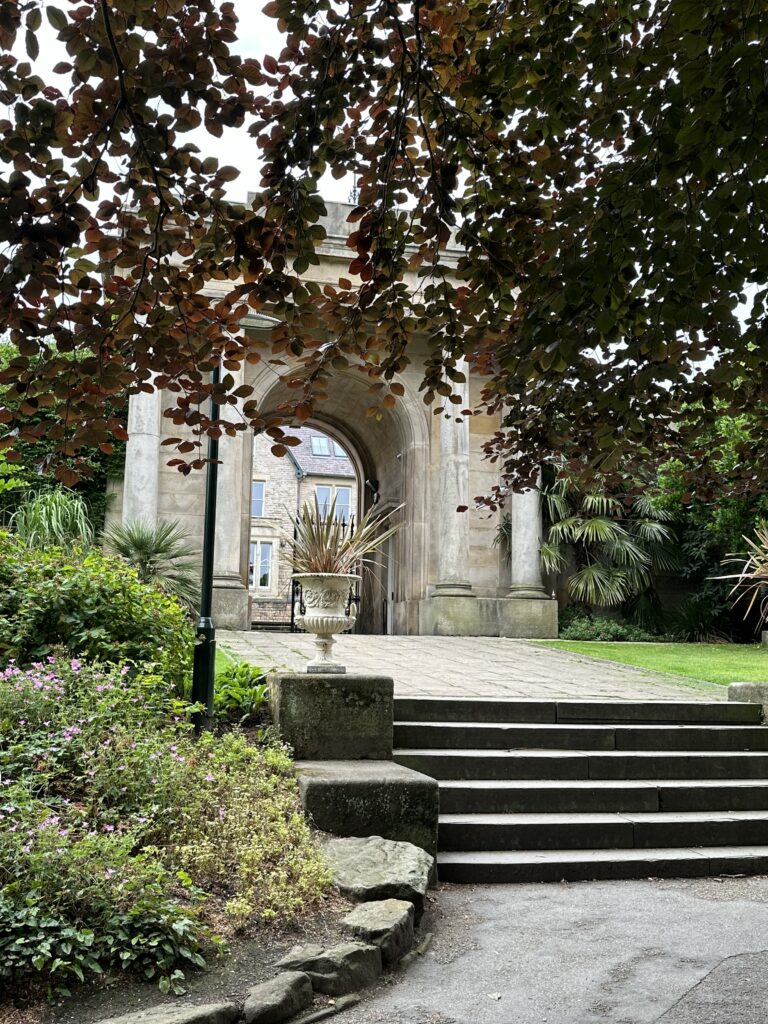
The designer and first curator of Sheffield Botanical Gardens was the landscape gardener Robert Marnock (1800-1889) and when the gardens opened in June 1836 admission was limited to shareholders and subscribers, with their own entrance on what is now the Clarkehouse Road. Today there are three entrances to the Sheffield Botanical Gardens: through the imposing archway of the original entrance, by a gate on Thompson Road, and via a turnstile on the corner of Botanical Road. There’s not a ticket office in sight, just an entrance and since 1951 admission to these ‘gardens within gardens’ in the heart of Sheffield city centre has been free. Surely something of an exception for a botanical garden, and a reminder that these nineteen acres of green landscape belong to the people of the city.
Marnock’s legacy was celebrated in 2023 by the Sheffield Botanical Gardens joining with the Gardens Trust and holding a free exhibition about his work, showcasing the original editions of his Floricultural Magazine, which can be seen in theonline exhibition about his work here.
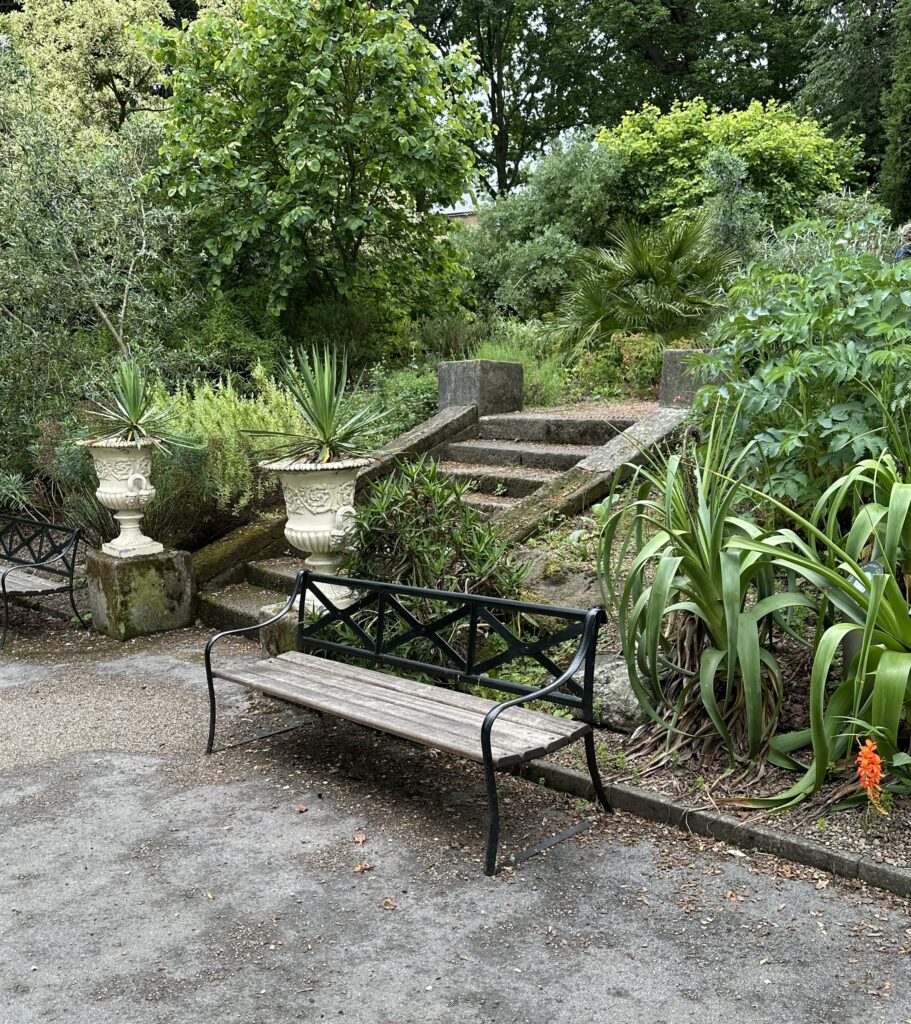
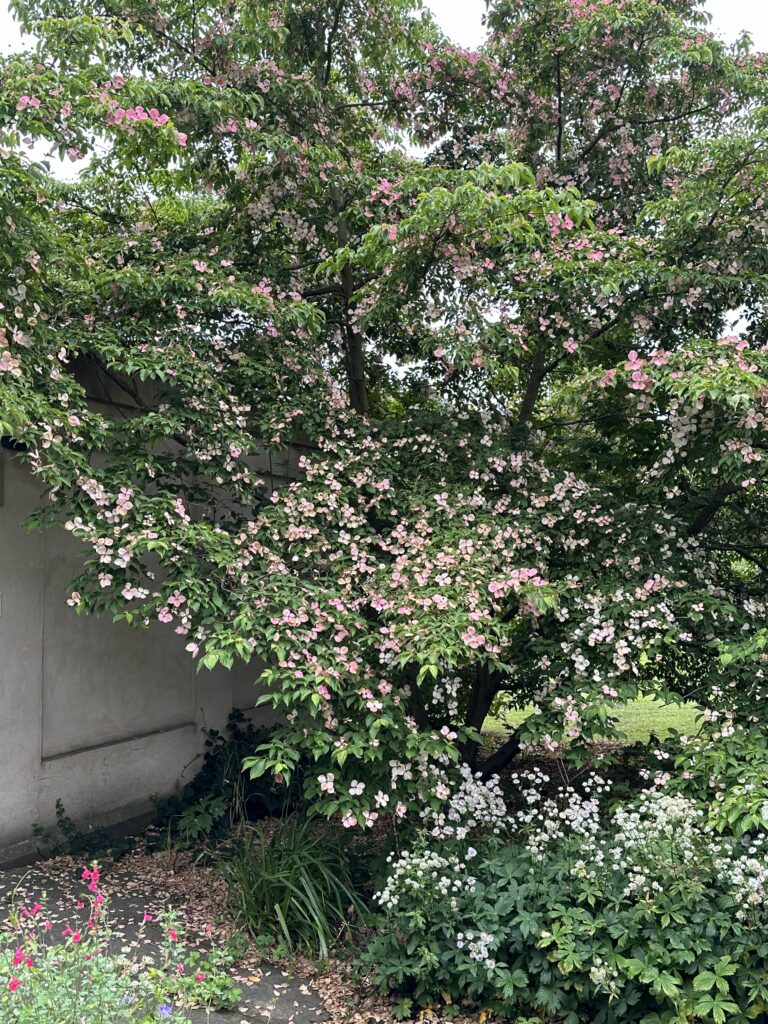
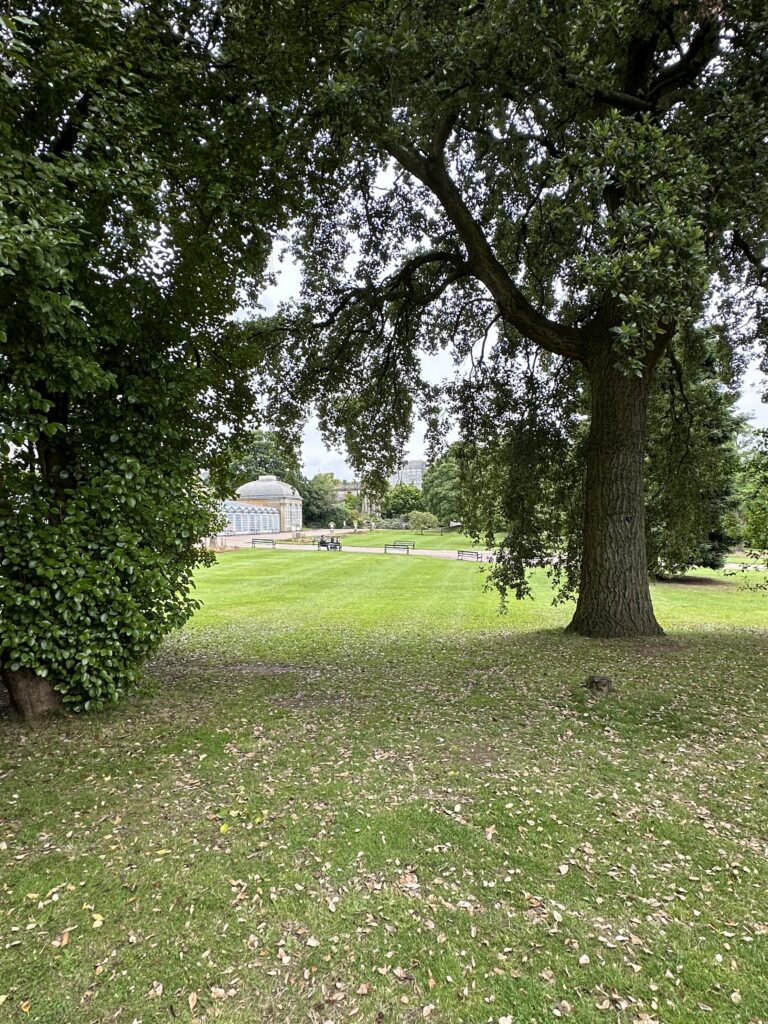
As part of the celebrations the Friends of SBG recently commissioned two new benches, inspired by an illustration of a bench in an 1840 engraving of the Botanical Gardens. A sheltered area of the garden close to the benches is named after Marnock, and features plants suitable for smaller gardens. This is one of more than eighteen different areas of planting in the gardens, which include Victorian carpet bedding, a rose garden, the Award of Garden Merit Borders and a more recent area of prairie planting first sown in 2004. There are wide spaces of lawns, a feature of Marnock’s gardenesque style, and a collection of interesting trees, with a Lucombe oak, maples and a huge Cornus florida in full bloom.
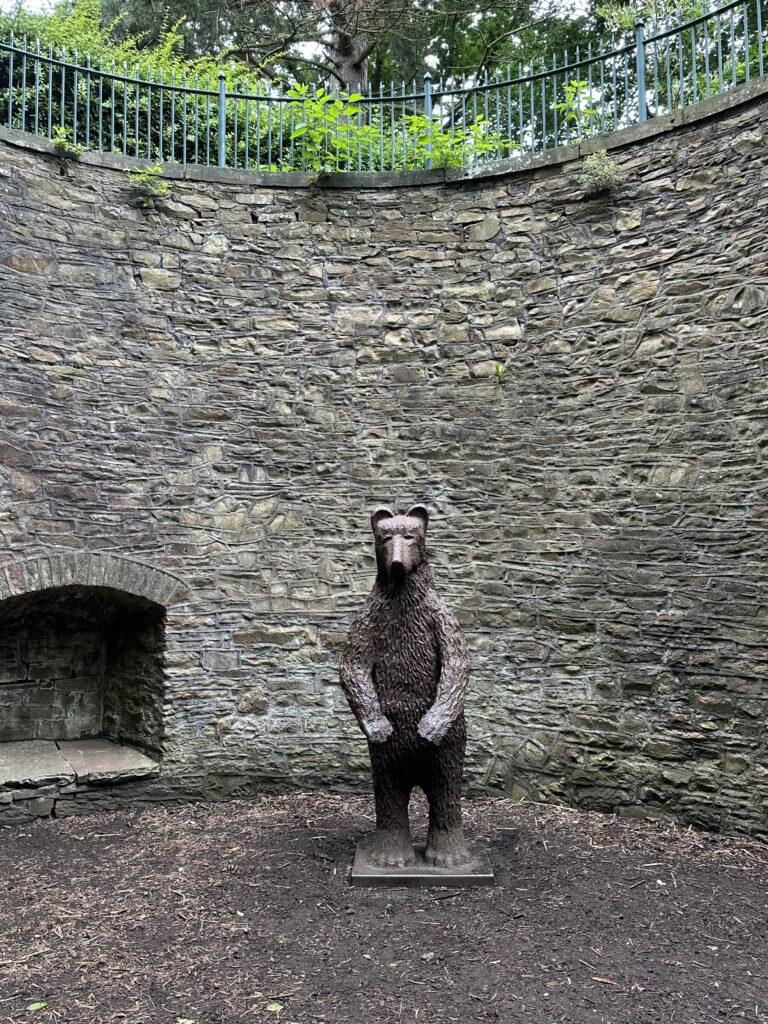
In the nineteenth century two brown bears were kept in the Bear Pit, to amuse visitors watching from the railings above; they were not the only animals in the garden, which also housed monkeys, a fox and parrots. There is a rather macabre story which Jill Sinclair told us that one of the bears had apparently killed a small child, but it turned out to be an urban myth, for which there was no real evidence. Today the only bear is a steel sculpture by David Mayne.
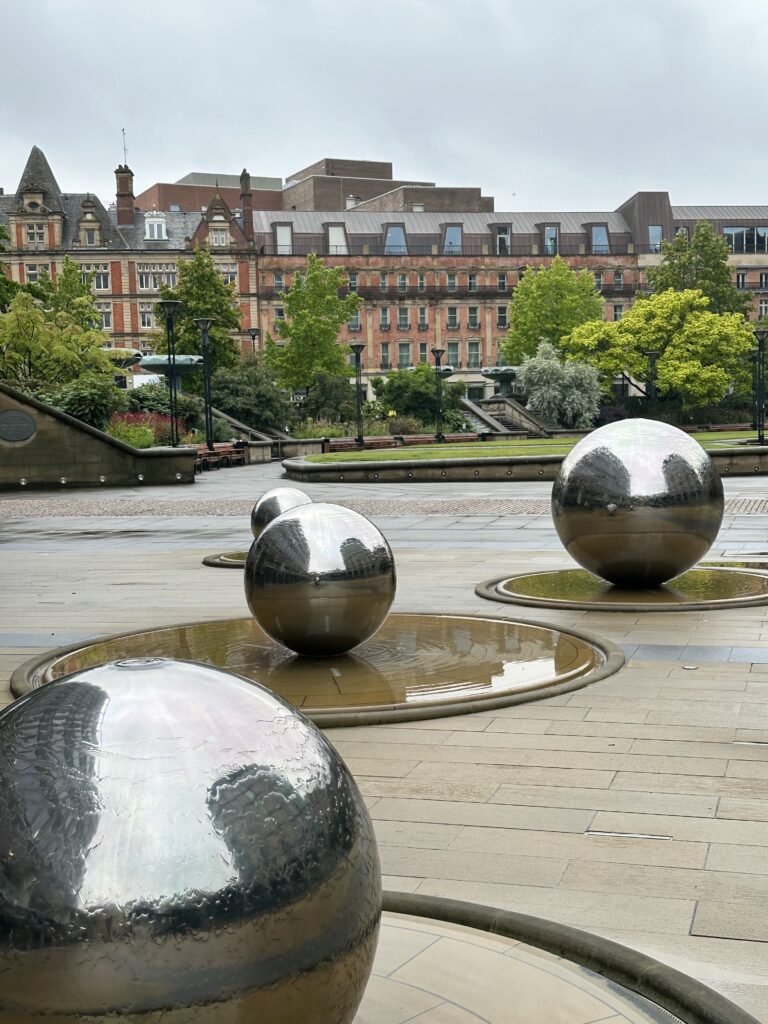
Before leaving Sheffield, I had time to visit two much-admired city gardens – also free to enter. Within the redeveloped city centre is Millenium Square which is in fact a triangle, with sleek modern architecture on two sides and the imposing Victorian Town Hall on the remaining side. Reminders of Sheffield’s history appear not only in the new and renovated buildings, but in pieces of sculpture, such as ‘Rain’, a water feature created by artist Colin Rose, with nine stainless steel balls varying in size, designed to suggest drops of rain falling on the square and reminiscent of Sheffield’s steel making industry.
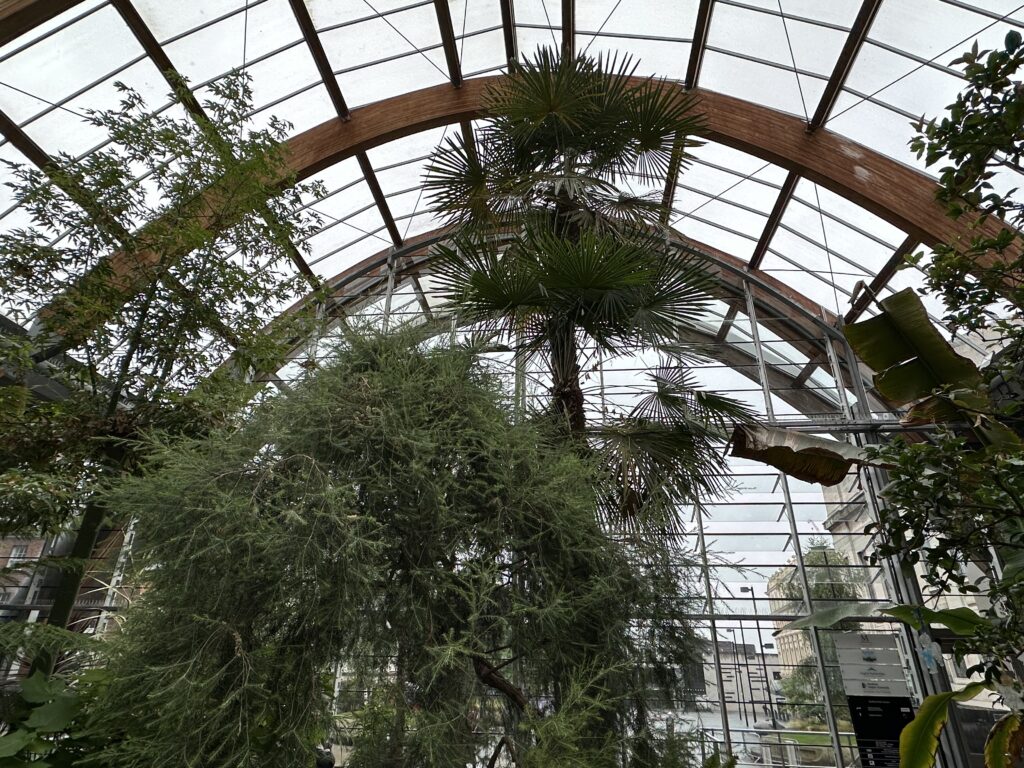
Symbols of the city’s heritage are also present in the two gardens. A renowned feature of the square is the Winter Garden, opened in 2003, and the soaring arches made from untreated larch bring to mind the glass-roofed public shopping arcades so popular in the nineteenth century. The garden was designed so that people could walk through as if in an arcade, yet surrounded by over 2,000 plants from around the world, and there are different pathways to follow, benches and places to meet, as well as retail spaces and changing art installations. The central space is twenty-two metres high, designed so that the taller species of plants would form a canopy, although these have now grown to full height making a dense covering, in places obscuring the beauty of the glass spans.
Across from Millenium Square are the Peace Gardens, a vibrant urban space of lawns, sparkling water and a rich variety of trees and plants sitting beneath new and old architecture within a space that was once a churchyard. The Goodwin Fountain in front of the Town Hall is dedicated to Sir Stuart and Lady Goodwin. Sir Stuart was the founder of one of Sheffield’s steel making firms and eighty-nine distinct jets of water serve as a reminder of the importance of water to the city’s heritage.
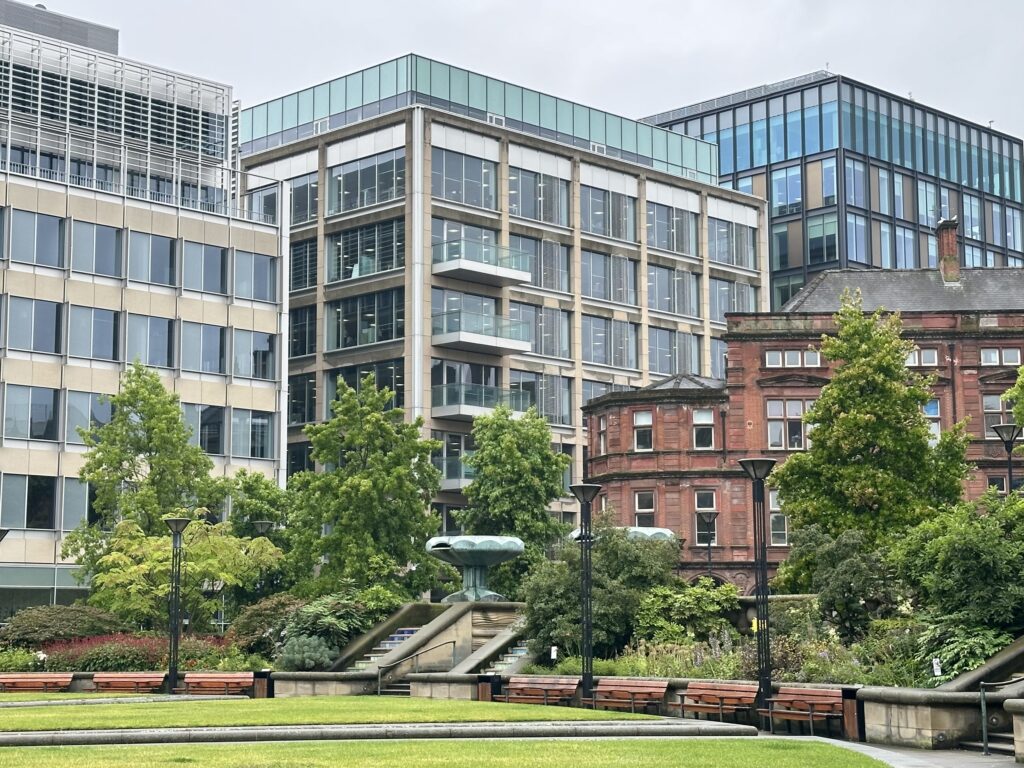
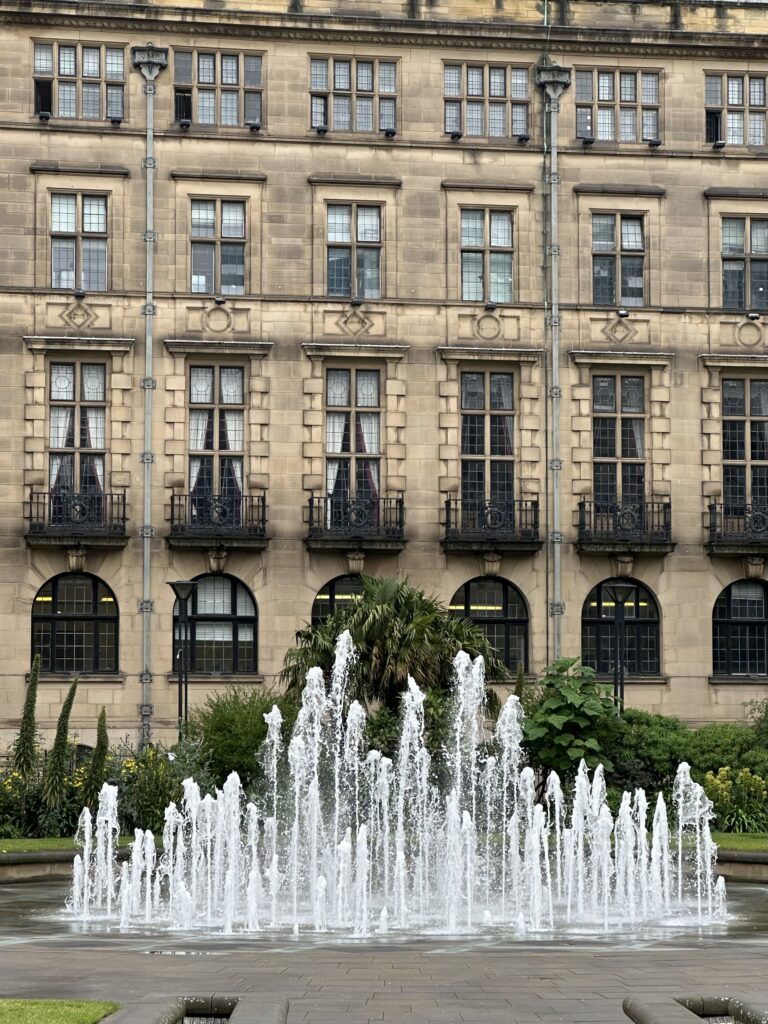
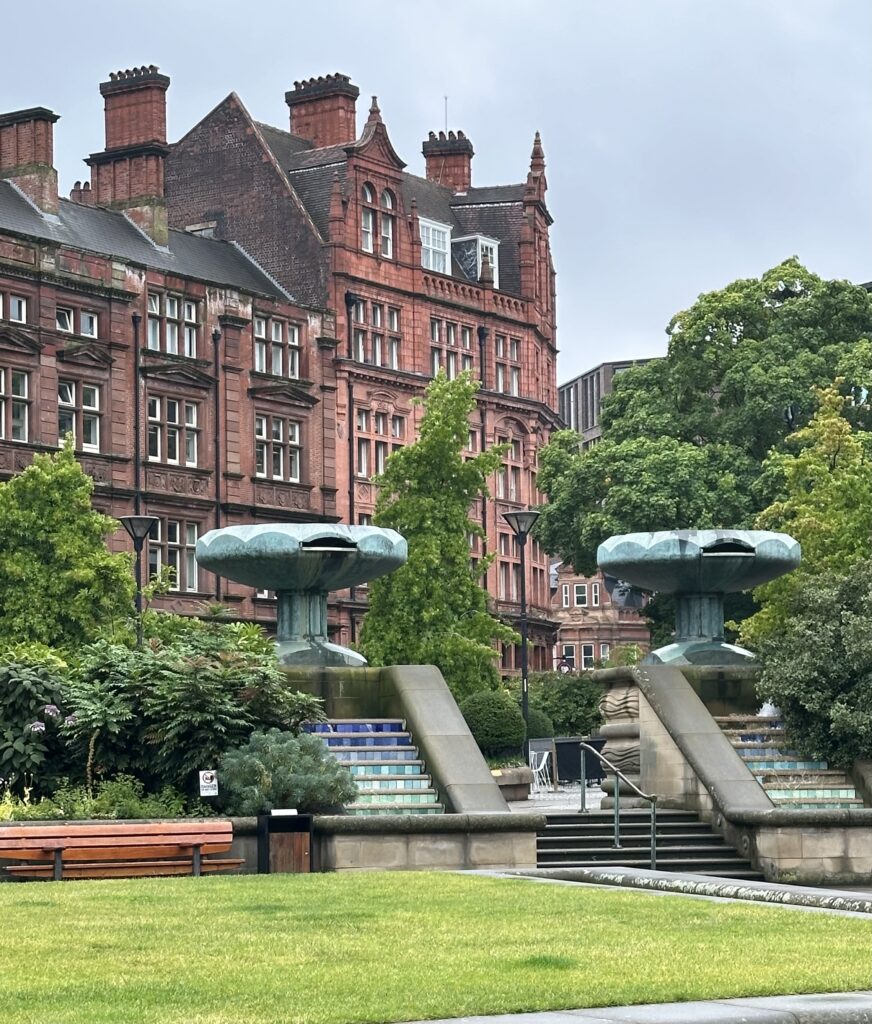
Situated at the edges of the Peace Gardens are the Holberry Cascades dedicated to the leader of the Sheffield Chartist Movement, Samuel Holberry. These eight water features represent the pouring of water into Sheffield’s five rivers and the pouring of molten metal used in the metal industries.
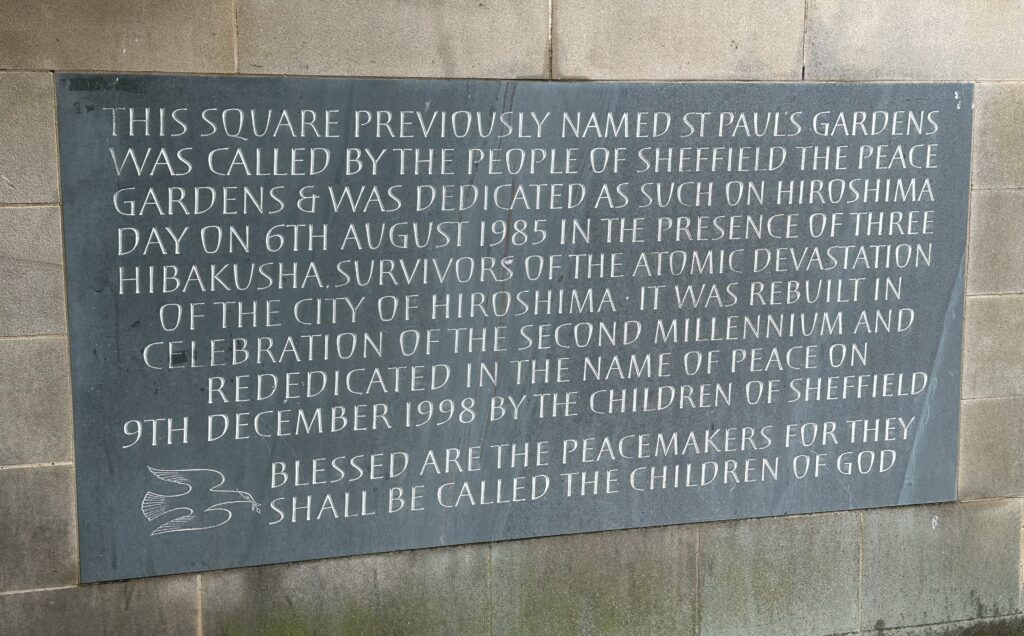
There are several memorials in the gardens, including one the Spanish Civil War and another to the destruction of Hiroshima, unveiled on 6 August 1985 in the presence of three Hibakusha survivors of the city.
The personality of Sheffield seems infused in these three gardens, whether it’s the legacy of Marnock and the remnants of Victorian bedding in the botanical gardens, or in the water, steel and glass emblematic of an industrial heritage in the urban gardens – together they are the heart of the city.
Article by Sally Ingram
All photos ©Sally Ingram, July 2024.