
Whilst on holiday in York, I was able to visit Goddards, a National Trust house and garden where George Dillistone designed his first garden after setting up a garden design business working for himself. The house is not open to the public as it is used by the National Trust for offices and the furniture from the house has been removed and is now at another property. The house was built in the Arts and Crafts style in 1927/1928 for the Terry family of chocolate orange fame.
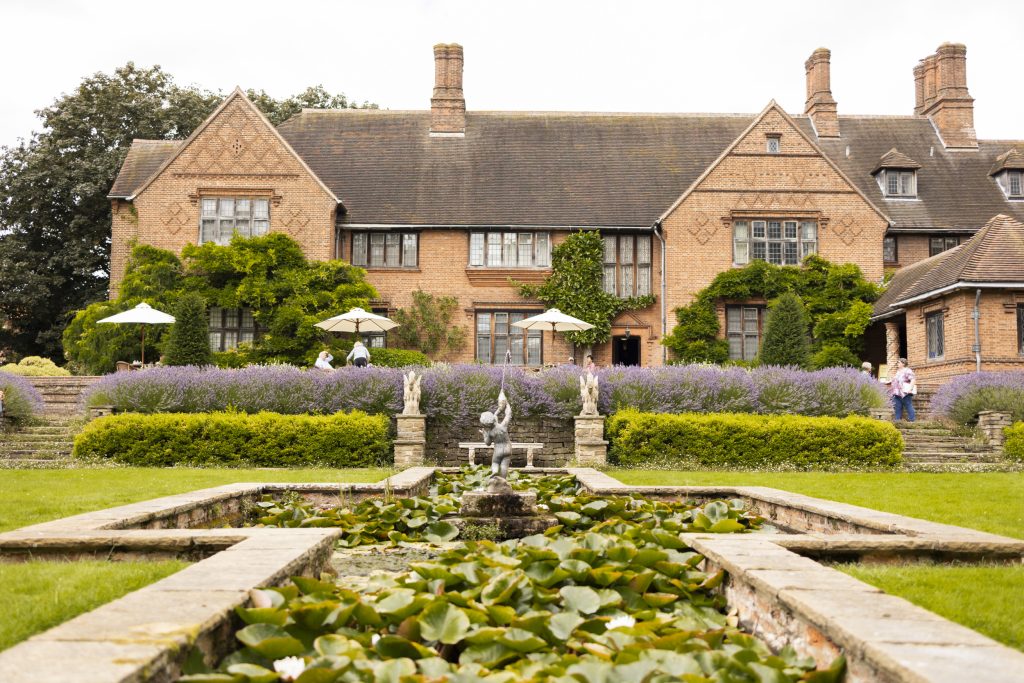
The garden, covering five acres, is designed with views over York race course, which runs along the bottom of the garden, and beyond you can see the brick of the Terry Chocolate factory built in art deco style, at the same time as the house, the square clock tower making it easily identifiable from afar. The National Trust has recently redesigned the garden to follow George Dillistone’s plans, which they have in their archives, and these have been carried out by the head gardener Tom Longridge and his team and many volunteers. Tom has been working at Goddards for the last ten years and I was lucky enough to join a tour by Tom of the gardens. There are many National Trust volunteers around the gardens to guide visitors and to provide refreshments on the terrace; it was a very welcoming place. The garden is divided into garden rooms each changing with the seasons with different planting and colour changes. The only area yet to be restored is the lawn at the back of the house leading from the terrace, which originally was a rose garden and discussions are continuing on whether to reinstate the rose garden.
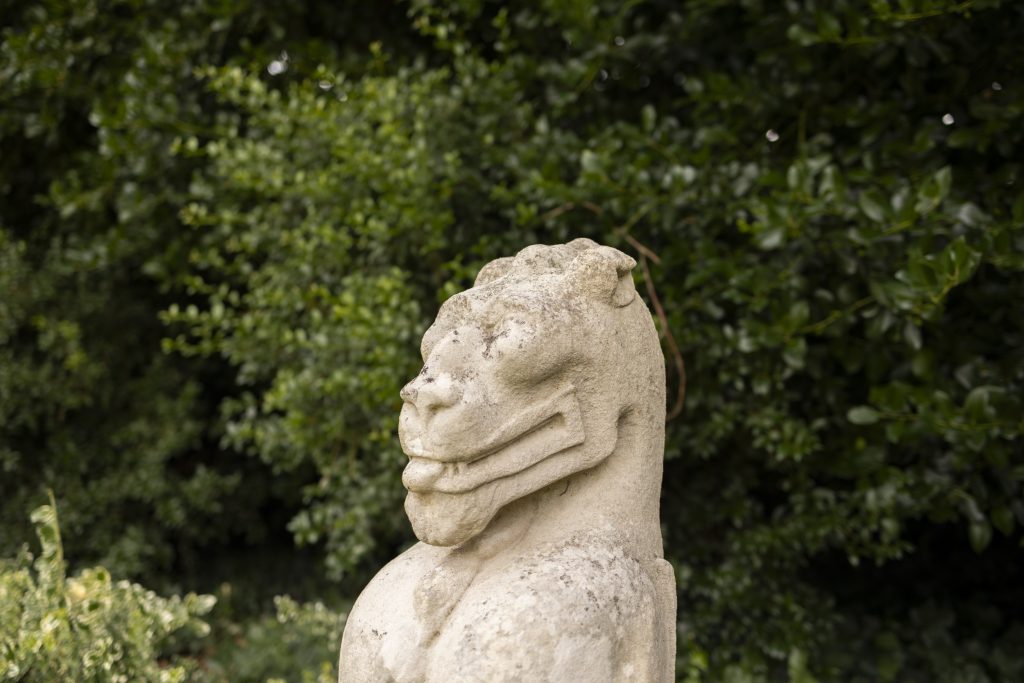
From the terrace there are steps down to the lawn which has low hedges edging the lawn. and crazy paved paths which makes all areas accessible for visitors. There is a central lily pond with a fountain statue. This pond and the others in the gardens are fed from rain water which is captured from the roof of the house. The statues which are spread around the garden were taken away by the owners when they vacated the property but they have recently returned them so visitors can see them in their original places. In particular are a pair of griffins and a pair of pelicans. The meercats are lovely in a small heather garden. There are lots of areas of open spaces with many seats so visitors can admire the gardens and the views beyond, also small semi enclosed spaces with seats for quiet reflection and some with statues for interest.
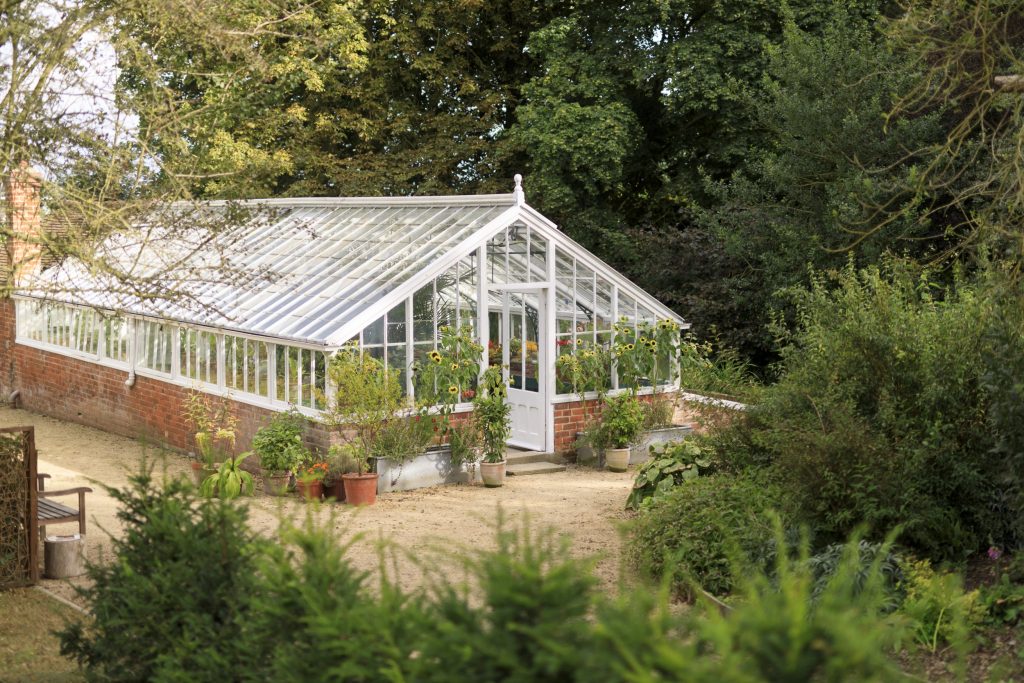
There is a tennis court and bowling green which the family enjoyed surrounded by hedges, in front of which are mixed borders with lots of trees and shrubs bordering the lawns. At the bottom of the garden is the original greenhouse which has been restored and is well used with additional cold frames along the side. There is a lovely walled garden which is used for growing fruit and vegetables and we were lucky enough to see a small mouse hiding in a hole in the wall. When a piece of land from the adjacent property became available a few years after the garden was finished this was purchased and turned into an orchard with many fruit trees, in particular the James Grieve apple which Noel Terry preferred.
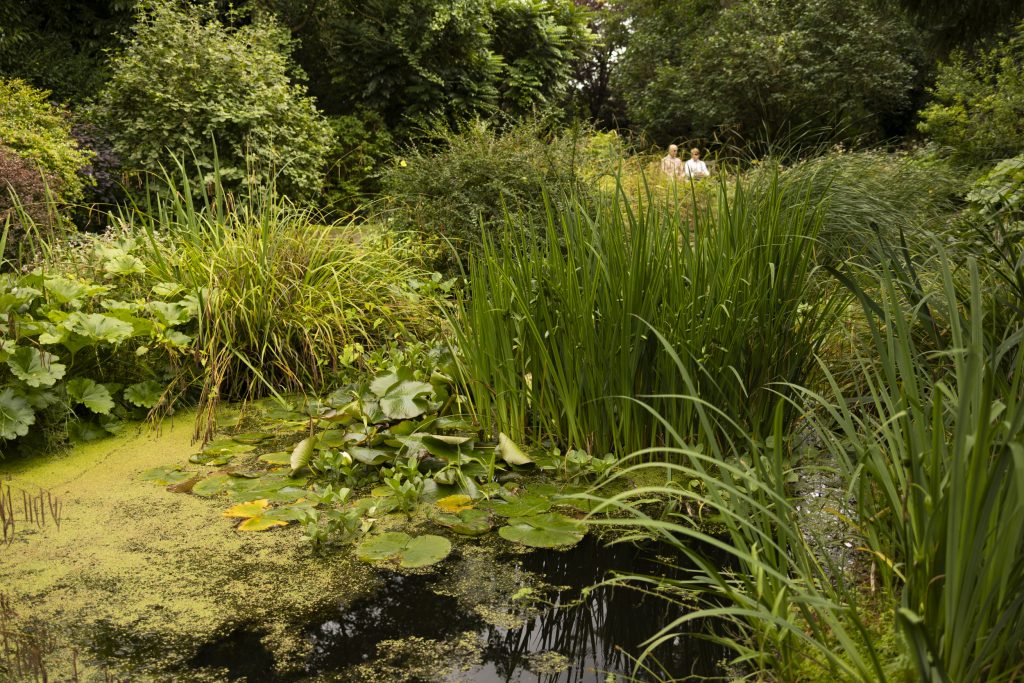
The rock garden covers a wide area with little pools, ferns and small plants, but also large rocks which would have taken a crane to put in place, with trees, mainly conifers, surrounding the rocks and a natural wooden hand rail. It is a lovely space with surprises round each corner. Wildlife is encouraged to inhabit the garden with many birds and butterflies with many habitats for insects to thrive and parts are left for the wildlife including a patch of nettles for butterflies. This is a lovely garden designed for a family of all ages to enjoy.
Article by Lynn Gausden
All images by James Beck, ©National Trust, used with permission