
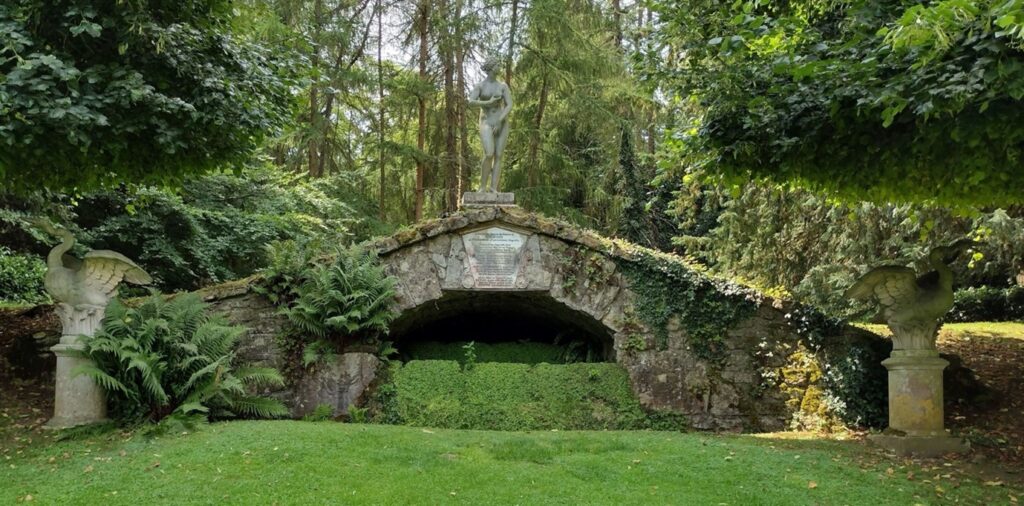
Rousham is considered to be one of the most important of William Kent’s eighteenth-century landscape gardens. Remaining much as it was in its heyday, a visit to Rousham is a delight for all of us who love both garden history and excellent design. The interplay of light and shade, ornament and parkland, works to enhance one’s enjoyment as the journey unfolds.
My visit was at the end of a busy week exploring the gardens of Herefordshire. These included The Laskett, which is very theatrical and Stockton Bury, a true plantsman’s garden. Seeing numerous borders bursting with colour, it had been a feast for the senses.
So, arriving at Rousham was a breath of fresh air, shades of green being the only colour variation. It has been suggested that Kent designed Rousham to present a narrative, and by following a specified route around the garden the scenes from the story would unfold. The garden works magnificently even if you meander at will. It is easy to imagine how eighteenth century visitors would have marvelled at the vistas presented and the numerous installations. What is the journey? Maybe it is childhood to adulthood, or it could be leaving the safety of the house to explore the ‘wilderness’ beyond?


There were many highlights for me, and these included the ‘Vale of Venus.’ This can be approached from above, via a woodland path taking you from darkness to light, which gives you sight of the Octagonal Pond. My preferred approach is from below with the River Cherwell behind you, from where you see a magnificent view of the whole ‘ valley.’
Walking into the darkness of the woods made me think of the ‘ornamental wilderness’, so popular in the seventeenth century. These woodlands were often swept away by Lancelot Brown in his search for more naturalistic scenes, but here at Rousham one can see how they provided intrigue and interest for visitors . Following a rill along a path, looking down, the sunlight plays on the paths below and the structure provided by hedges encourages that feeling of exploration as one has to turn a corner to see the next point of interest.
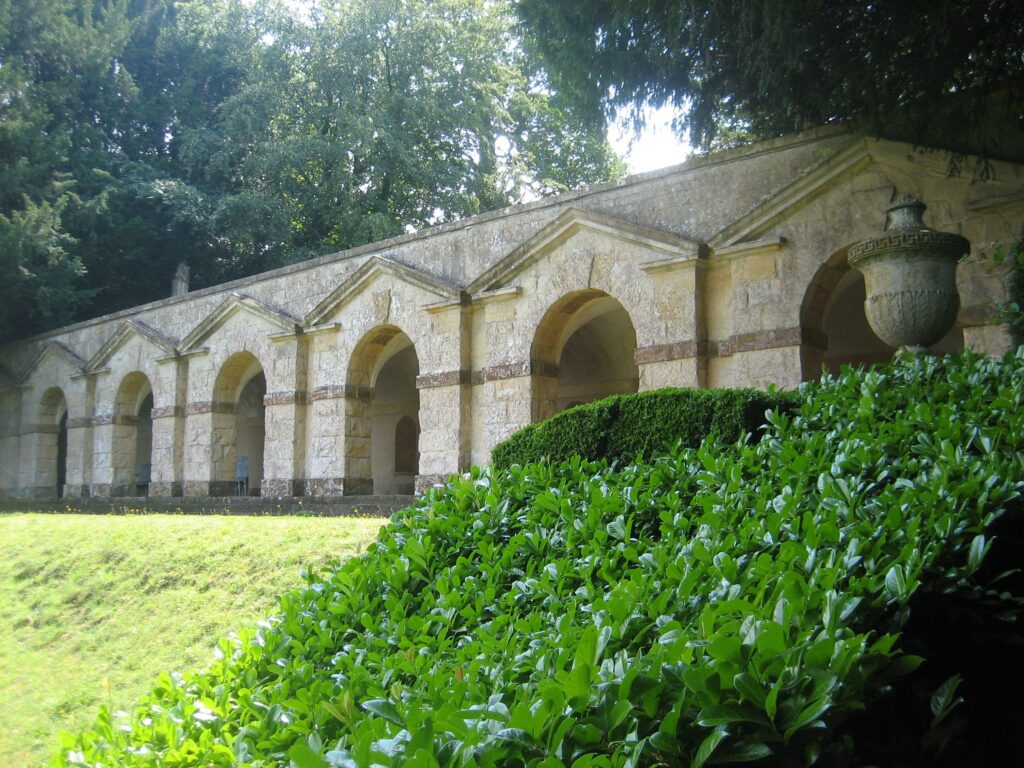
Near the Vale is the impressive replica of the Praeneste (forecourt of the Italian Temple of Fortuna). Well designed and of solid construction this is now a place to rest and reflect and enjoy the view. One then realises that as you started your journey, passing the statue of the Dying Gladiator, the terrace on which that sits is above the Preaneste, which is at that moment unseen.

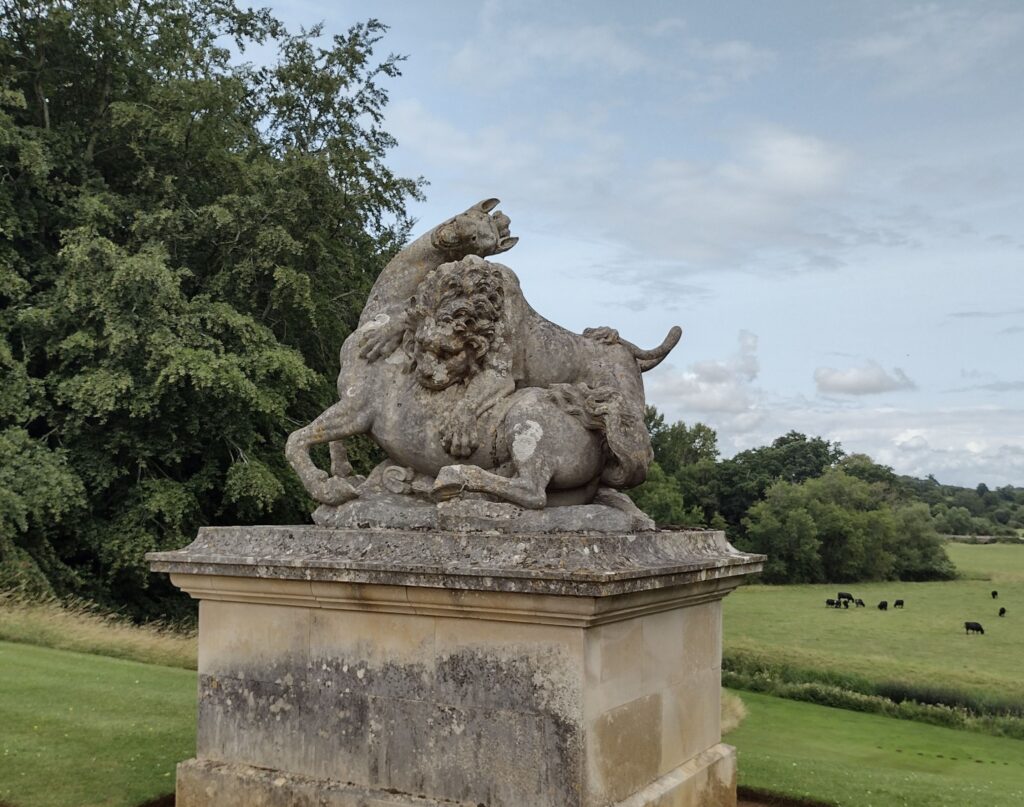
Coming back towards the house, the famous statue of the Lion and the Horse locked in mortal combat sits at the end of the Bowling Green. The subject matter is similar to that in a series of paintings by George Stubbs, potentially symbolising the battle between the wild and the tamed. Maybe a metaphor for some of our gardens!
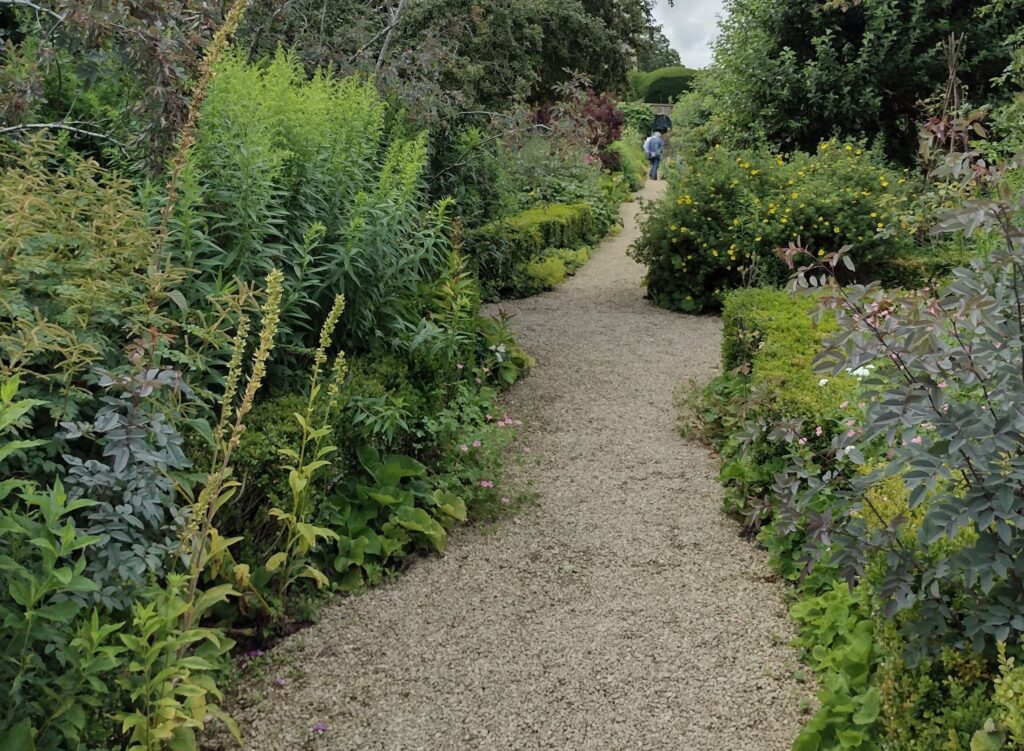
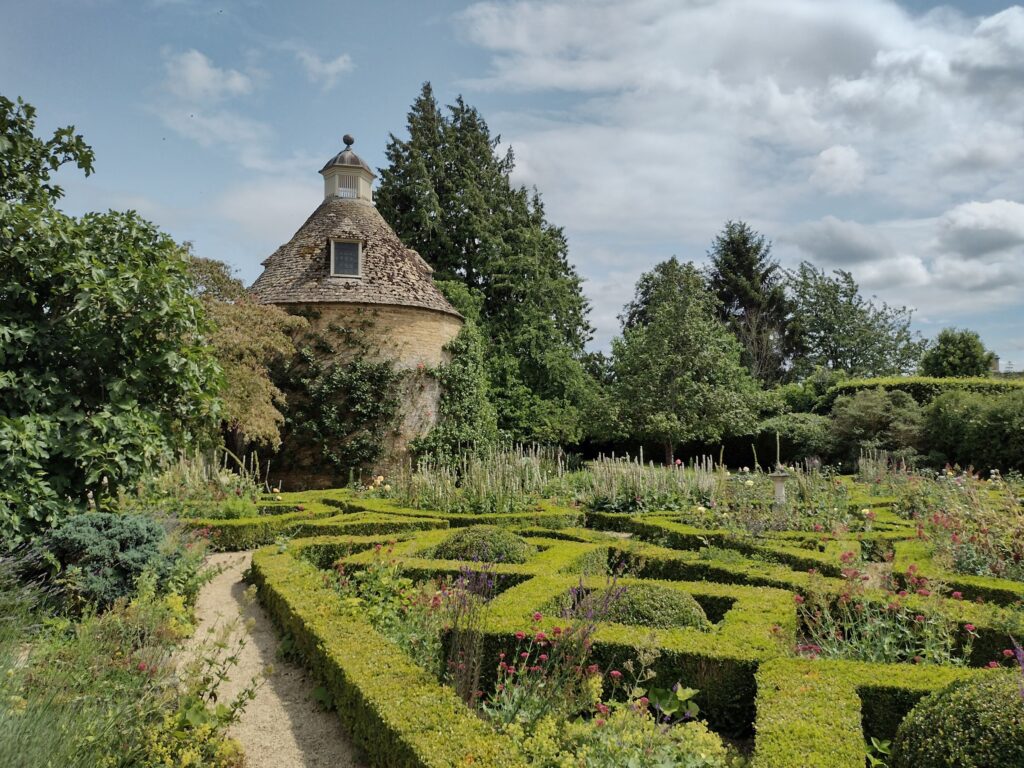
As well as the landscape areas Rousham has a walled garden with exuberant planting, espaliered fruit trees and a pigeonnier.
Rousham is a garden for personal discovery, so I do not want to give all its secrets away. For me, one of the most enjoyable aspects was the lack of commercialism. Tickets are purchased from a vending kiosk, there is no café or shop and , apologies to parents, no small children are allowed. This means that the visitor can experience Rousham as Kent intended. It was serene on the day of my visit and offered a chance for reflection. A true escape from our usually hectic lives.
Article by Gillian Taylor
All photographs © Gillian Taylor