
In July, 2026, in the middle of the third heatwave, I went on holiday with my cousins and their families to Snowdonia (Eryri) National Park for one week, and then on to Anglesey for the second week. The weather was not quite as hot as in the south of England and there was a nice breeze blowing, skies were blue and clear and the sun shone every day, unlike the Welsh weather one normally gets on holidays.
There is a National Trust garden in the Conwy Valley that one should not miss, it is Bodnant Garden, listed Grade II. It consists of 80 acres (32 ha) developed on a hillside by the Victorian gentleman Henry Pochin, and subsequent descendants, with a stunning backdrop of mountains. It has paths, terraces, streams, waterfalls, formal and informal ponds, exotic plants and trees, woodland and herbaceous borders, quiet areas for everyone to explore and enjoy.
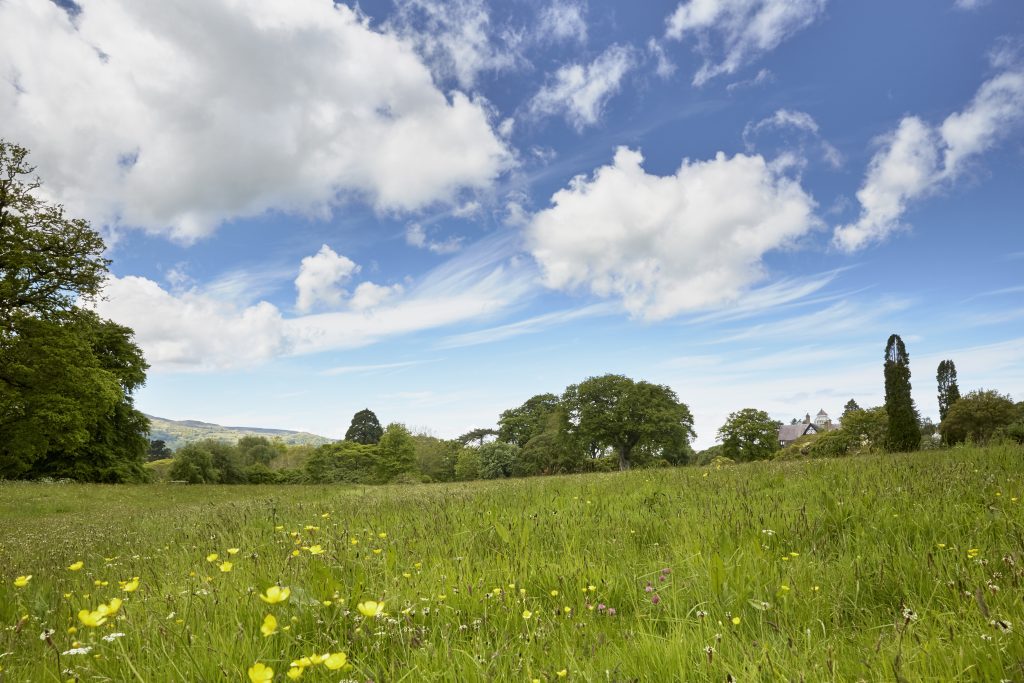
In 1879 the estate was bought by Henry Davis Pochin, a chemist and financier with liberal political ambitions. His wife, Agnes, was a writer and women’s suffrage campaigner. They first set about remodelling the old Georgian Hall from its white Italianate frontage and then tackled updating the formal gardens and parkland. When Henry died in 1895 he left the estate to his daughter, Laura, who had just as much passion for the gardens as he did and developed the wild garden, and planned out the terraces which her son Henry completed. Laura had married the barrister Charles Benjamin McLaren and both of them were keen horticulturalists.
This interest continued down the generations to their son Henry who was particularly interested in exotic plants and plant hunters. He also liked to propagate and hybridise plants for which he won medals at Chelsea Flower Show. He was President of the Royal Horticultural Society from 1931 to his death in 1953. Before this in 1949 he had given the gardens to the National Trust, whilst allowing the family to continue its interest and support of the garden, and reside in the Hall, which to this day remains private. The current custodian is Henry’s son, the QC Michael McLaren and his wife Caroline who continue to look after this beautiful estate with of course the help of the gardeners who also have passed the job down generations. After the first head gardener there were three generations of head gardener called Puddle, Frederick, Charles and Martin.
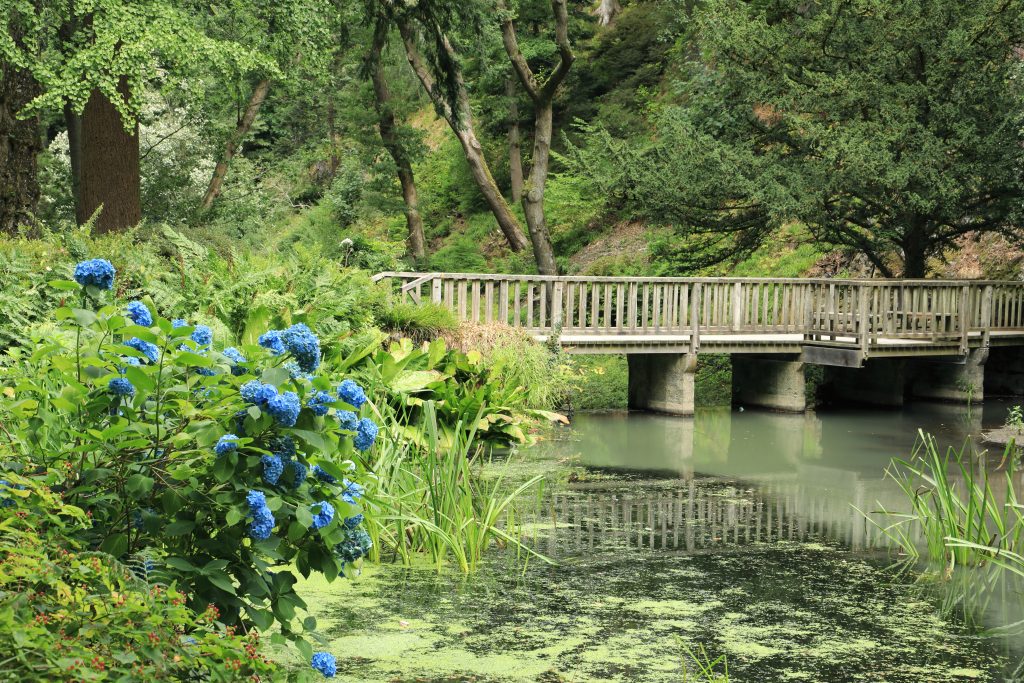
As we entered the gardens up near Bodnant Hall we were initially struck by the distant views of the Conwy valley and hills with the garden gently falling away through the lawns, terraces, pools and woodland. The atmosphere is peaceful and serene, encouraging exploration of the different areas and pulling one down to the stream and dell below. The herbaceous borders near the house were generous and colourful with grasses, lavender, day lilies, and verbena, punctuated by small slim cypress trees.
If one visits in late May, according to the guidebook, you can join around 50,000 visitors who come to see the Laburnum Arch in all its glory. This is a 55-metre pergola, erected originally by Henry Pochin, now with a metal frame and 48 plants of Laburnum watereri ‘Vassi’, with its long yellow racemes. It is apparently quite a sight but of course long gone by July when we were there. We walked past the house to the terraces and the beautiful distant view of the Carneddau mountains. There are five Italianate terraces built at the start of the twentieth century, the first being two rows of roses, complimented by saxifrage, campanula and rock rose. There is also a rather interesting Strawberry Tree (Arbutus andrachnoides) of about 120 years old with gnarled pink bark trunk.
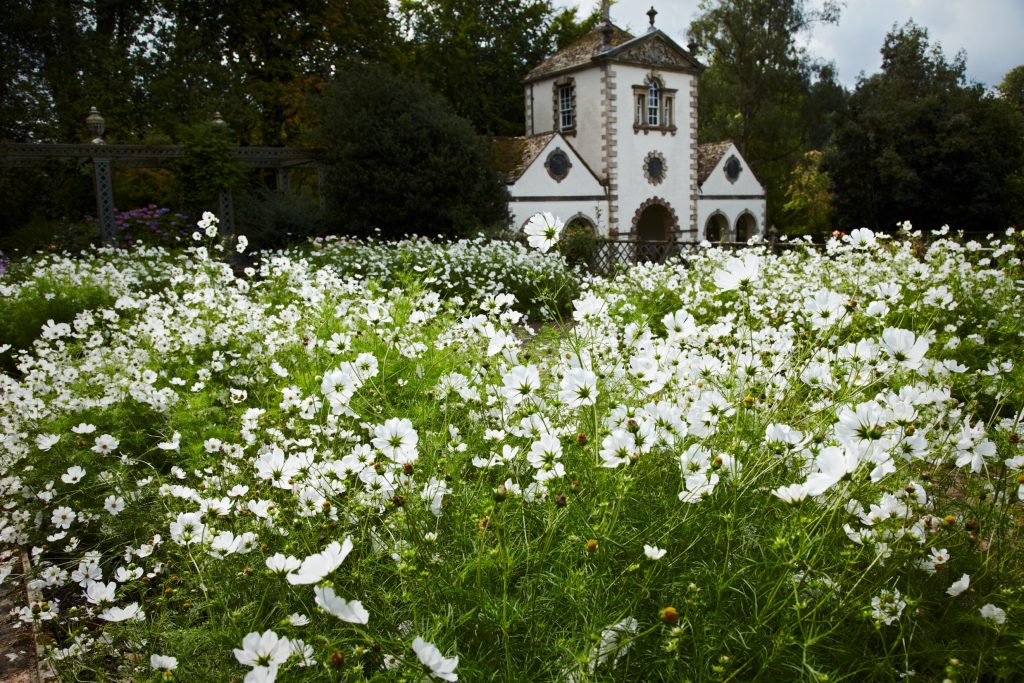
Walking leisurely through the terraces we come to the last one, the canal terrace which features a long pond filled with white and pink waterlilies with a Pin Mill at the far end. This building dates from the 1730s and was originally a hunting lodge in Gloucestershire before being a mill and then left derelict. It was purchased and moved to Bodnant by Henry McLaren two centuries later in the 1930s. It has a ground floor gallery and a music room above. Around the large terrace is clipped hedging, roses, pergola, steps, statues and seats.
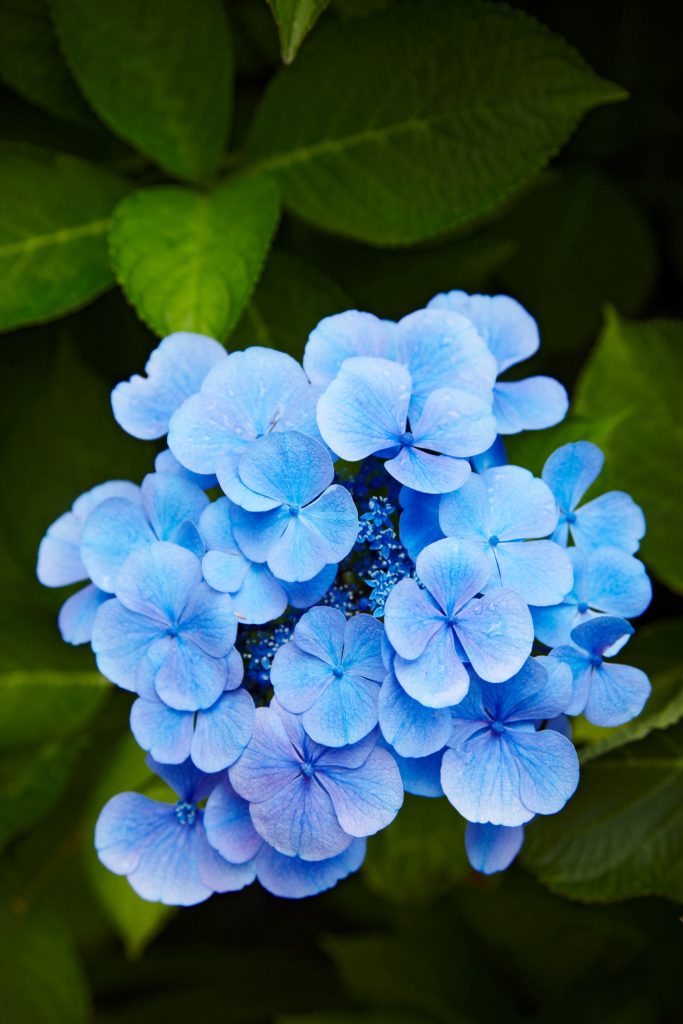
From the formal terraces we walked down wooded paths to the stream and over a bridge to the old mill, now disused, and into the dell, home of around 40 Champion trees including Wellingtonias and cedars. In Spring it must be stunning as one can see magnolias, camellias and rhododendrons in full flower plus snowdrops, daffodils, primulas and poppies. We saw a variety of blue and pink hydrangeas along the riverbank towards the waterfall. Near here we saw The Poem, a small building created in 1882 by Henry Pochin as a mausoleum for the children he lost in infancy and intended for the rest of the family in time. It is currently being restored but we saw the stained-glass window inside.
We crossed back across the stream here and headed towards the house through the Glades, full of Acer trees which will look wonderful in Autumn. We could have spent a lot longer exploring the garden, but we had coffee in the café and checked out the gift shop before returning to our holiday rental. We were all most impressed and hope to return some day as there is still lots to explore and enjoy at Bodnant Garden.
With reference to the National Trust Guidebook on Bodnant Garden (2017,2025) for names and dates.
Article by Maggie Weir-Wilson
Photos © (1,3,4) Arnhel De Serra. (2) Derek Hatton: National Trust