
I had the opportunity to visit Munstead Wood on 7 May this year, when a National Trust Inside the Trust day was hosted there. The National Trust purchased Munstead Wood in April 2023 with its own funds and support from the Government. The Trust describes Munstead Wood as: ‘An Arts and Craft fusion of architectural and garden design and home to one of the World’s most influential gardeners – Gertrude Jekyll’.
Since purchasing Munstead Wood the Trust has been researching and undertaking surveys of the house and garden and developing plans to restore the property and secure its long-term sustainable future. One of the major problems facing the Trust is Munstead Wood’s relatively small domestic scale and very restricted vehicular access down a narrow track with no visitor car parking. The house is a Grade 1 listed building and the garden is a Grade 1 registered landscape. The site is also within the Surrey Hills Areas of Outstanding Natural Beauty and a Conservation Area, so any proposed development will be well regulated.
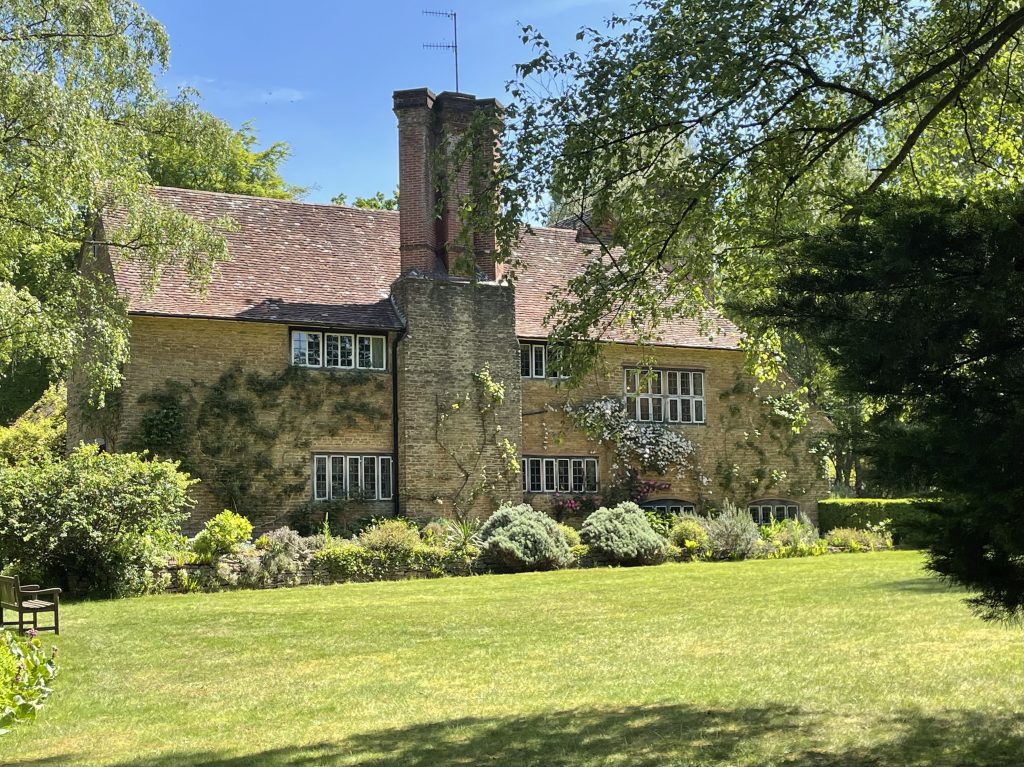
When, in 1882, Gertrude Jekyll (1843-1932) acquired the plot of land which was to become Munstead Wood it was approximately 15 acres (6 hectares) in extent. She spent over ten years developing the garden before asking Edwin Lutyens (1869-1944) to design the house. Construction of the house started in 1896 and Jekyll moved into the completed house in October 1897. Its accommodation included; an entrance vestibule, dining room, hall, kitchen, workroom and garden store on the ground floor, a photographic workroom in the cellar and seven bedrooms at first floor level.
During the late 1940s some of the plot was sold. In 2023 the National Trust acquired the house and about 11 acres (4.5 hectares) of the original garden and woodland.
The house is approached from the south-east and, due to the way it is positioned, the garden is not visible from the turning circle at the end of the access track, which was created after Jekyll died to facilitate leasing the property.
Gardens and woodland surround the house on the other three sides.
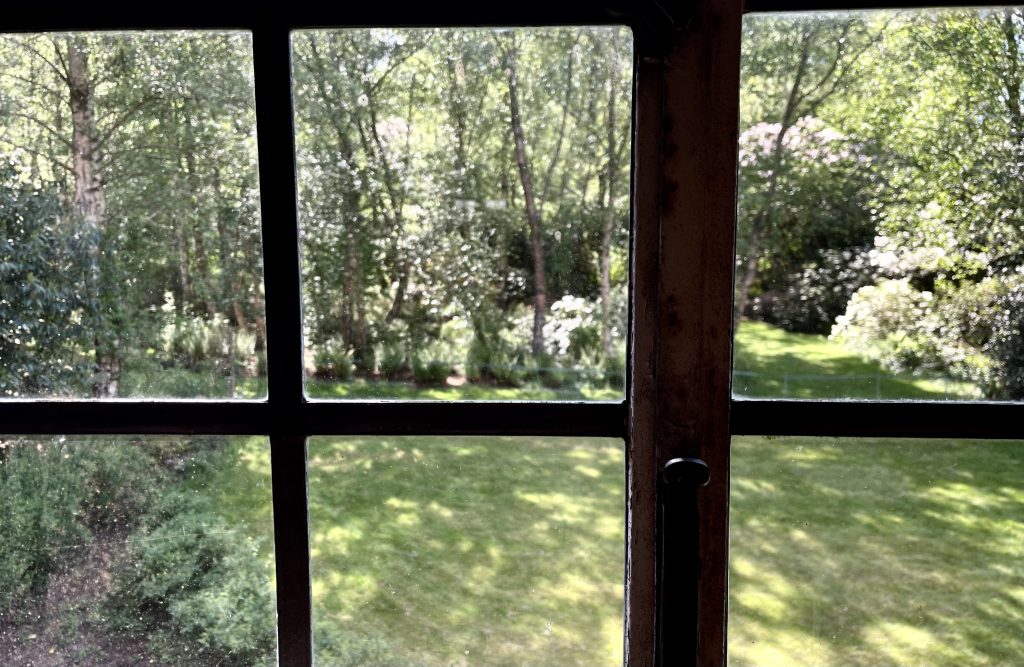
The first-floor view from what was Jekyll’s bedroom is thought to have inspired her to write Wood & Garden (1899).
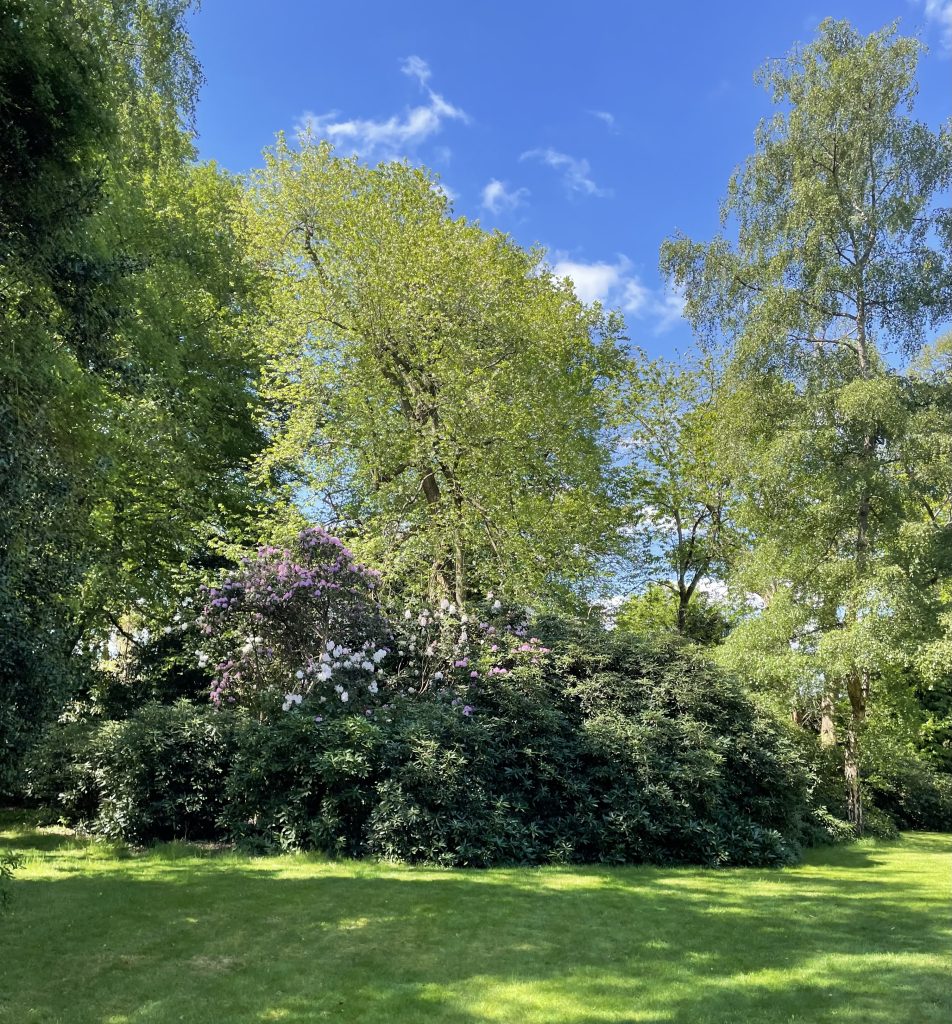
Annabel Watts, who has been at Munstead Wood since 2003, and Head Gardener since 2013, led a tour of the garden for the group to which I was allocated. Starting on the South Lawn there were views of rambling roses climbing amongst the trees, the roses will be followed later by Clematis Montana.
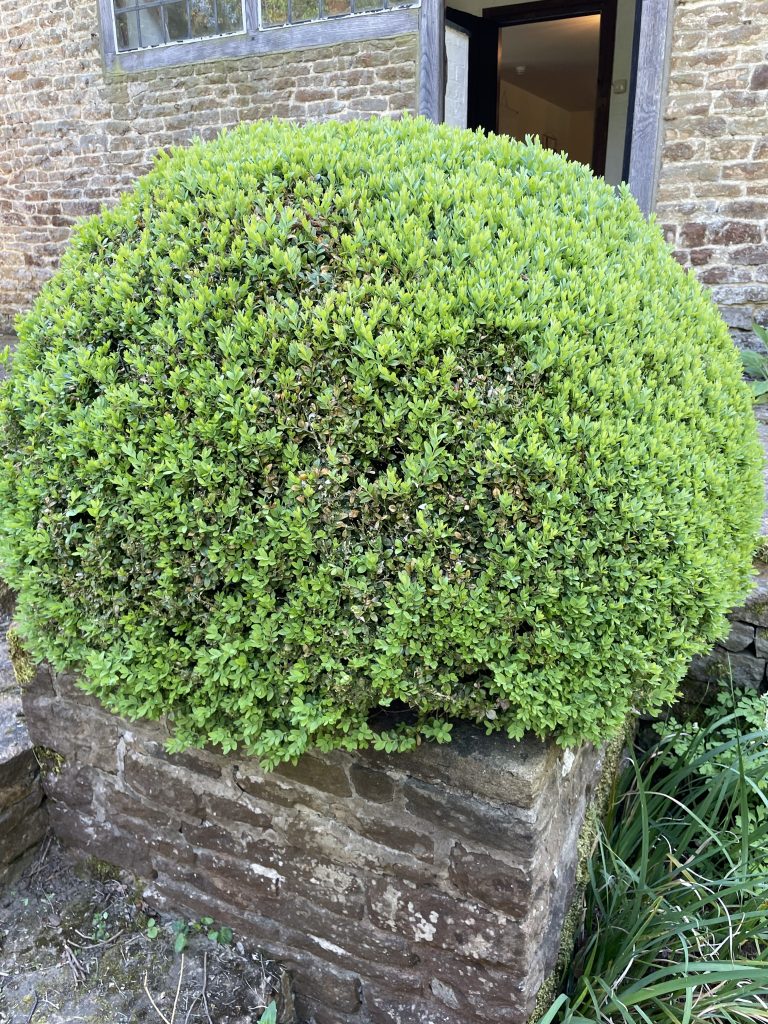
Jekyll and Lutyens created a shared joke with the ‘Box within a box’ feature to the north of the house.
The National Trust refers to the ‘Garden Store’ as the ‘Flower Room’ because Jekyll ran her cut flower business from there.
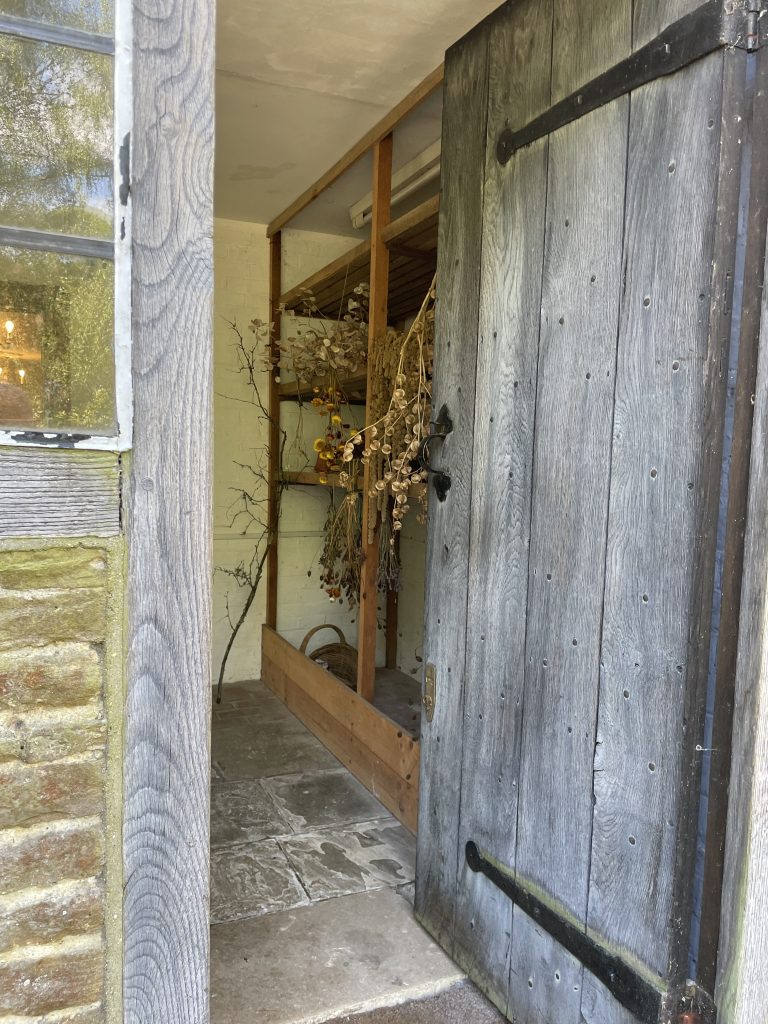
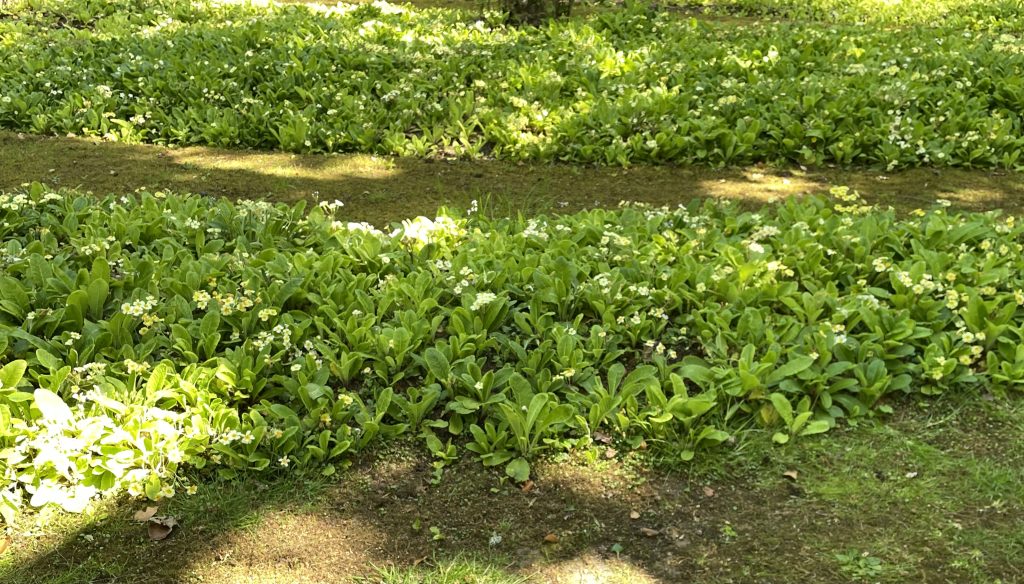
A great deal of restoration and recreation of beds was undertaken at Munstead Wood during the 1990s. The Primrose Garden benefited from this and Jekyll’s ‘Munstead bunch’ primroses are now well re-established.
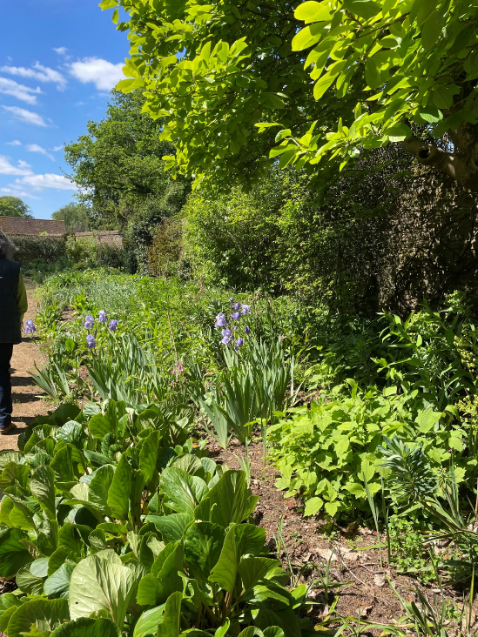
The Main Flower Border reminded me of the borders Jekyll designed for Pollards Wood, which are described on pages 45 and 46 [Figure 3] of Gertrude Jekyll in Sussex. However, I imagine the cost of creating this border today would be greater than Jekyll’s 1908 estimate of ‘£4 per 100 ft run, 4 ft wide’!
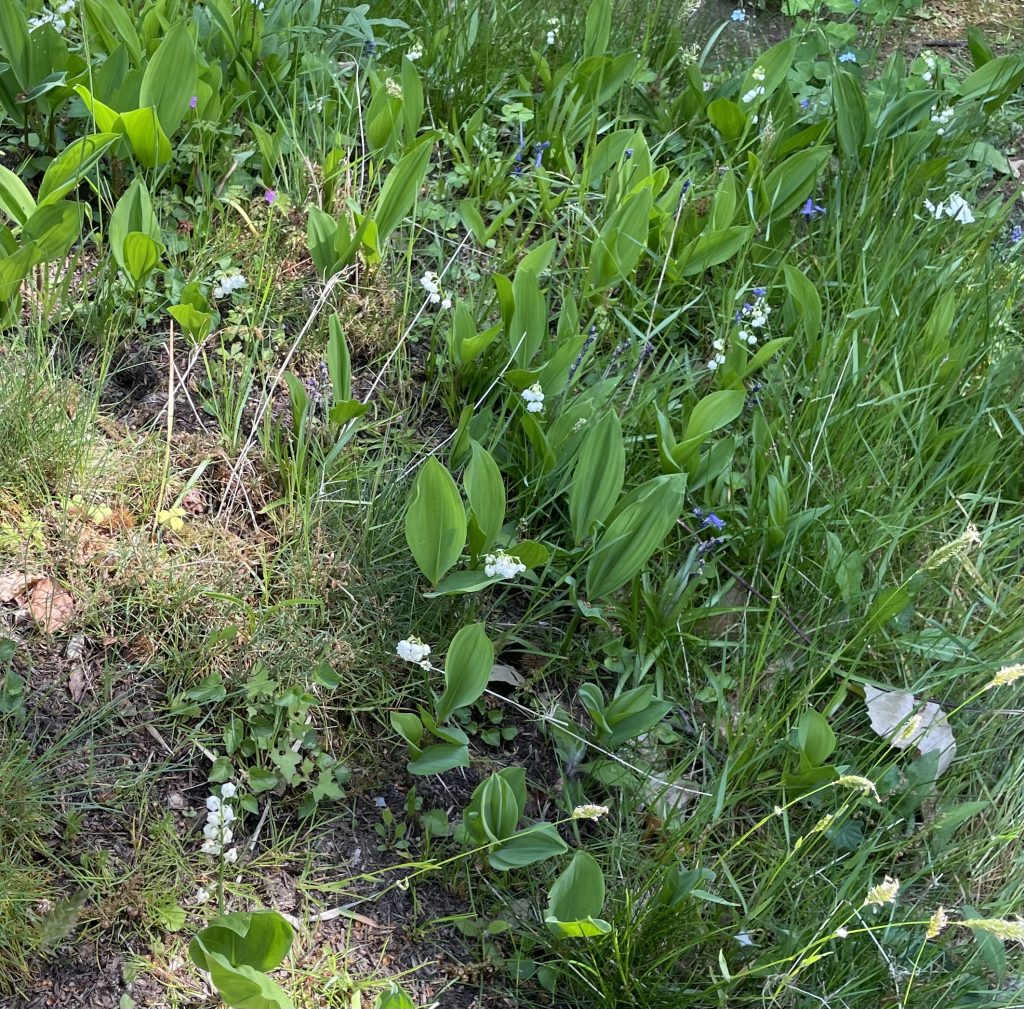
Convalaria majalus (Lily of the valley) is also still growing well. This was referred to in Gertrude Jekyll in Sussex where, on page 40, it is noted that 500 were sent to Close Walks as part of the ‘Planting near shelter’.
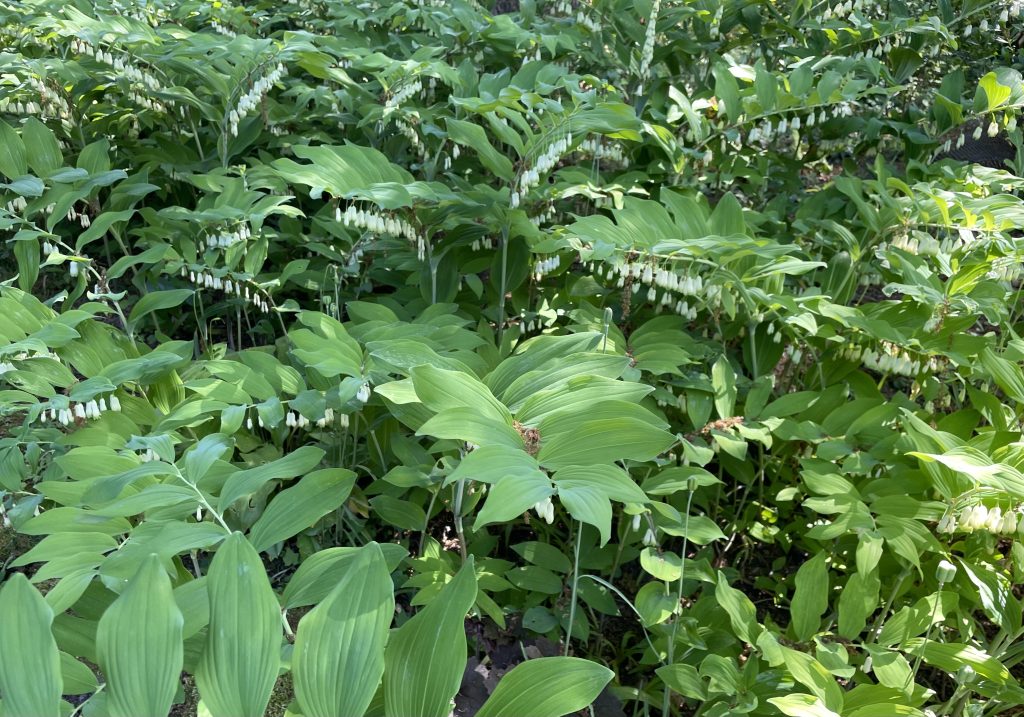
I was interested to see Poligonatum (Solomon’s seal) is well established as it was featured on page 39 [Figure 9] of Gertrude Jekyll in Sussex. Jekyll specified 50 to be planted ‘Near Pool in the Wood’ at Close Walks. A reproduction of ‘Stalks of Solomon’s Seal in Moss’ 1886 from Gertrude Jekyll’s Photographic Album was included on page 40 [Figure 10] of Gertrude Jekyll in Sussex.
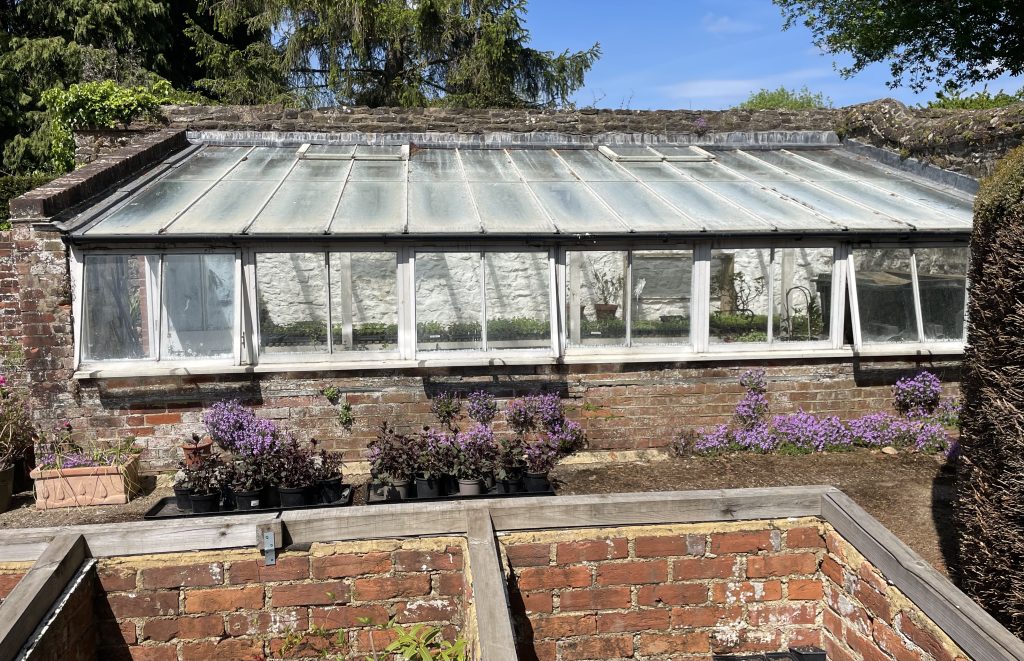
The glasshouses and cold frames were essential for the garden and plant nursery at Munstead Wood. Plans are being prepared to restore them.
What are the National Trust’s plans for Munstead Wood’s future?
The Trust has budgeted £4.5 million for its restoration and conservation and £4.0 million for its development to create a home of horticultural learning and excellence. This will be achieved through; ‘hands on’ gardening opportunities, demonstrating the benefits of gardening to people and the planet and providing access to the garden. One of the main factors being considered by the Trust is how to retain Jekyll’s planting principles whilst ensuring the garden is resilient to climate change. The garden team is exploring how this can be achieved and a conservation management plan will be created for the garden.
Visiting Munstead Wood brought to life much of what I had read about Gertrude Jekyll and I greatly enjoyed looking again at Gertrude Jekyll in Sussex.
Article by David Bridges
All photographs ©David Bridges and with permission of Munstead Wood.