
I had wanted to visit Japan for many years and finally succeeded for my 76th birthday in November 2025. I hoped to catch the autumn colours rather than suffer the high costs and over-tourism of cherry blossom time in Spring, however beautiful that was. I arranged to go with a tour group for nine days centred on Tokyo, Osaka and Kyoto which included a ride on the bullet train.

Our first visit was to the Nijo-jo Castle and grounds in Kyoto. This former imperial villa dates from 1603 and was built by the first Shogun of the Edo period. It is a UNESCO World Heritage Site with the main Ninomaru-goten palace being thirty-three rooms full of beautiful old wall paintings. The palace is set within a garden, an inner and outer moat, an island with a smaller Honmaru-goten palace and gardens, plus another distinct garden. This latter, the Seiryu-en garden, was made in 1965 and includes a small lake, two tea houses, paths and a western style lawn. In contrast the one near the main palace was built for an imperial visit in 1626 and has a large lake with three islands, one symbolizing paradise and the others, crane and turtle islands, symbolizing longevity. It is a traditional garden with water and rocks.
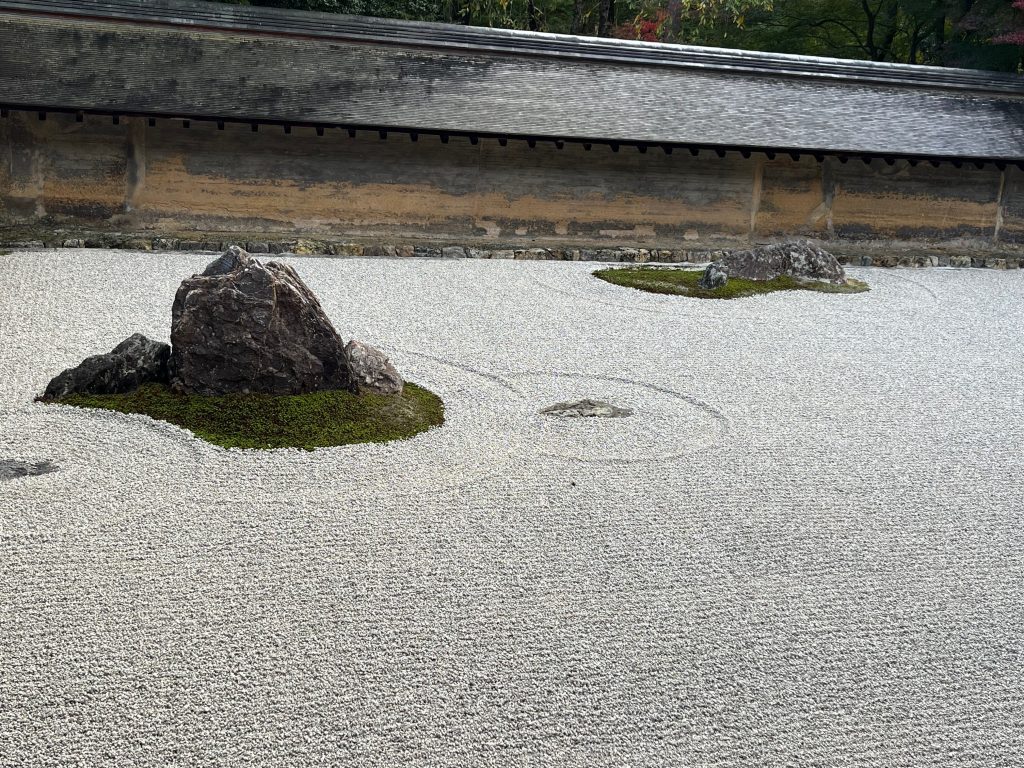
We next visited a very different type of garden at the Ryoanji Temple. This was originally a country house but was acquired in 1450 for use as a Zen Buddhist training temple. Again, it is registered as a World Heritage Site. Near the temple is the alternative type of garden to the strolling, park-like one, this is a dry landscape garden which tends to be more symbolic of Buddhist ideas of plants and rock. It is rectangular in shape, only 25 x 10 metres, and surrounded on three sides by a low wall of clay which was originally baked in oil. Within this enclosure are just fifteen rocks, said to be a lucky number, and raked white gravel, no plants. It was made in about 1500 by a respected Zen monk.
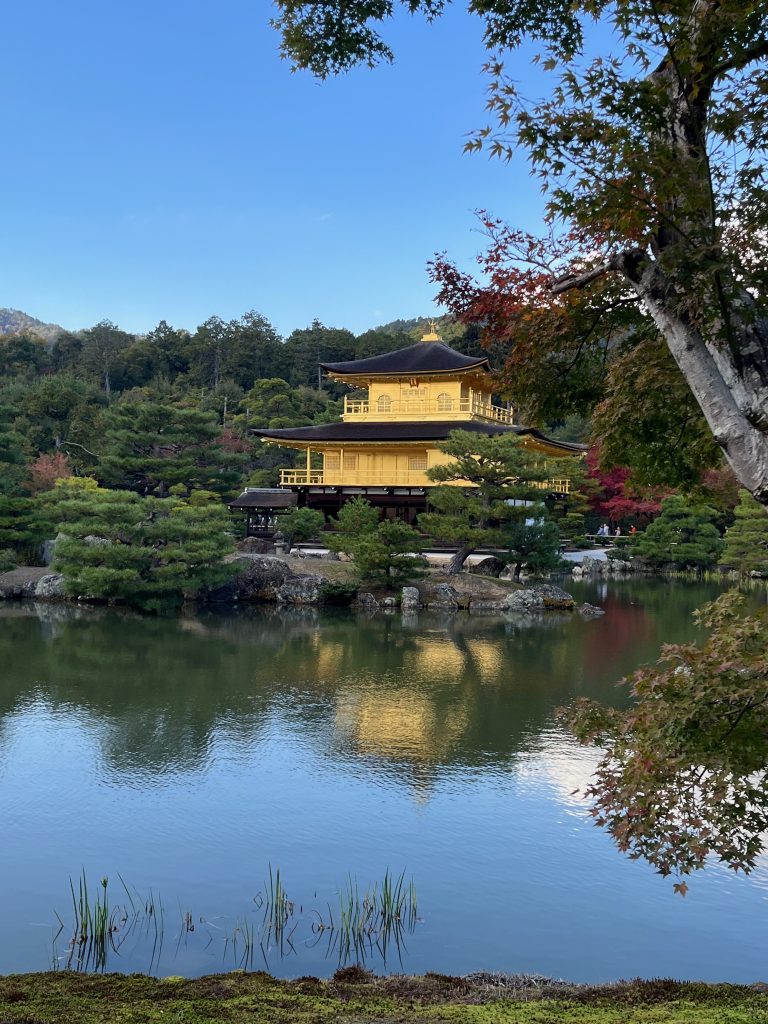
Still near Kyoto we visited the open strolling gardens of paths and ponds where one can relax and appreciate nature. This garden was the setting for the Kinkaku-ji Zen temple and Golden Pavilion on the edge of Kyoko pond. Like the previous temple it was originally a villa in the fourteenth century until taken by a Shogun, Yoshimitsu, who built the palace which became an important centre, welcoming Emperors and merchants. However, when Yoshimitsu died it changed to become a temple according to his wishes. It is another World Heritage Site and the Golden Pavilion is stunning in the autumn sunshine, reflected on the pond bordered by Japanese maple trees and black pines.
Near the temple building we noticed how one old Rikushu pine was being well supported with wooden struts and platforms under its branches. It is reported to be very old and was apparently Shogun Yoshimtsu’s favourite tree and is now a famous tree in Kyoto.

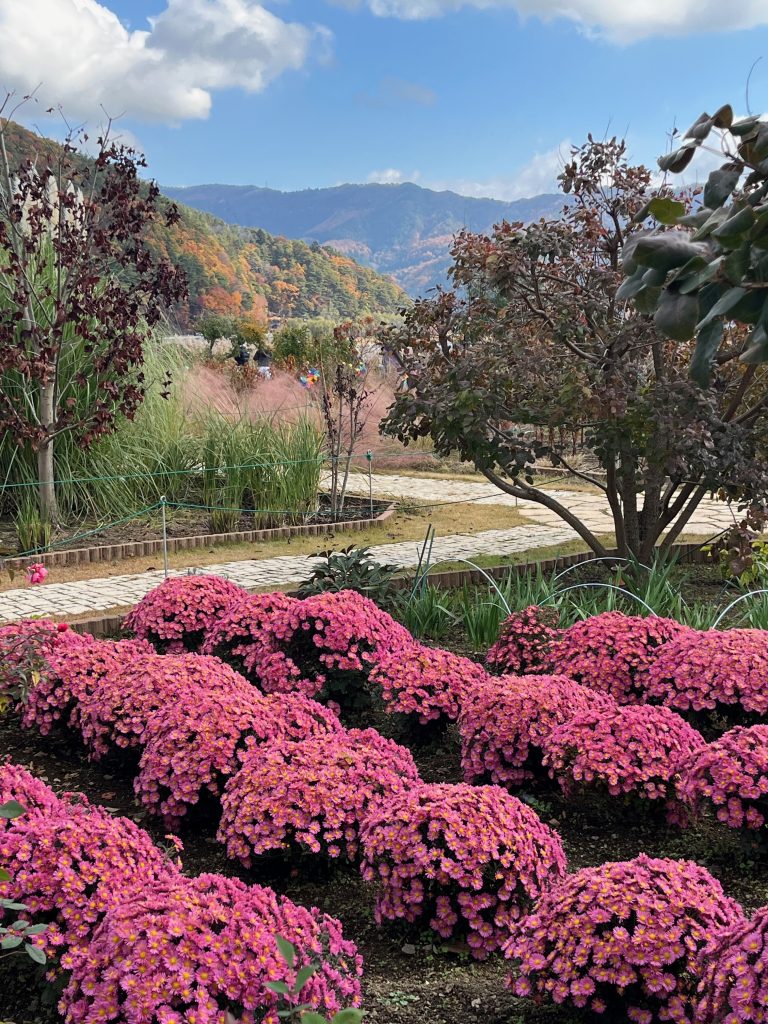
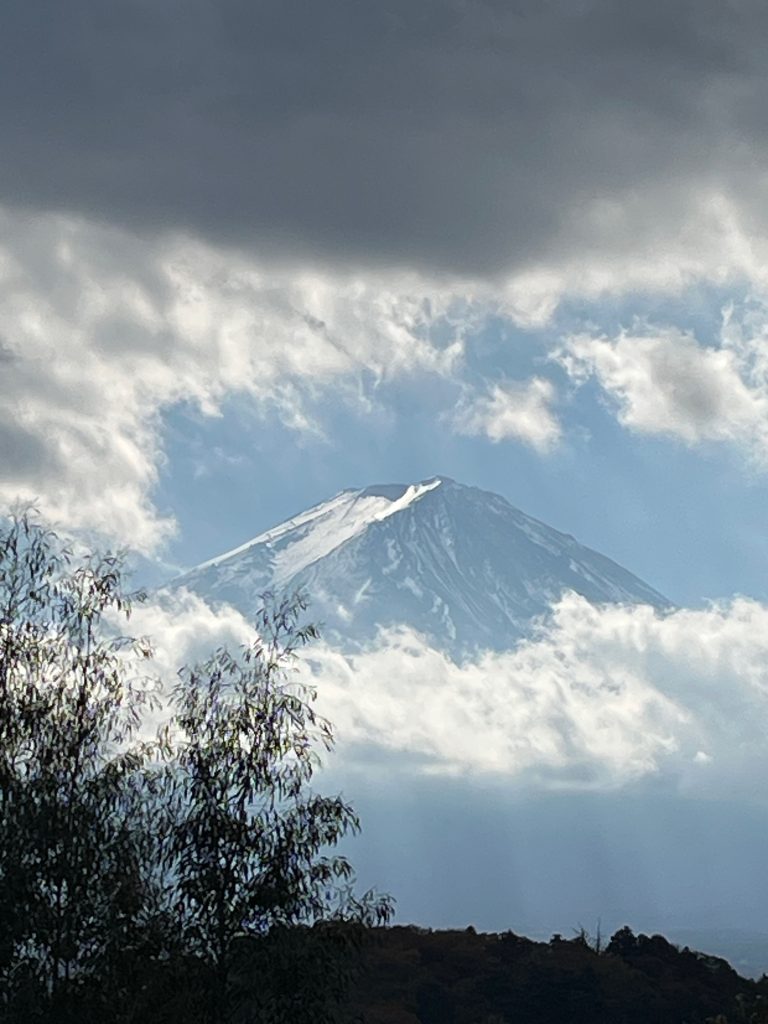
The following day we headed towards iconic Mount Fuji and planned to see it from one of the five lakes, Lake Kawaguchi. Here a formal small park, café and viewing areas had been set out in order to appreciate the view of Mount Fuji. Unusually, there were beds of neat rows of lavender, pampas grasses and vibrant chrysanthemums amongst the paths and viewing areas. It was a bit cloudy but we saw the mountain, although the following days were cloudless and some good photos were taken from our hotel. We had hit the timing for autumn colour just right and the maples were stunning from the lake.
Back in Tokyo some of us went to the Tokyo National Museum. Here, behind the Japanese Gallery and the central building, was a garden apparently full of rare plants, the obligatory pond, tea houses, pagoda and stone lanterns. After a stroll around, it was back to the hotel and then in the afternoon we walked to the Shinjuko Gyoen National Gardens which have a long history as botanical and Imperial gardens, then in 1949 it was opened to the public. It has three distinct styles of garden, the formal, landscape and the Japanese traditional garden. The whole site covers 58.3 ha with winding paths and four ponds.
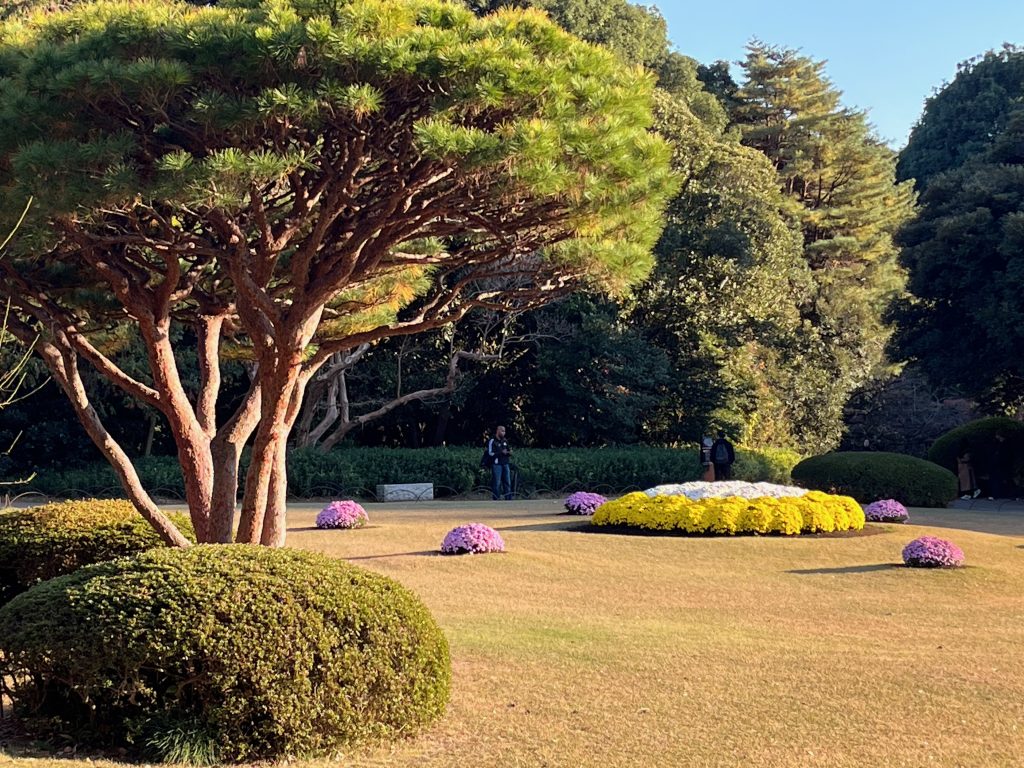
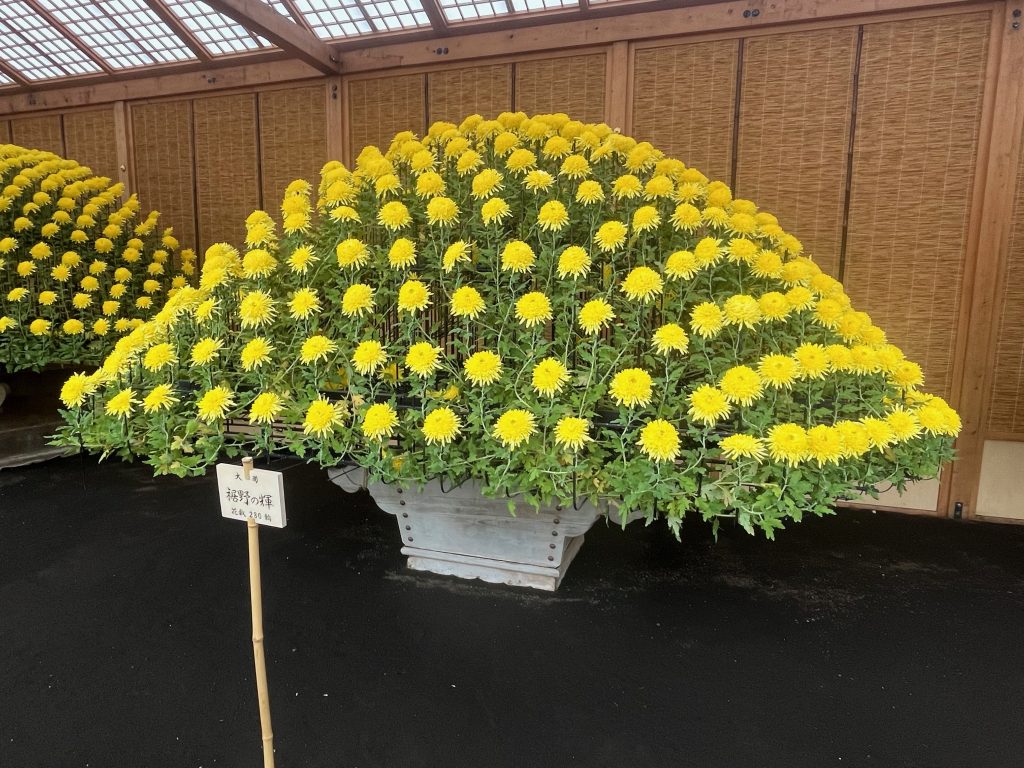
The most impressive style was the Japanese traditional garden which had mounds of closely clipped hedging, artistically pruned trees and small mounds of pink chrysanthemums circling a round bed of yellow and white chrysanthemums. In fact, we were just days after the Chrysanthemum Flower Beds Exhibition in the first two weeks of November and the impressive exhibits were still in place to view. One of which was the Ozukuri, first created in 1884, and which takes one root of chrysanthemum and creates hundreds of flowers by pinching and training. It was quite extraordinary that so many perfect flowers could be produced in a mound from one stem. There were other displays of single and medium flower varieties which had been grown originally by Samurai warriors as part of their discipline.
I came away with a very different and diverse idea of Japanese gardens in comparison to our usual western interpretation of Japanese gardens as small acer trees, water, stone bridges and summer houses. The Japanese appreciate beauty and meaning in their rocks and stones, and tend towards a more intellectual interpretation of their gardens, as well as strolling their landscape gardens for relaxation and reflection.
Article by Maggie Weir-Wilson
All photographs ©Maggie Weir-Wilson