
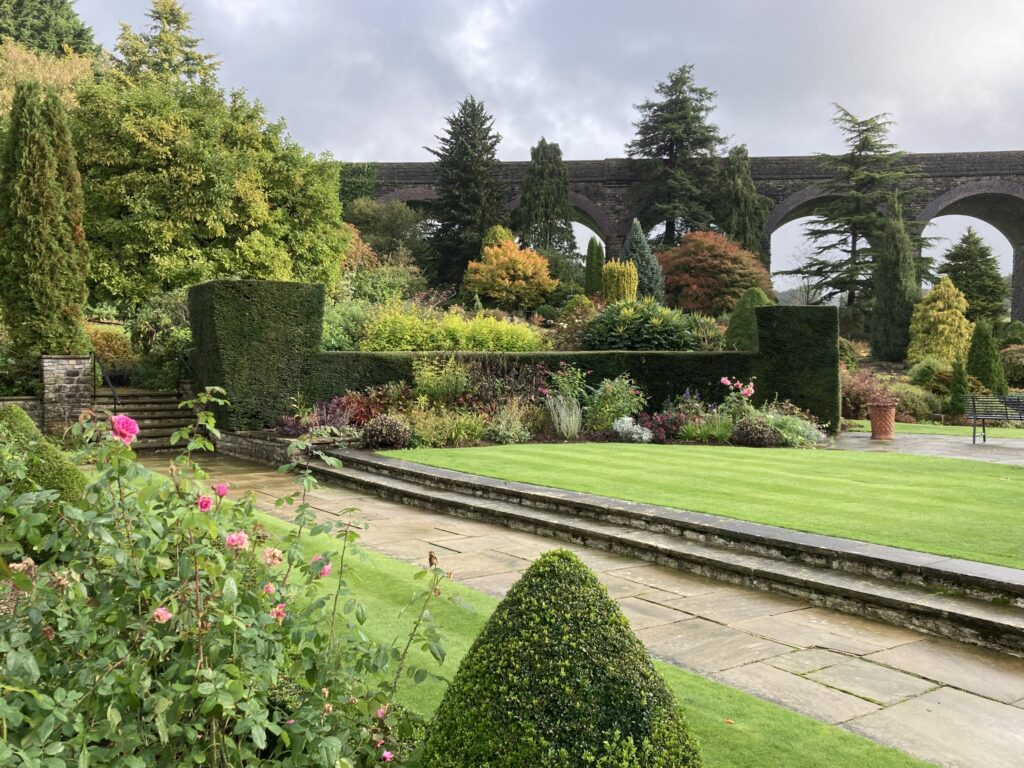
Think of gardens in Somerset and the famous names come to mind: Hestercombe, Prior Park, Barrington Court, to name but three, but on a recent visit to Bath I discovered a little gem, tucked away just outside Shepton Mallet, where an impressive piece of architecture creates an unusual and striking backdrop for a delightful garden.
The gardens at Kilver Court, which has become an RHS partner garden, were created in the 1900s by Ernest Jardine, for the enjoyment of the lace workers employed at his factory, and Jardine’s Park, as it became known, included allotment plots so employees could grow their own food. The Showering family, famously known as the makers of Babycham, then took over the garden and the old factory buildings for their cider business, until 1996 when the Mulberry founder, Roger Saul, bought Kilver Court and redesigned the gardens. In 2021 the Showering family once again became the owners.
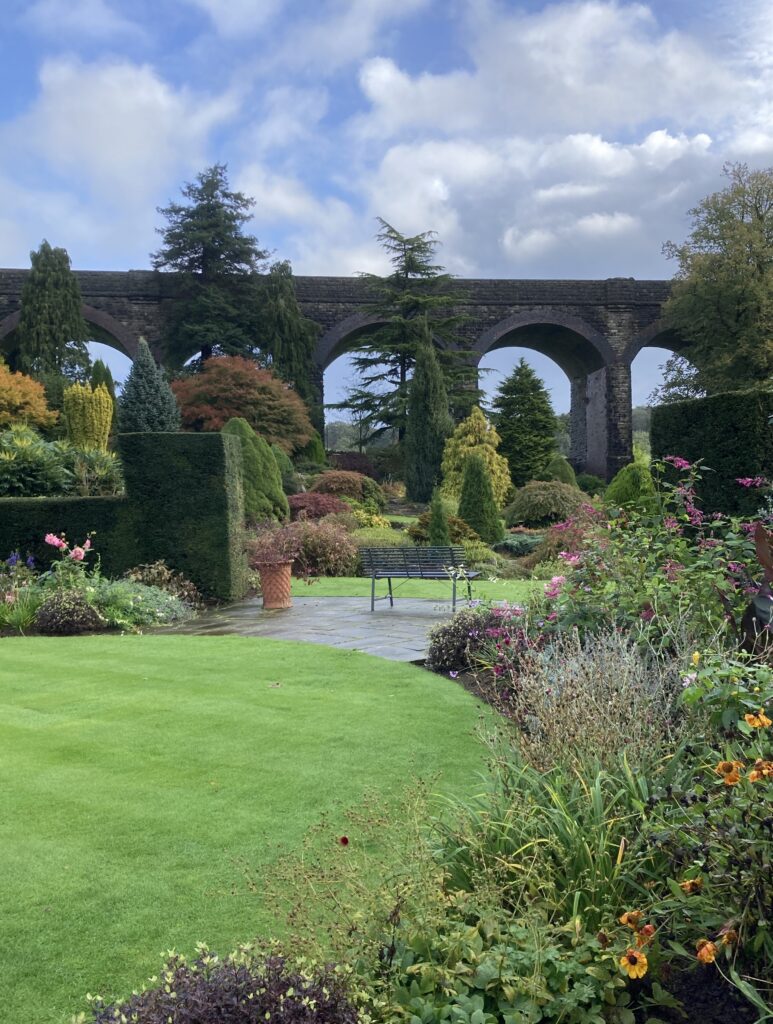

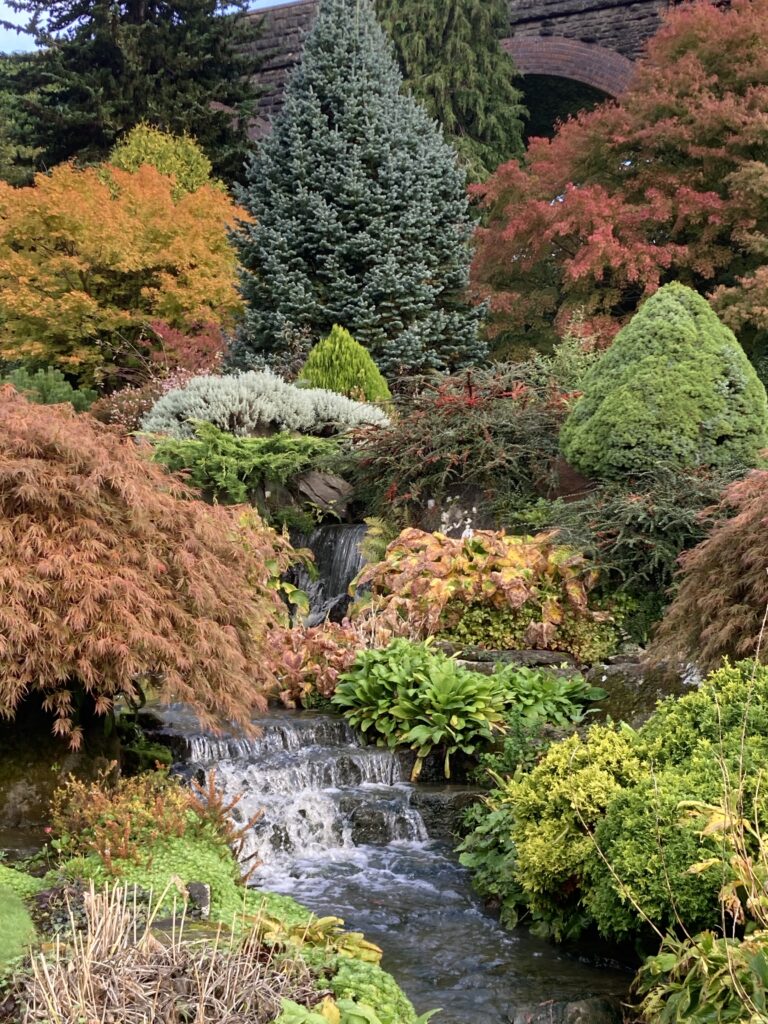
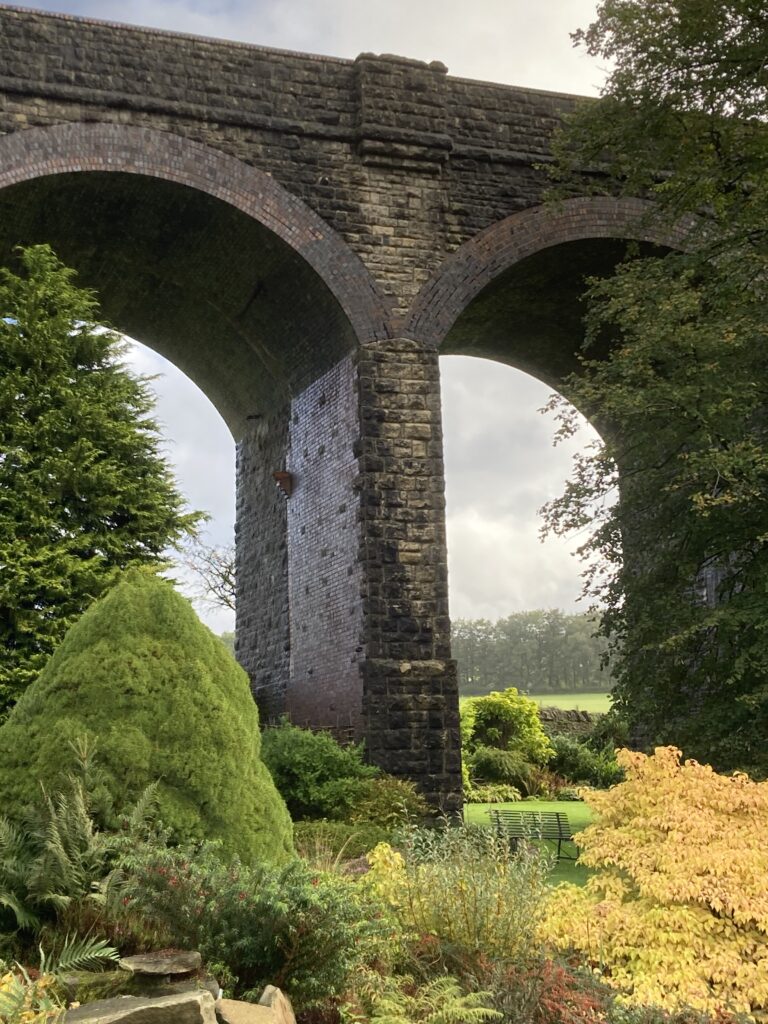
Visiting in late autumn and in a burst of sunshine after a heavy rain shower, this beautifully kept garden is a vibrant mosaic of colour, texture and shape. The rockery, which was created after Herbert Showering had seen the original design at the Chelsea Flower Show in the 1950s, has tall columns of conifers in all shades of green, tightly clipped yews, purple-leafed Japanese acers, and heathers and alpines. Winding paths of flagstones circle the old mill ponds and a waterfall edged with hostas, and the rose ‘Gertrude Jekyll’ is planted inside a box parterre. In the area behind the viaduct Roger Saul designed a long border of mainly foliage plants, where the colours graduate from dark greens to reds and then shades of blues and whites.
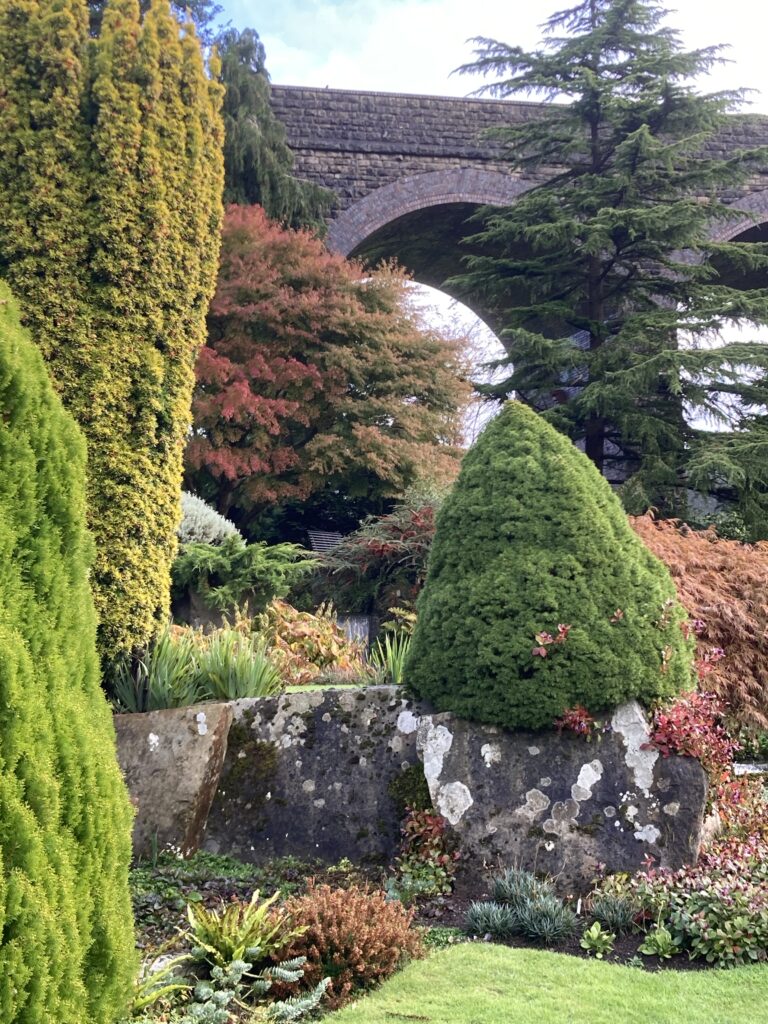
But the architectural feature that dominates is the huge Charlton railway viaduct, which crosses through the garden. The viaduct was built in 1874 as part of the Somerset & Dorset Joint Railway, fifty feet tall, with twenty-seven arches constructed of limestone. The railway was closed in the 1960s, but the viaduct, which is listed Grade II*, is an integral part of this garden, almost like sculpture, where the geometric shapes of the natural planting are in keeping with the archways and the stonework of this remarkable old structure.
Abandoned railways transforming into gardens have become a recent feature of several cities, created on railway viaducts such as the New York ‘High Line’, or the elevated ‘green sky’ garden in Manchester. At Kings Cross in London, Bagley Park has been made on a disused Victorian viaduct, with views of the Regent’s Canal and planted to encourage biodiversity. Rescuing these forgotten railway bridges, and creating parks and green spaces in the midst of cities is an inspiring idea, yet the emptiness of the Charlton viaduct at Kilver Court, standing just as it would have done more than 140 years ago, creates a quiet sense of dignity in this garden. So, the next time you visit Somerset, Kilver Court is well worth stopping for, as a diversion from some of those grander, and more familiar names.

Article and photos by Sally Ingram