
The Grand Tour to Italy continues! The small town of Schwetzingen lies about ten kilometres south of Heidelberg, close enough for the statues from the plundered garden to be easily transported to their new home in the palace garden at the end of the eighteenth century. The small compact palace sits astride an extensive axis which leads to the lake at one end and into the town which gathers outside the gates in the other direction. Imagine Versailles but on a smaller scale.
The garden is a rare example of a well-preserved eighteenth-century courtly garden. Many such gardens were converted into romantic ‘English’ gardens dominated by trees, grass and water by the late eighteenth-century, especially in Germany. Schwetzingen has, for some reason, maintained a continuous history of care and cultivation from the French style laid out in 1753 by Johann Ludwig Petri with subsequent additions by Nicolas de Pigage in 1762.
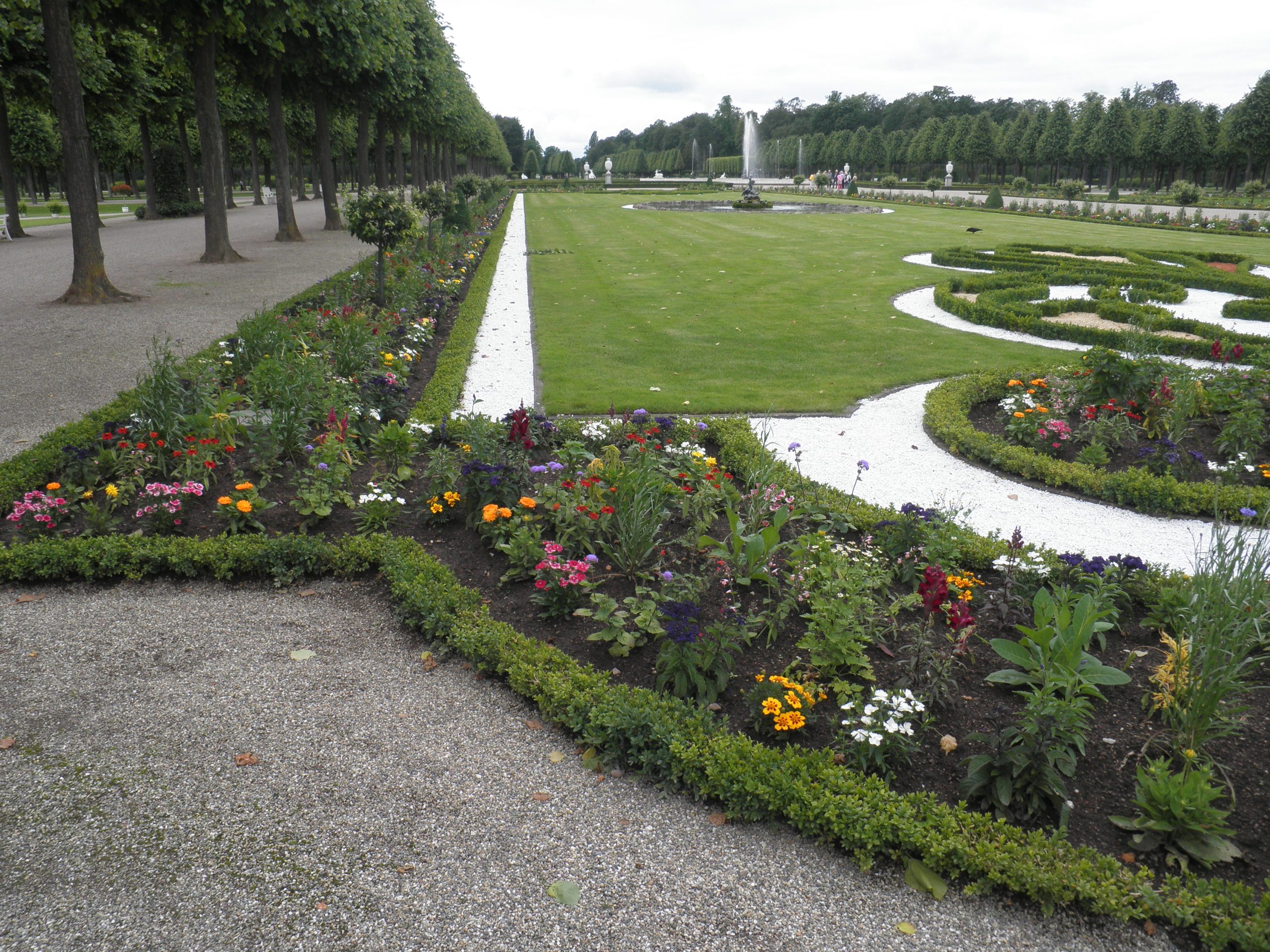
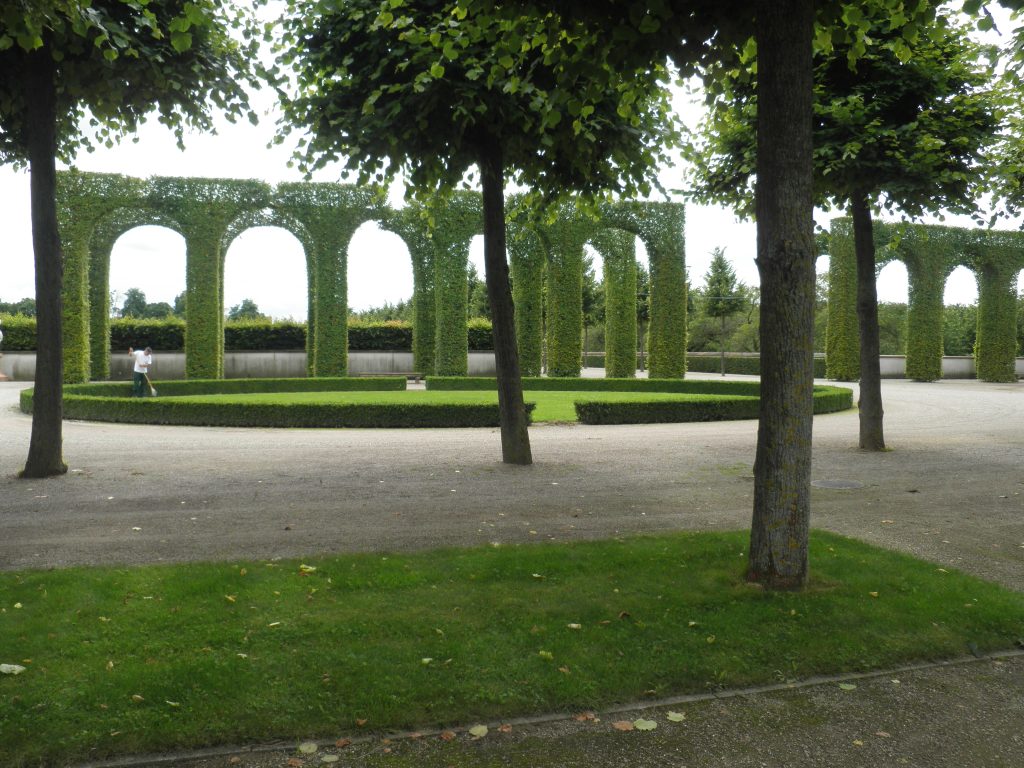
The plan of the garden in the guidebook lists 92 features, laid out on all sides of the central circular parterre. This is bisected by the wide axis leading in the distance to the Grand Étang (lake), guarded by two river gods representing the Rhine and the Danube. The single storey wings of the palace curve away on each side, embracing the extensive parterre, planted with grass and flowers in the French style. Further away, on one side a true wilderness with shady walks lined with flowering trees and shrubs is punctuated by small decorative features such as pools and statues. Everywhere you look there is immaculately clipped geometry, with high hornbeam arches and tunnels in the manner of Versailles.
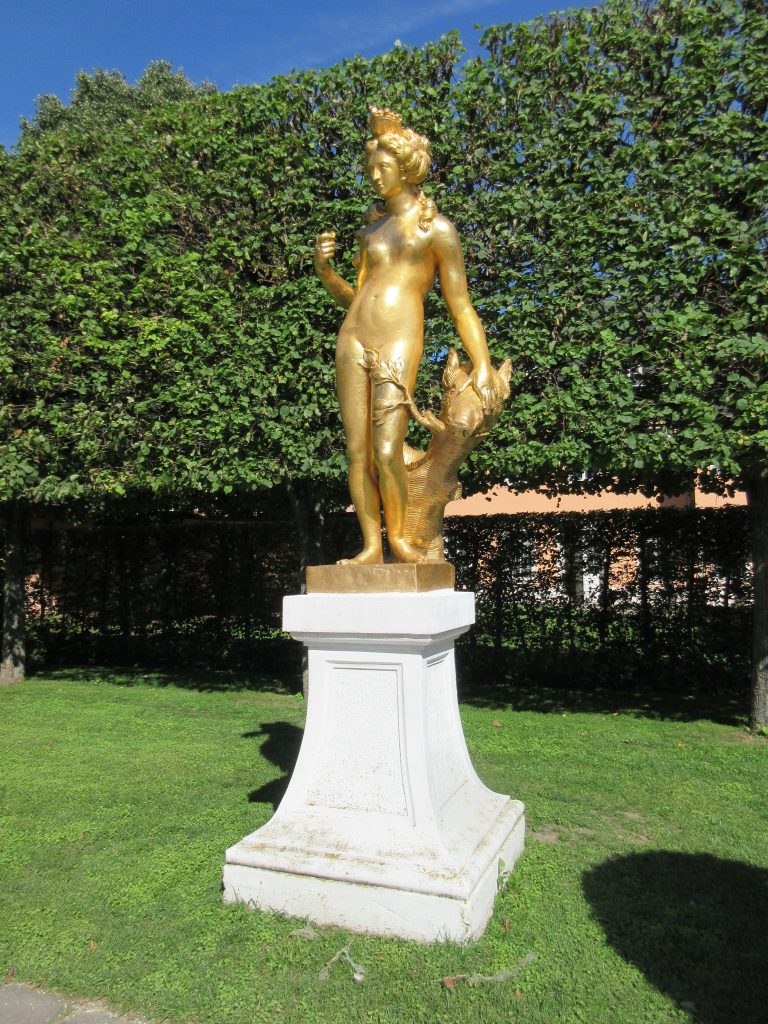
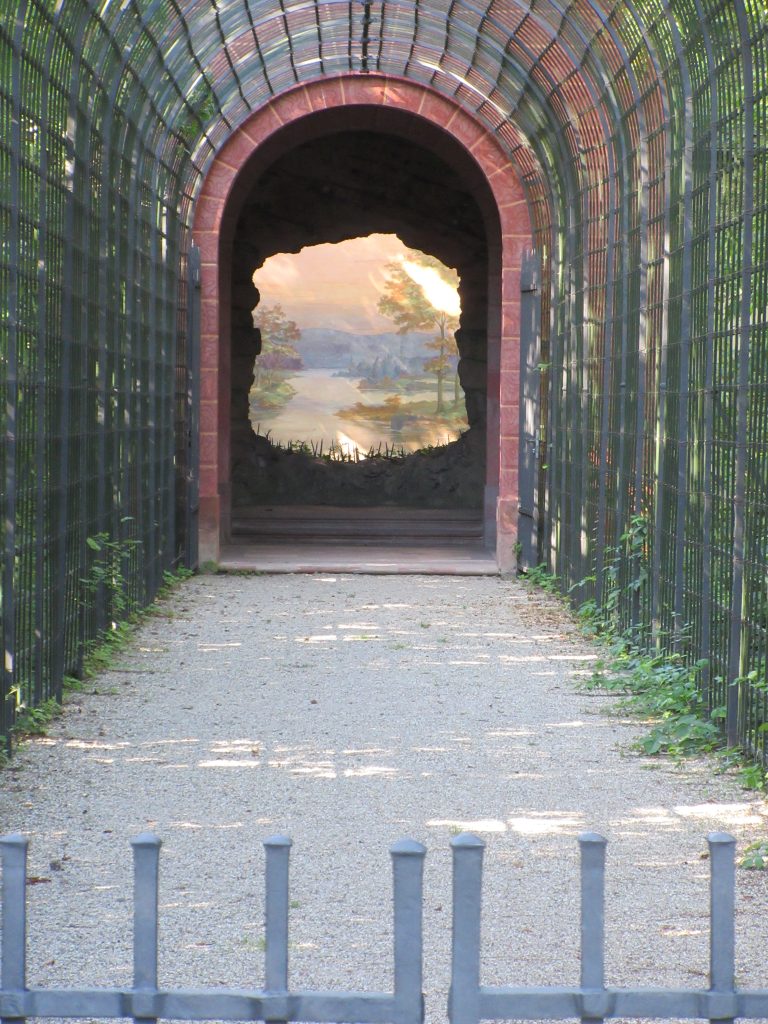
A special feature of the many sculptures in this garden is that some have been gilded, as they would have been in the past, creating a particularly striking effect. Indeed, all the features have been lovingly cared for and restored so the whole garden shimmers with colour, light and shade as the visitor progresses through the different areas. It would take a long time to describe everything there is to see, but one of the highlights for me was the Temple of Apollo, entered through a dark underground passage, from which stairs lead up into the brilliant, gilded temple inhabited by the presiding Apollo. This overlooks the ‘theatre of nature’ on one side and a canal on the other. Another outstanding experience was the green tunnel leading away from the aviary, at the end of which could be seen a ‘perspective’ painting of the garden of Eden. Also not to be missed is the beautifully restored mosque, at a distance from the main area, set in its own ‘Turkish’ garden. In addition, there is a fully-furnished bath house, orangery, and many temples and pavilions, all in their own settings.
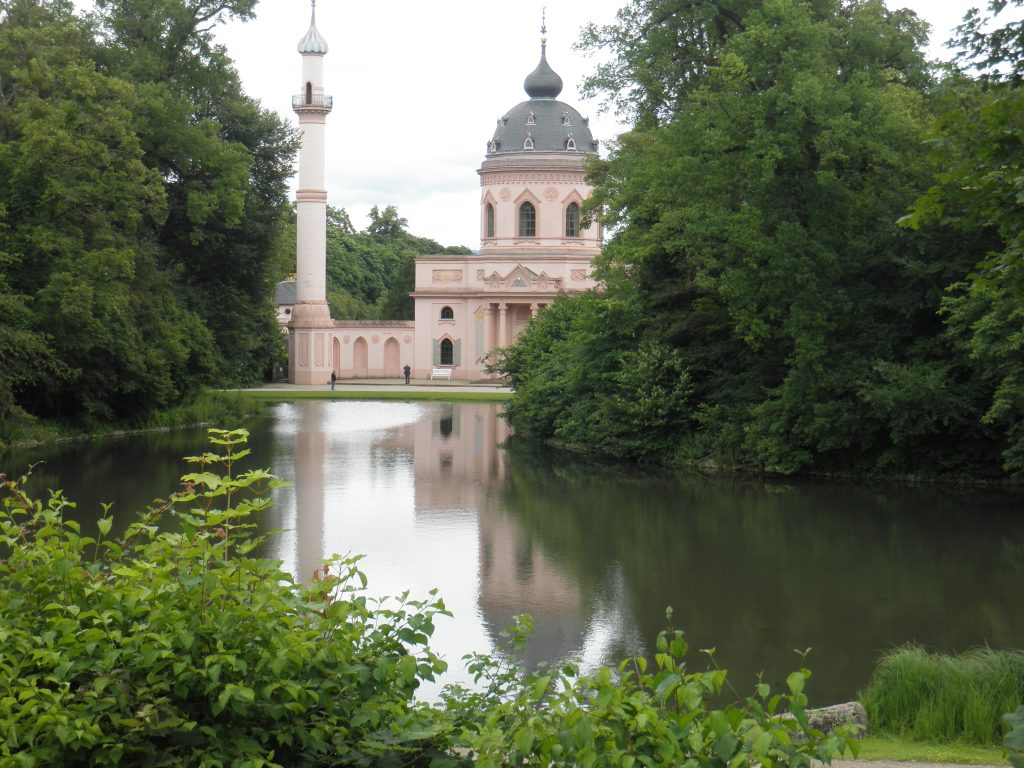
I cannot recommend this garden highly enough and it is worth a special journey to visit. When I visited there were surprisingly few visitors, but even so, the extensive area would never seem crowded even in peak times. The small hotel where I stayed near the gates offered a free pass to the palace and garden, but entry is not expensive (about E12 for castle and garden). The Schloss Schwetzingen website has many pictures and plans.
Article by Judy Tarling
Photos ©Judy Tarling and with kind permission of Schloss Schwetzingen.