
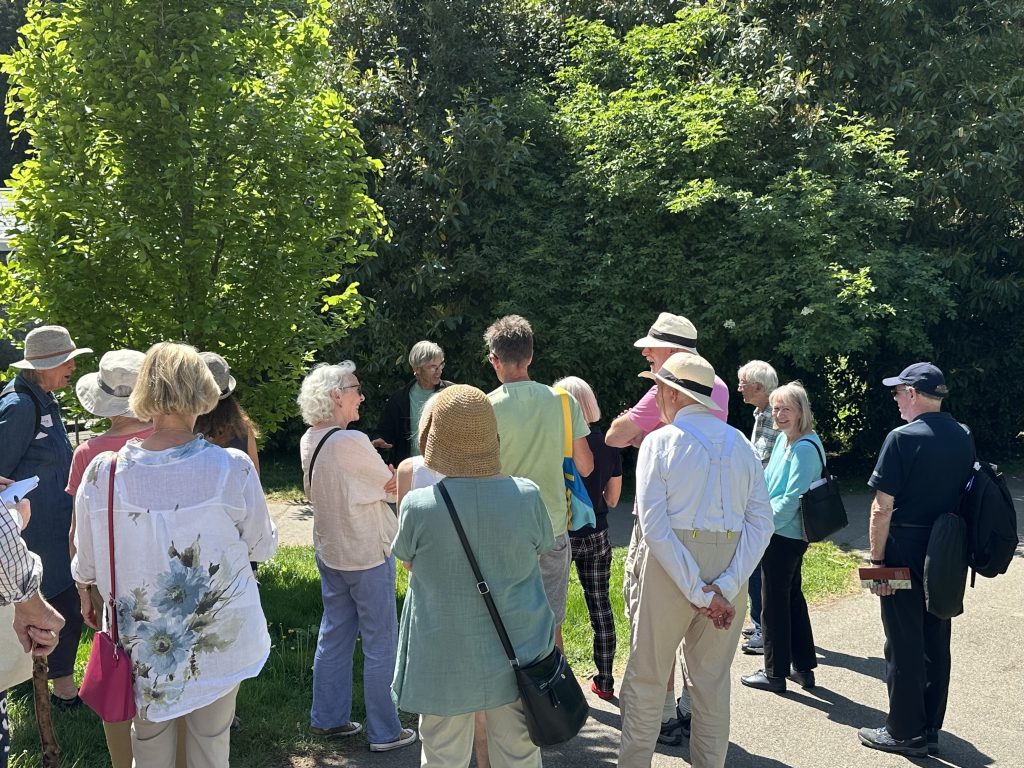
Bounded by the town of Hastings at the southern end and the residential area to the north Alexandra Park is renowned for its collection of rare and unusual trees, many of which are classed as ‘champion trees’ – the largest or tallest of their kind. It was the Victorian landscape gardener, Robert Marnock, whose commission in 1879 for a new public park ensured £250 was allowed for the tree budget and he created an arboretum with more than a thousand labelled trees. His design was for no hard lines, but almost all the pathways to be circular, with woodland scenery and walks shaded by oaks, pines and hawthorns which remain to this day. While engaged with the park, Marnock rented rooms in Rock Place, apparently so that he could watch over the works, until the opening in 1882. Dr Owen Johnson, who is a Registrar with the Tree Register and our guide for the Tree Tour, has a far longer relationship with the park, having lived nearby all his life and has grown up alongside these trees.
As Owen explained at the start of his walk, we might think that all trees have incredibly long lives, outlasting our own by huge numbers, but in fact many of them have a relatively short time frame, and are vulnerable to external forces: extremes of weather, senseless vandalism, marauding animals. Countless trees were lost to the Great Storm of 1987, but replanting in the 1990s by the Hastings Tree Officer, John Tucker, led to a new collection of 400 different kinds of trees. Guided by Owen’s expertise we could admire some of these close up as well meeting survivors from Marnock’s original planting.
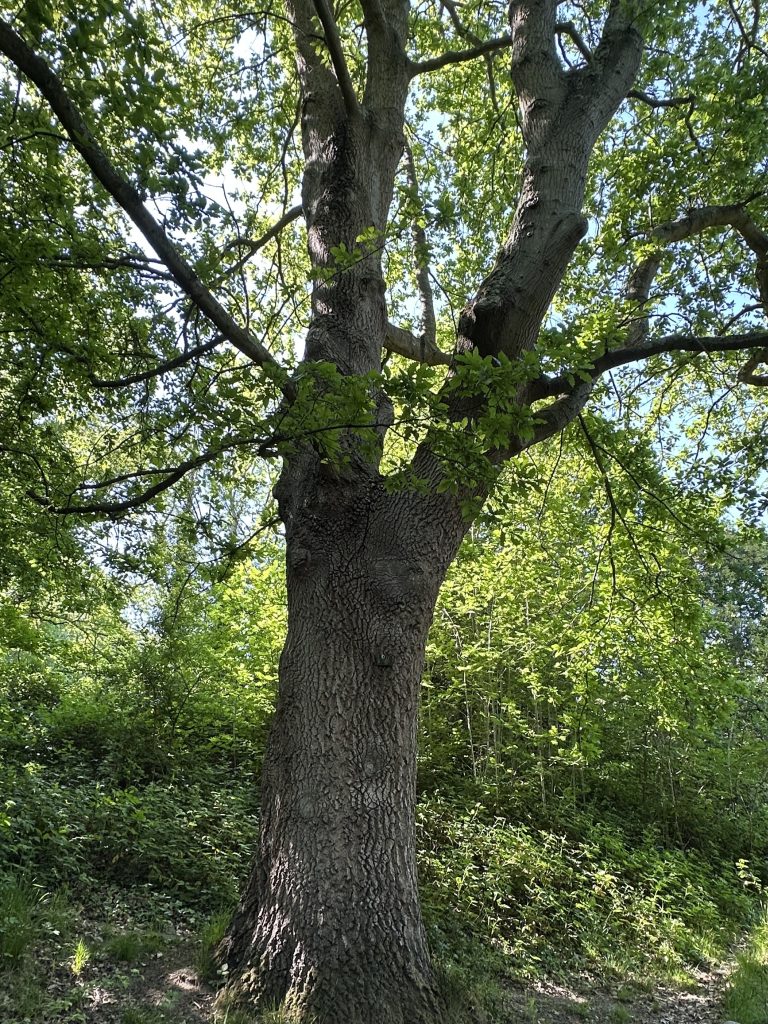
In Marnock’s design the trees were grouped according to their families and the oak collection, named by Marnock as the ‘quercetum’, has some of the oldest trees in the park. The Lucombe Oak Quercus x hispanica ‘Lucombeana’ is a survivor from the Victorian plantings and named after the Devon nurseryman William Lucombe. Owen explained that Lucombe felled his first tree to make boards for his own coffin, but lived to 103 by which time the boards had rotten and another of his Lucombe Oaks had to be felled. On the bank behind the Lucombe Oak there are new additions to the quercetum. After the 1987 storm John Tucker sourced and grew young trees in his own garden and planted several of the oaks to replace those lost including a Black Oak Quercus velutina. Owen pointed out the Blue-jack Oak Q. incana, and the Black-jack Oak Q. marilandica, planted by Tucker around 1990, a species from the United States. The Hastings Oak Q x hastingsii, also on the bank was planted by the Friends of Alexandra Park in 2015, named after Hastings, not in Sussex but Texas.
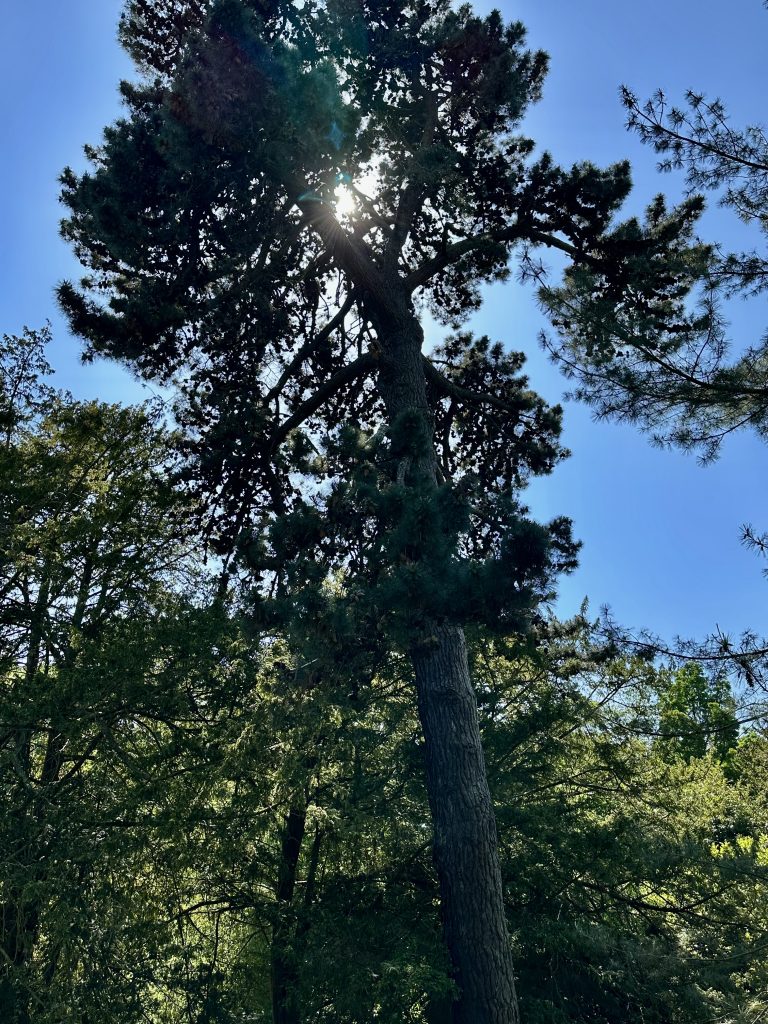
On the west side of the park, next to St Helens Road are some younger trees, replacing the wind belt of pines planted by Marnock and which blew down in the storms of 1987 and 1990. A slightly messy pine in this collection – the Bristlecone Pine, Pinus aristata, named for the cones that have bristles between each scale, grows in the dry conditions of California. Also from America is the Monterey Pine, Pinus radiata and this magnificent tree is thought to be a survivor of the original plantings from 1880 when Marnock designed a conifer collection in this area of the park.
Writing in June 1885, the Hastings and St Leonards Observer commented “the Park is essentially a ‘lounging ground’. There can be nothing more delightful than to wander in the cool of its shady paths in the heat of the day”. On our tour we were definitely not ‘lounging’ but appreciating the shady paths and the dappled sunlight. Owen Johnson truly knows his trees and as our guide presented a fascinating walk, sharing his experience and knowledge of this special public park.
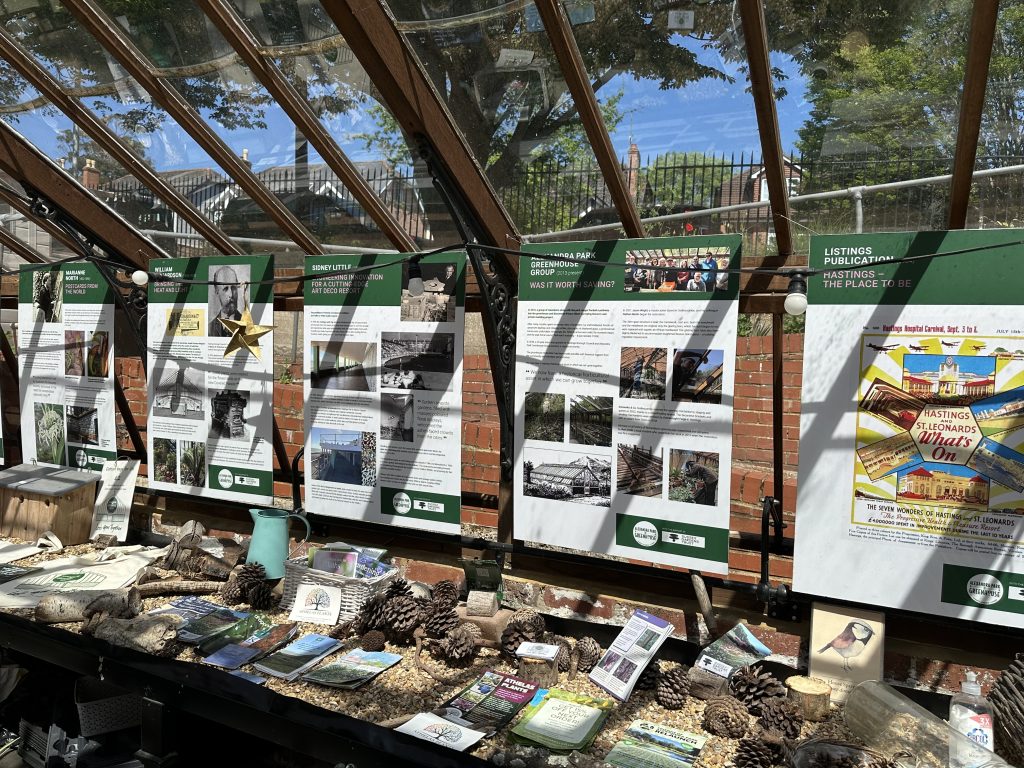
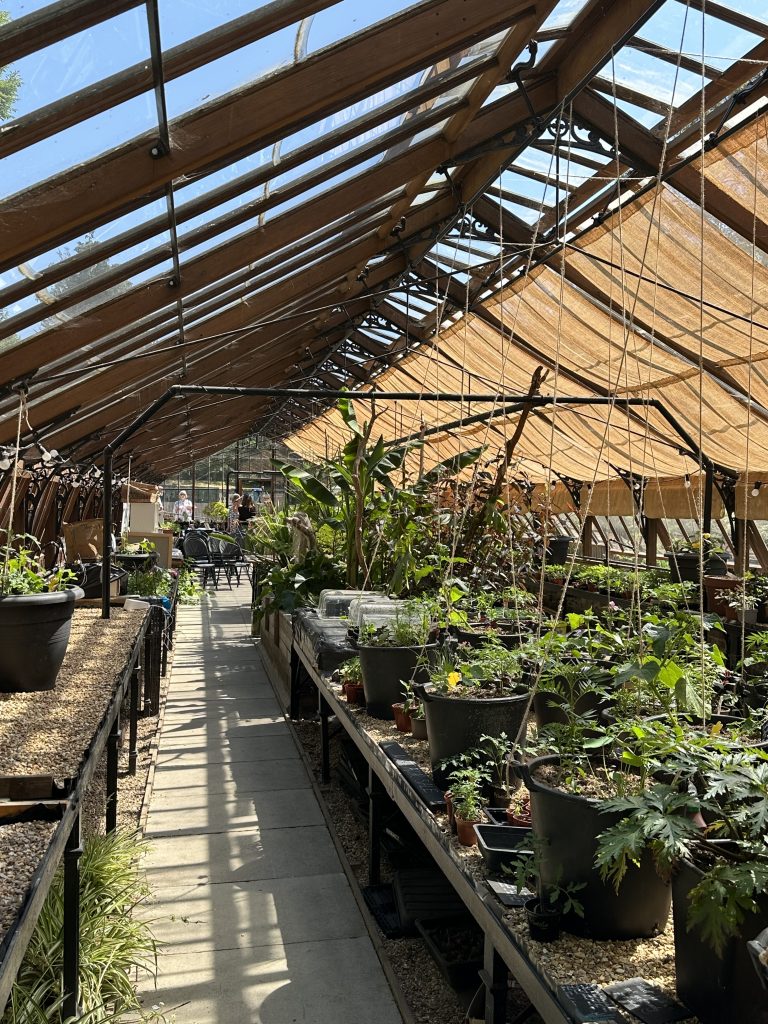
We ended the afternoon with cakes and tea at the Greenhouse and met some of the volunteers from the Greenhouse Group who since 2018 have worked tirelessly to restore this historic glasshouse to its former glory. The beautiful teak and cast-iron building is now fully renovated and the whole community can enjoy a host of activities, including gardening sessions, and growing and donating plants. The charity plant shop is open twice a week and there’s much more about the history here.
There are some wonderful images of the park in the 1880s and the opening event here.
Jan Woudstra has written a very interesting and informative article for Garden History (Summer 2023) on ‘Robert Marnock’s Retirement Project: Alexandra Park, Hastings, 1876-82’.
Dr Owen Johnson MBE has written Champion Trees of Britain and Ireland (2003).
Article and photos by Sally Ingram