

Growing Together: Horsham’s Town Allotments by Maggie Weir-Wilson (Author’s Pen, 2023. ISBN 978-1-8383436-6-8)
Maggie Weir-Wilson has been a keen allotment owner in Horsham for more than ten years and in 2021 she began exploring the history of each of the allotment sites in the centre of the town. Growing Together delves into the archives to examine the fascinating story of the allotment movement, and by talking to plot holders and researching the background of Horsham’s allotments Maggie has written an insightful study of people and their plots.
The book begins by considering the historical context of allotments in England, tracing the beginnings of the movement to the increasing demands by radical groups to return common land from priests and landlords to the people, and the pioneering Gerrard Winstanley, who in 1649 took his spade to St George’s Hill in Surrey, to set up the first Digger community. Changes to land ownership, enclosure and increasing mechanisation led to wages among the agricultural labourers reducing and levels of poverty increasing, and the first allotment movement could be said to have started in 1796 with suggestions to provide small pieces of wasteland to the poor for growing their own food. By the 1830s the Labourers’ Friends Society was established to encourage landowners and others to give allotments of land to the local poor. In 1839 Horsham LFS had rented three allotment sites, adding a further site a year later and by 1913, as new laws were gradually introduced to compulsorily purchase the land, two thirds of parishes in England had allotments. During the war years sites continued to increase, often with strict rules, such as no growing of flowers and no selling of produce, although women were now encouraged to get involved and to grow vegetables.
Allotment holding declined in the 1950s, with land being sold off for development, and older plots lost. However, new ideas about sustainability, and environmental concerns for the loss of pollinators and damage from insecticides, has led to a renewed sense of purpose for allotments: no longer just for growing cheap food, but valued for good health, well-being and a shared sense of community.
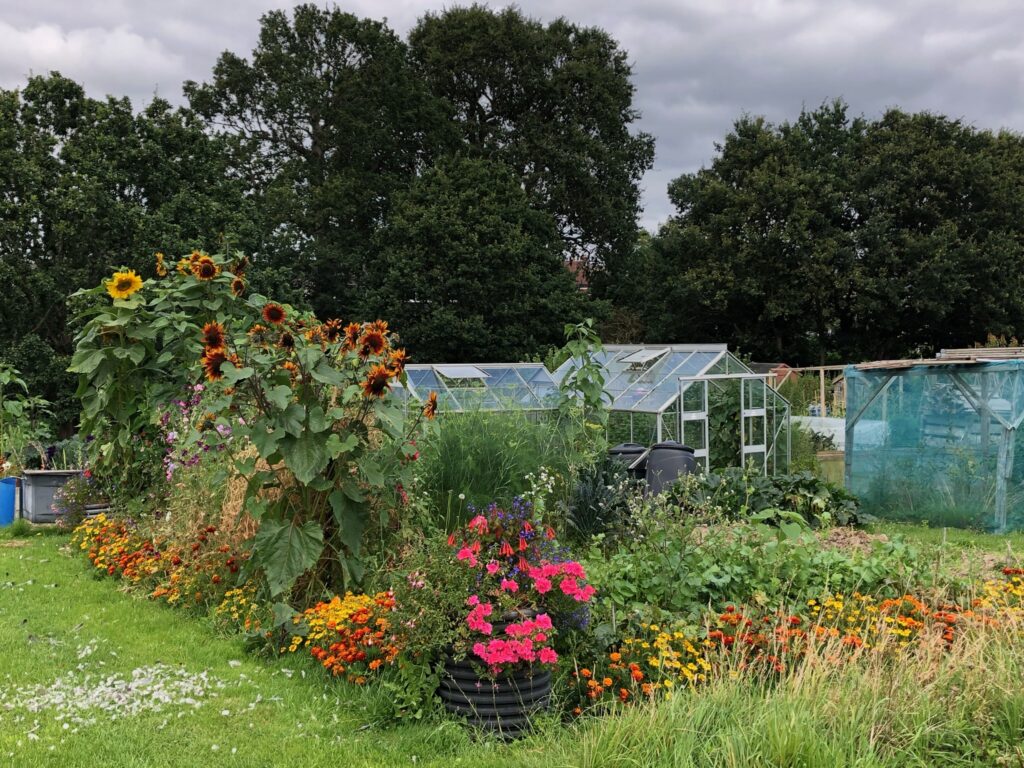
These changes are reflected in the many conversations Maggie has had with the plot holders of the eleven allotment sites in Horsham. Unsurprisingly, many of the sites have long waiting lists, sometimes three or four years, and owners who may have had their allotments for more than thirty years have seen the original plots (by tradition measuring ten rods, a rod being the length of oxen and the plough) now divided to make smaller sizes available to new owners. Despite the demand, allotment committees have to be vigilant, as the land is inched away by developers.
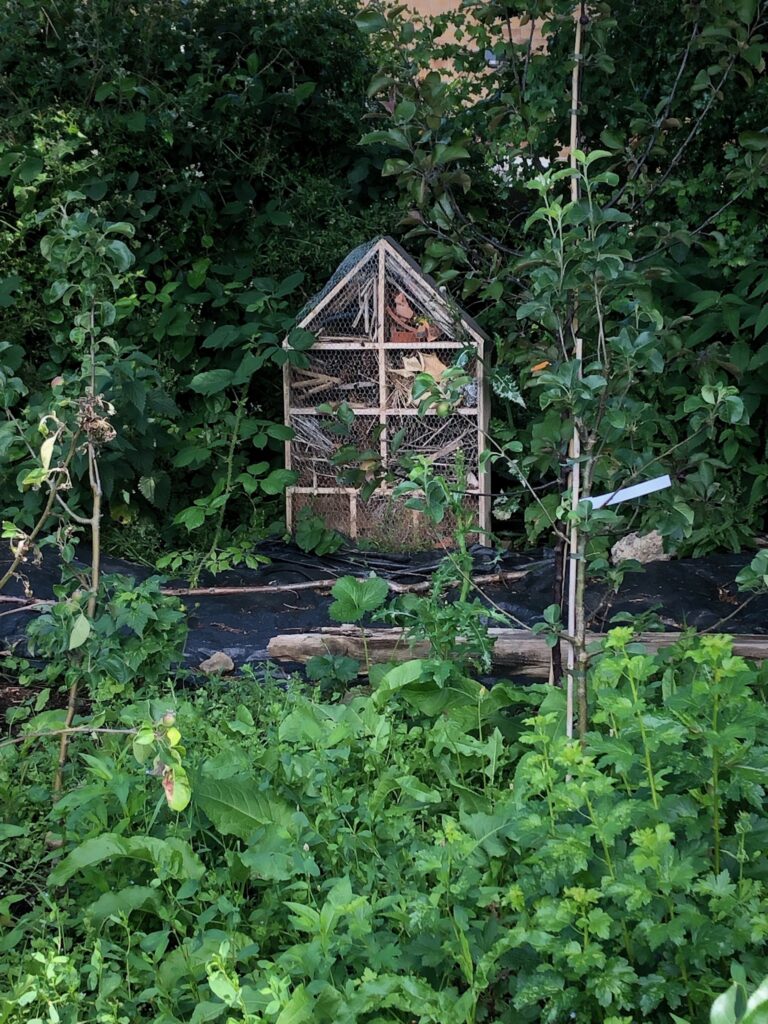
One of the most noticeable differences recalled by owners has been in how the plots are used. The strict rules about only growing vegetables have relaxed, and flowers are now allowed, encouraging pollinators and reducing the need for shop bought flowers. There is a greater concern for nature, with many owners creating home-made bughouses, bird houses, mini ponds and wildlife areas. Several of the allotments have composting toilets.
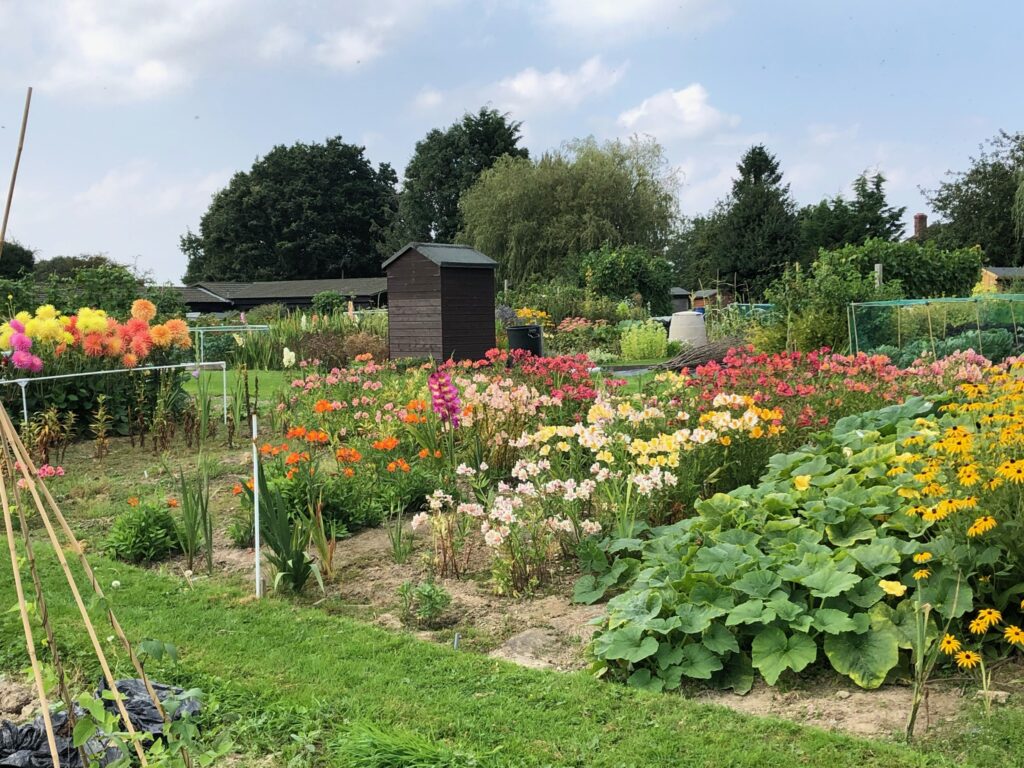
In the past allotment holders in Horsham were mostly men, but nowadays nearly half are women, and although some owners have worked on their plots for more than thirty years, there are young families who bring their children and an increasing number of newcomers from Europe and beyond with their own experiences of planting. Two local primary schools are also giving children positive experiences of growing plants and vegetables and noticing nature on the allotments. The Montessori Nursery School has a plot at the Bennetts Road Allotment, and Leechpool Primary School has a plot at the Harwood Road Allotment site.
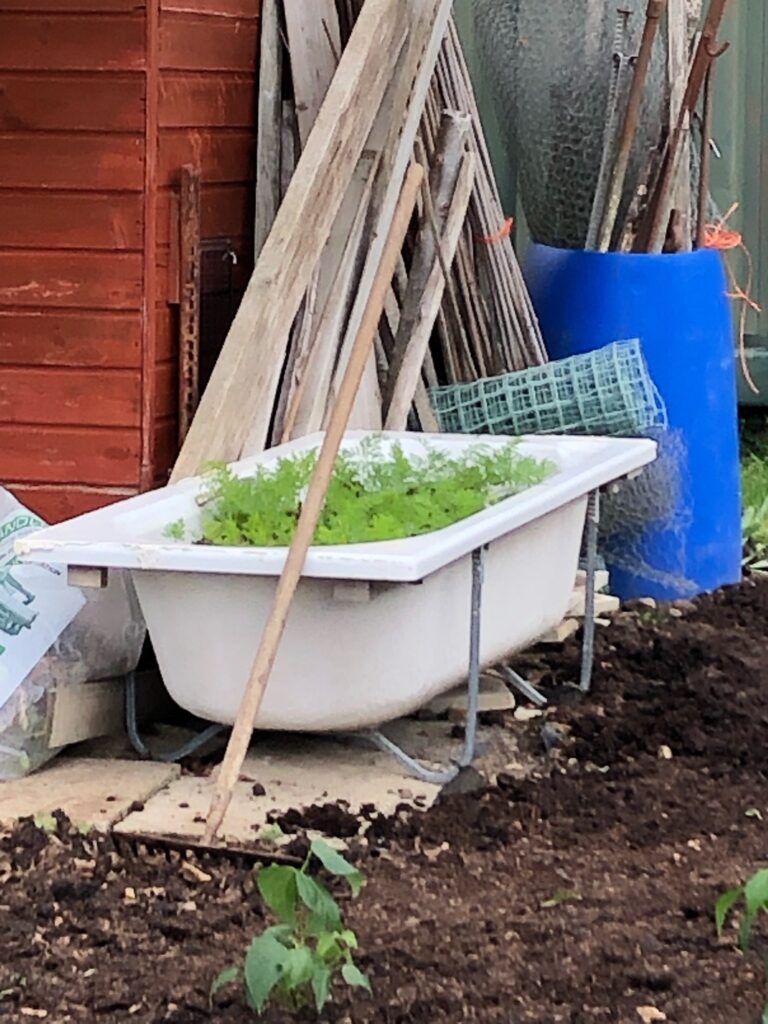
The book is richly illustrated with original plans, photographs, and beautifully interspersed with Maggie’s delightful botanical drawings and poetry – there’s even a recipe or two from some of the plot holders. There is much to discover and to celebrate in the history of Horsham’s allotments and Maggie’s book is a vivid testament to these greatly valued plots of land.
Review by Sally Ingram
Photos ©Maggie Weir-Wilson
Growing Together is available from Waterstones in Horsham.
Dr Maggie Weir-Wilson’s first book Secret Horsham was published in 2019. You can read about her second book St Leonard’s Forest: A Landscape History on Maggie’s website.
National Allotments Week 2023 is from 7 August to 13 August.