
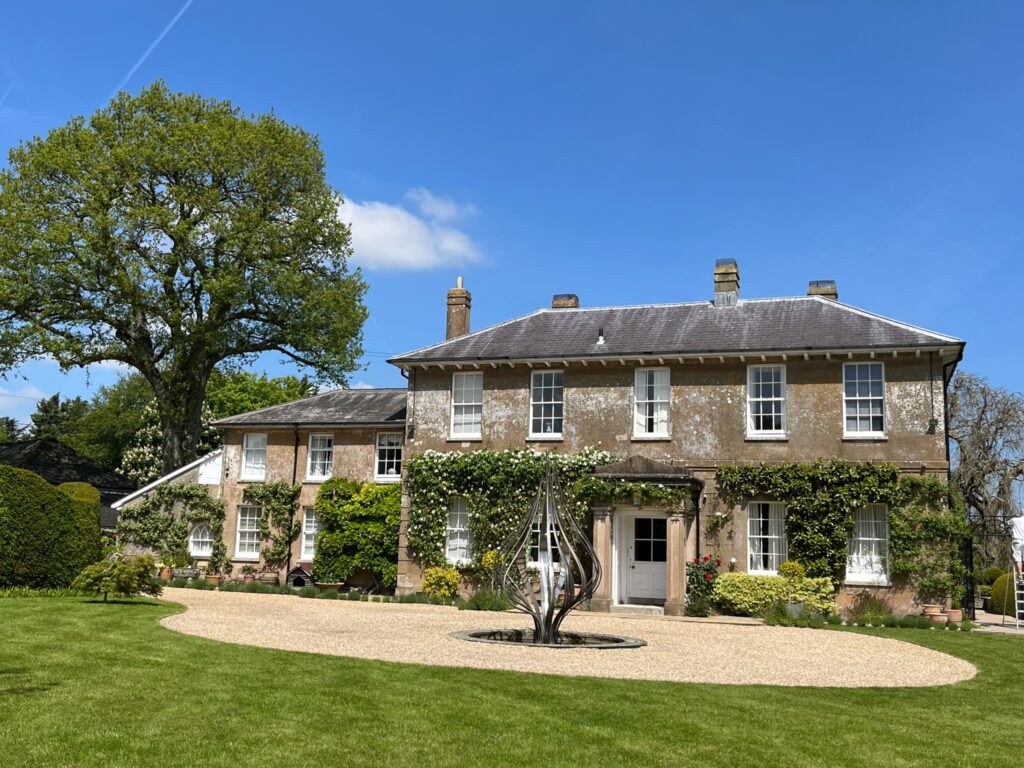
It is easy to bypass Washington on the A24 but last week I stopped in the village to join a Horsham Organic Gardeners Society (HOGS) garden visit to The Old Vicarage and its lovely three and a half acre gardens. As its name suggests the Old Vicarage sits next to St Mary parish church, both of which were renovated in the nineteenth century. The Old Vicarage mansion, which is not open, effectively dates from 1832 and is in the Regency style.
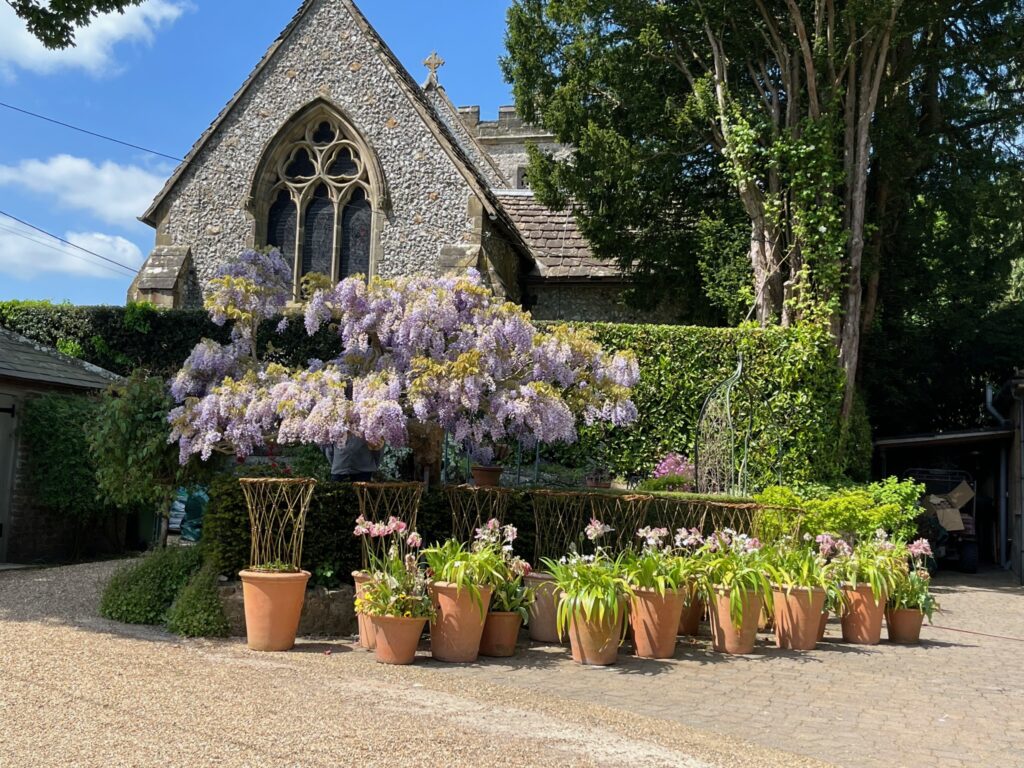
The church estate sold the mansion in the 1960s and it is now owned by Sir Peter and Lady Walters who bought it in the 1990s. Since that time, they have worked to create an interesting and relaxing garden with extensive views to the North Downs from the back garden. They built a large conservatory on the front which is ideal to host private groups and National Garden Scheme (NGS) visitors. A patio extends from the front of the house and the conservatory with tables and chairs, a small pond and a large sculpture in the centre of the pond by Maria Kubiak. The front garden has the feeling of being quite formal, the lawn being enclosed by crisp curved topiary and herbaceous borders. These were being refreshed as we visited by an enthusiastic team of part-time gardeners. Here also were the bright white trunks of three Himalayan birch trees, the lower branches removed to accentuate the whiteness of the bark. Beyond the topiary hedges and near the house was a magnificent wisteria, freestanding in an umbrella shape and just dripping with beautiful long scented blossoms.
Moving into the back garden there is a stunning view to the North Downs as the garden falls away. One can still hear a murmur from the A24 but it can no longer be seen, as it was before the Walters took it over. They planted a large laurel hedge and established a woodland of over 3,000 trees which not only blocks the view of the road but absorbs most of the noise.
There is a rare Weeping Ash tree on the back lawn. This tree was thought to have been planted around 1832 when the house was being rebuilt. It was much praised by Christopher Lloyd who thought it was the largest and oldest Weeping Ash certainly in Sussex, if not the whole country.
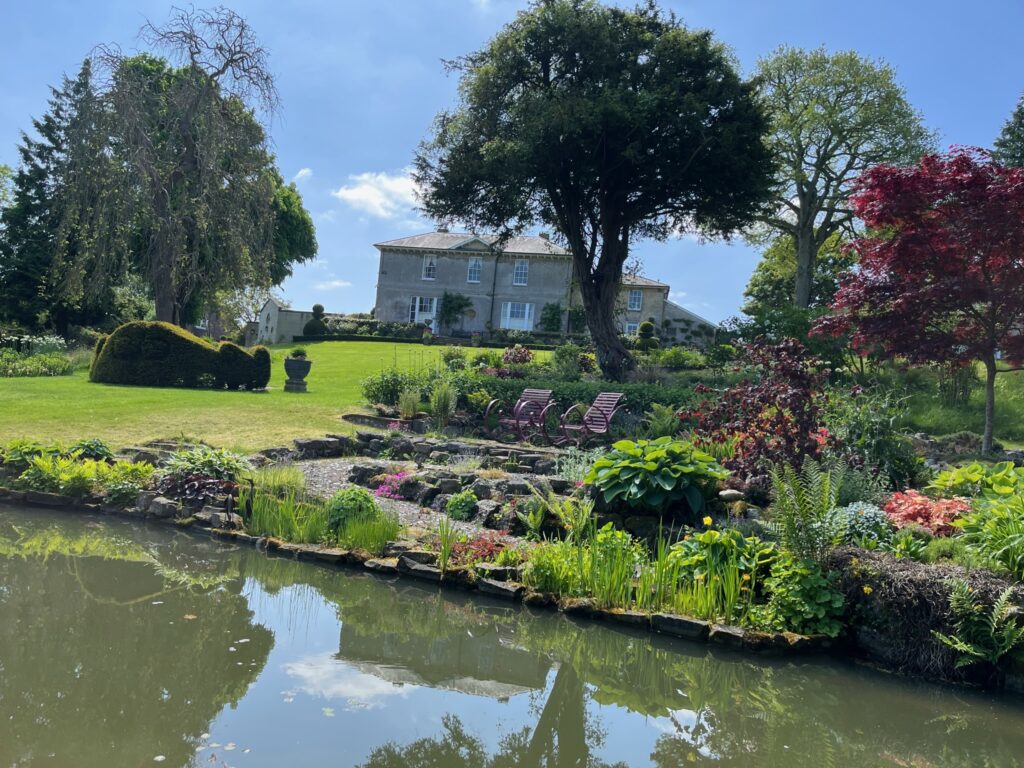
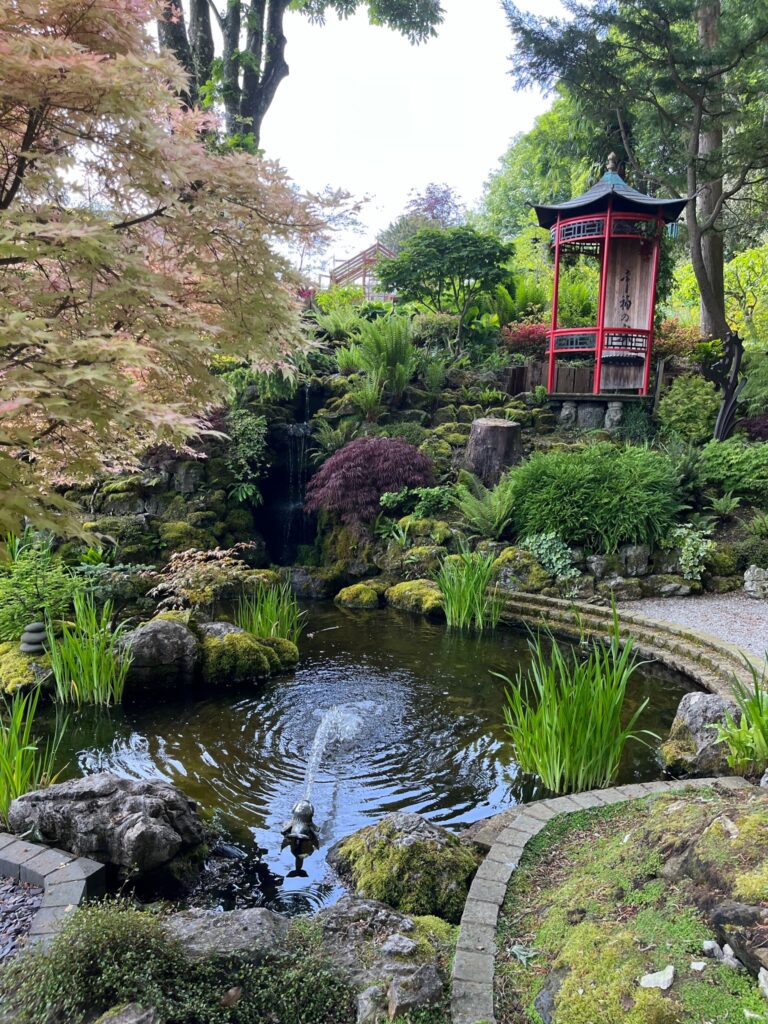
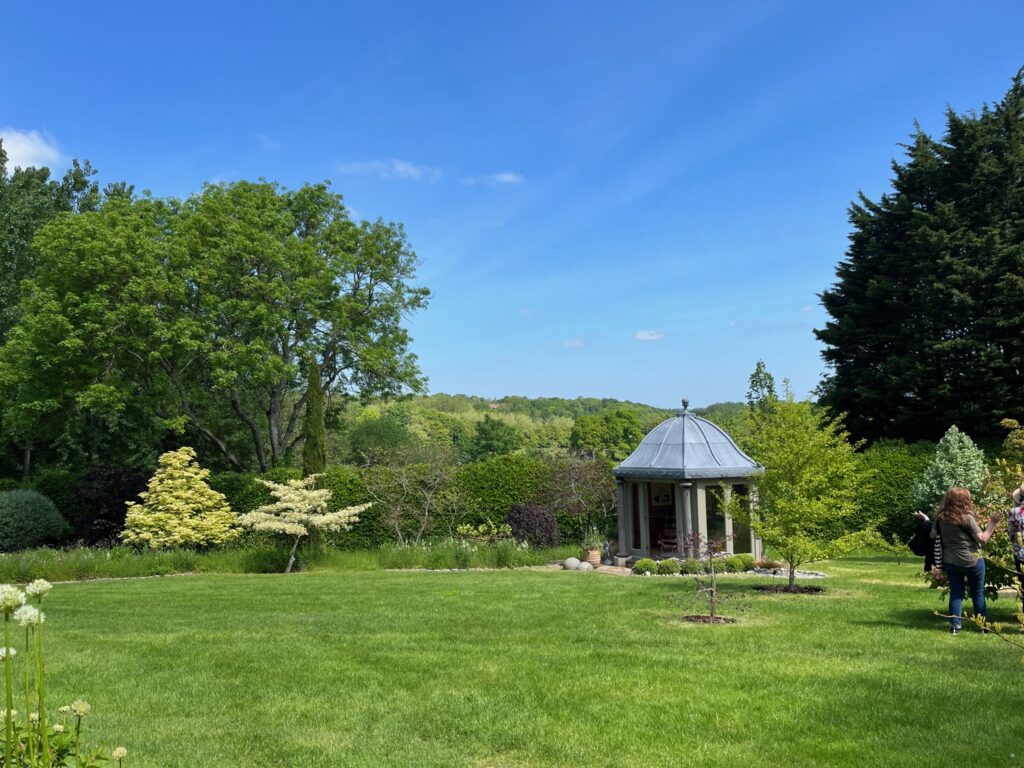
Throughout the back garden there are delightful places to sit and just absorb the tranquillity and beauty of the surroundings. For example, there is a small summer pavilion, a wooden seat by a mill stone water feature and in the woodland is a tree house with a viewing platform and wood burner. A particularly lovely feature is a shady Japanese Zen Garden with Japanese Acers and bonsai plants. Here water cascades downhill into a small pond at the side of which is a Japanese teahouse and sculptures.
On the return towards the house, up the hill, one passes through the vegetable and fruit garden, complete with bee hives. At the time I visited the wooden greenhouses were planted up with cucumber and tomatoes, raised circular beds were producing asparagus spears and beetroot was just beginning to take off.
The different elements of design plus the care and attention to detail make this both a beautiful and reflective garden to visit, one that I will undoubtedly return to, particularly in spring when the tulips are in flower. Thankfully, visits are made possible by the National Gardens Scheme, and from time-to-time SGT has arranged private visits for members.
Article and photos by Maggie Weir-Wilson